
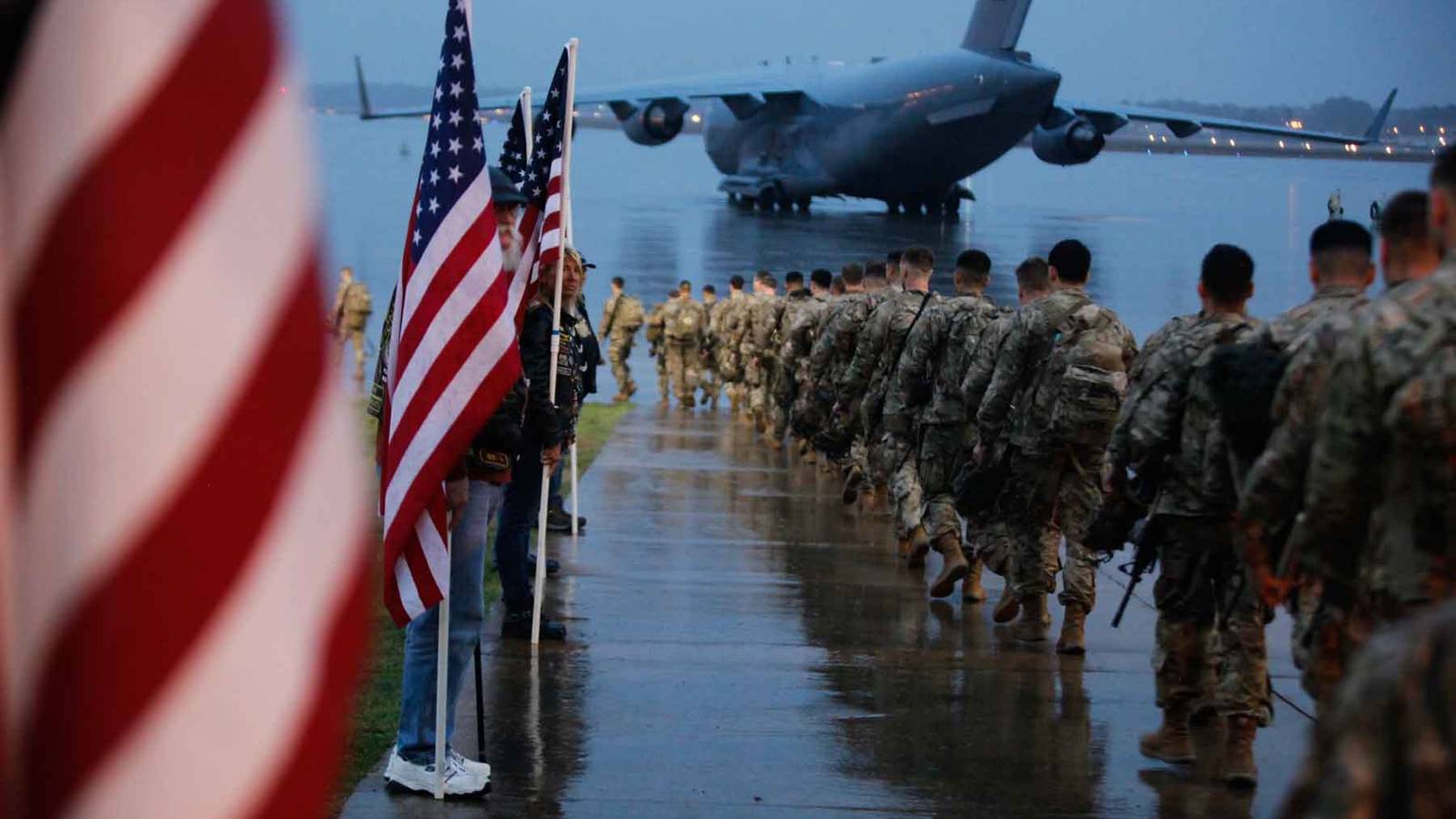
The recent announcement regarding the deployment of the 82nd Airborne Division by the Pentagon has raised eyebrows and generated discussions around its implications, particularly involving the potential for conflict in the Middle East. As tensions continue to brew, understanding the details of this deployment sheds light on the current military strategy.
Deployment Insights
The Pentagon informed the public earlier this year about sending elements of the 82nd Airborne Division to the U.S. Central Command (CENTCOM) area. However, it wasn’t widely disclosed that some of these troops were destined for Israel. According to a deployment order shared by journalist Ken Klippenstein, parts of the 2nd Battalion, 501st Infantry Regiment arrived in Israel for temporary duty starting from April 7. While this information remained unconfirmed by other outlets, it aligns with the broader context provided by the Pentagon.
In March 2026, the Department of Defense announced the mobilization of various units within the 82nd Airborne Division, alongside the division’s headquarters and supporting elements, to the CENTCOM zone. While officials cited operational security as a reason for withholding further details, they did not specify Israel or any other individual nation as a deployment target. Technically, this was accurate, as Israel has been part of CENTCOM’s oversight since 2021. Yet, the implications of deploying to Israel differ significantly from moving to established military bases in regions like Kuwait or Bahrain.
The Strategic Importance of the 82nd Airborne Division
The deployment involves units that are integral to rapid-response operations. The 82nd Airborne Division is recognized as the Army’s premier quick-response force and plays a pivotal role when crises arise internationally. As Joint Chiefs Chairman Gen. Dan Caine highlighted in a Pentagon briefing, this division conducts training to ensure rapid deployment and immediate combat readiness. Although there were no explicit confirmations of the mission directed towards the troops in Israel, such assertions help explain the scrutiny surrounding their deployment.
Caine’s discussion extended to U.S. military operations concerning Iran and the Strait of Hormuz, emphasizing that CENTCOM is poised to initiate large-scale combat operations if necessary. This context further shapes public perceptions of the deployment, as it raises questions about the nature of military involvement in volatile regions.
Kharg Island and Military Planning
Klippenstein’s reporting brought attention to military planning documents that suggest connections between the deployment and operations revolving around Iran, particularly concerning Kharg Island. This island, found in the Persian Gulf, is a critical hub for Iran’s oil exports and plays a significant role in strategic military considerations regarding Tehran. Due to its economic importance, Kharg Island represents a key target in potential military scenarios involving Iran.
Sources involved in military planning indicated that the recent deployment was related to preparations for operations focused on Kharg Island and parts of Iran’s coastline. Earlier reports from major news outlets also noted that senior military officials have been contemplating deploying the 82nd Airborne in scenarios involving this key territory. While operational security often restricts the amount of information military personnel can divulge regarding troop movements, the discrepancy between official announcements and details emerging from media sources provokes questions about transparency in military operations.
In conclusion, while the Pentagon’s original statements accurately described the troop movements, the omission of specific destinations and the implications of deploying to Israel indicate a possible strategy rooted in diplomacy and operational security. As the situation evolves, greater scrutiny of military deployments in such strategically sensitive areas remains imperative for understanding U.S. defense tactics in the Middle East.