
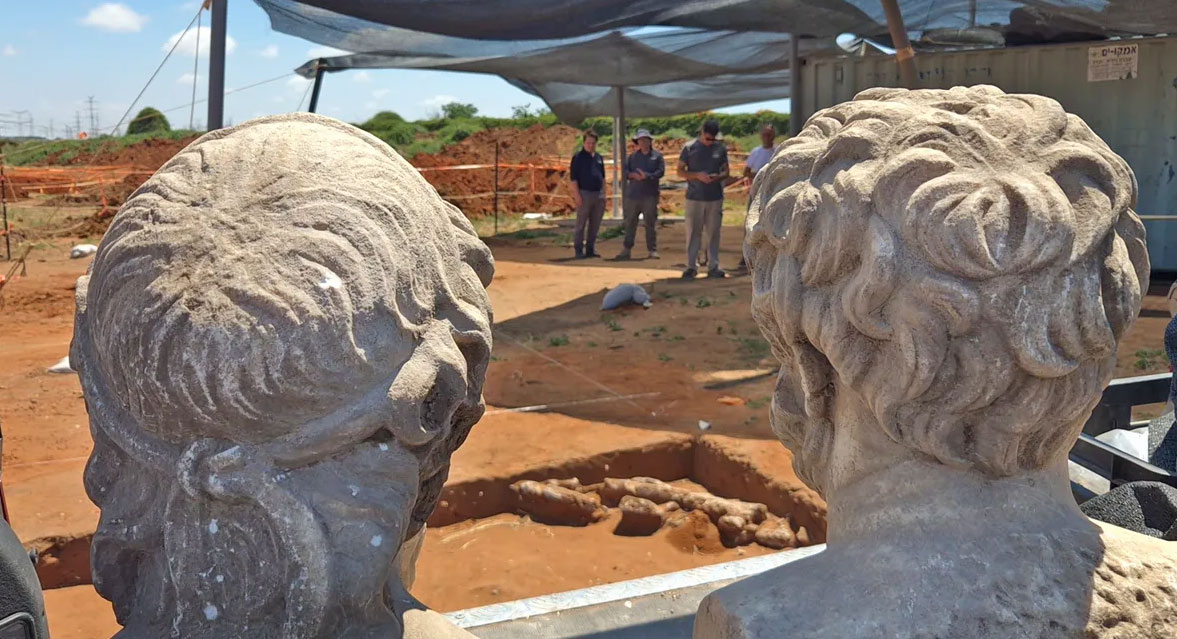
Two remarkable 1,700-year-old marble busts were recently uncovered in a wine-storage pit in Binyamina, Israel. This significant archaeological find sheds light on the rich historical tapestry of the region, highlighting the craftsmanship and cultural influences of ancient civilizations. These artifacts are not just objects of artistic merit; they also provide valuable insights into the social and economic practices of the time.
Historical Significance of the Busts
The discovery of these marble busts goes beyond mere aesthetics. They bear the marks of Roman influence, suggesting that Binyamina was a vibrant hub during the Roman period. Such artifacts help to piece together the narrative of the area’s past, showcasing how art and culture were shared and adopted across different regions. The presence of high-quality marble indicates that skilled artisans were likely active in the area, possibly serving affluent patrons who sought to display their wealth and status through art.
These busts are believed to have adorned a villa or some prominent place, indicating that the owner of the wine pit was not just a local citizen but someone with significant social standing. The artistic style of the busts reflects a blend of local and Roman styles, further emphasizing the interaction between indigenous cultures and foreign influences. Their preservation in a wine-storage pit also suggests that this location held value beyond simple storage, possibly serving as a marker of societal prestige.
Exploring the Archaeological Context
The wine pit, where these busts were found, is significant in its own right. Wine production has deep historical roots in Israel, dating back thousands of years. Archaeological evidence suggests that wine was a highly sought-after commodity, often used in trade and ceremonial contexts. The presence of the marble busts within this unique context indicates the importance of wine not only as a beverage but also as a symbol of affluence and social gatherings.
Excavations in this area continue to reveal layers of history, offering a glimpse into daily life in ancient Binyamina. The discovery of other artifacts alongside the busts, such as pottery and other tools, paints a detailed picture of the social and economic environment at the time. This kind of continuous exploration is vital for understanding how ancient populations lived, interacted, and thrived.
The Future of Archaeological Discoveries in Israel
As excavations in Israel progress, they continue to surprise researchers with new discoveries that expand our knowledge of history. The country is a treasure trove of archaeological sites, each with its unique narrative waiting to be unveiled. The recent find in Binyamina is a testament to the ongoing relevance of archaeological work in understanding our past, and it highlights the importance of preserving these artifacts for future generations.
The excitement surrounding such discoveries fosters a greater appreciation for the complexity of human history. As we learn more about the diverse cultures that have inhabited this land, we also gain a deeper understanding of our shared human experience. This ongoing research not only enriches our knowledge but also contributes to the tourism industry, inviting visitors from around the world to engage with Israel’s profound historical legacy.
In conclusion, the discovery of the two marble busts in Binyamina opens a window into a past filled with artistry, social dynamics, and cultural exchange. As the archaeological community continues its work, each discovery brings us closer to unraveling the complexities of ancient life in this historically rich region.