
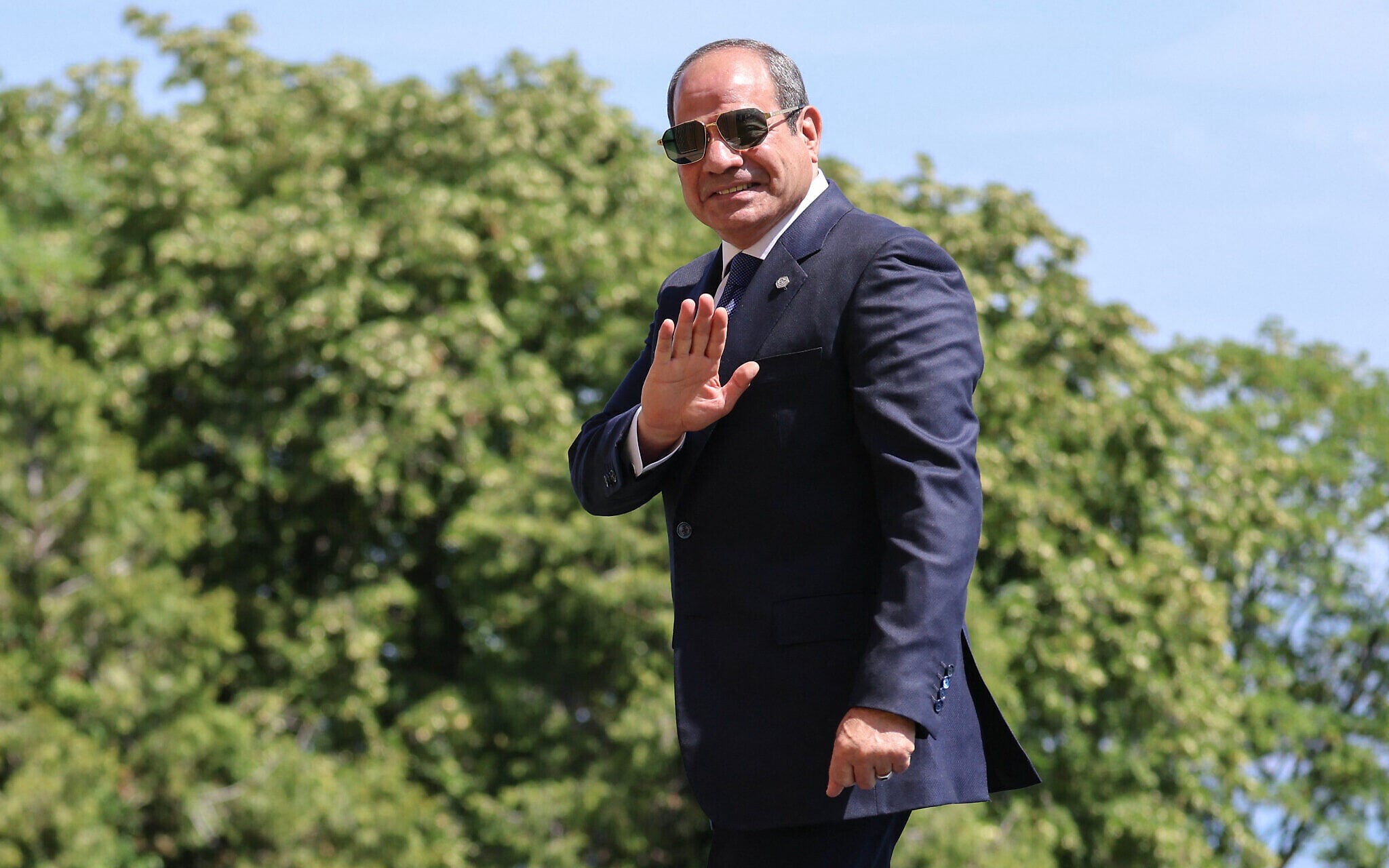
Egyptian President Abdel-Fattah el-Sissi recently called on Israel to scrap its plans to expand control over the Gaza Strip during a G7 summit focused on Middle Eastern stability. As tensions mount, reports indicate that the Israel Defense Forces (IDF) have begun infringing upon territories previously designated as Hamas-controlled. The humanitarian ramifications of this escalation are profound as the region continues to grapple with a precarious ceasefire and deteriorating living conditions for its inhabitants.
Israeli Expansion Plans Cause Concern
Prime Minister Benjamin Netanyahu announced last month his intention to direct the IDF to seize approximately 70% of the Gaza Strip, a move deemed a direct violation of the fragile ceasefire agreements established last October. Although the agreement stipulated that Israel should maintain control over a little more than 50% of Gaza, recent developments suggest that the military now occupies around 60% of the territory and is pushing closer to its stated goal of 70%.
During the G7 summit, President el-Sissi emphasized that only 30% of Gaza remains accessible to the Palestinian population. He asserted that Israel’s continued encroachment must cease immediately, drawing attention from leaders assembled from the G7, the European Union, and the Arabian Peninsula.
Stalled Peace Negotiations
The longstanding conflict has prompted Egypt to play a crucial role as a mediator since the outbreak of violence following the October 7 massacre in Israel, which provoked the ongoing conflict in Gaza. The initial phase of the truce allowed for the release of hostages in exchange for Palestinian prisoners, yet the transition to subsequent phases has stalled. Hamas has steadfastly refused to disarm, complicating further negotiations. The group claims that Israel has failed to honor prior agreements, maintaining that continued military action hampers progress toward a comprehensive resolution.
Sources involved in the negotiations reveal that despite agreeing to 14 out of the proposed 15 points in a recent peace plan put forth by mediators and Trump’s Board of Peace, a sticking point remains concerning Hamas’s disarmament. Israel maintains that the militant group must relinquish its weapons and adhere to governance reforms, while Hamas insists that disarmament should be integrated into broader discussions surrounding Palestinian statehood.
Humanitarian Impact on Gazans
The humanitarian landscape in Gaza continues to worsen as Israeli military actions intensify. At least two Palestinians lost their lives in recent Israeli airstrikes, as residents described an escalating atmosphere of fear. Many fled their homes due to the IDF’s increased military presence in specific regions such as Khan Younis and Gaza City.
Reports indicate an alarming situation where over two million Gazans, largely displaced multiple times, now reside in makeshift shelters or damaged structures. People lament their plight, expressing exhaustion from repeated dislocation and the effects of military actions that have left vast swathes of Gaza in ruins. The struggles of individuals echo throughout the territory, revealing a deep sense of desperation and uncertainty about the future.
Confronted with such dire circumstances, observers argue that the need for immediate and lasting peace has never been more pressing. As el-Sissi highlighted, a viable resolution rooted in a two-state solution could pave the way for stability and humanitarian relief for both Palestinians and Israelis alike. The ongoing conflict serves as a painful reminder of the complexities that accompany efforts to achieve peace—efforts that are crucial in alleviating the suffering of millions caught in the crossfire.