
Ricardo de Burgos, the referee in the recent La Liga clash between Barcelona and Real Betis, has drawn significant attention for his controversial officiating decisions during the match. This encounter took place at the Benito Villamarin stadium, marking the ninth round of the La Liga season.
Match Overview and Key Moments
Barcelona arrived in Seville facing off against Real Betis, a matchup rich with historical rivalry. The intensity peaked when, just before halftime, Giovani Lo Celso of Real Betis unleashed a powerful shot from outside the box that flew past Joan Garcia, seemingly putting the home team ahead. However, de Burgos made his way to the pitchside monitor to review the goal. To the shock of players and fans alike, he disallowed the effort, claiming that a handball had occurred earlier in the play, involving a Real Betis player well before Lo Celso’s shot found the net.
This decision fueled discontent among the players wearing green and white, particularly with Chilean coach Manuel Pellegrini expressing his frustration. The handball occurred far back in midfield, raising questions about the consistency and fairness of the ruling. Many witnesses in the stadium felt the goal should have stood, given the minimal impact of the alleged infringement on the attacking build-up.
Comparisons to World Cup Controversies
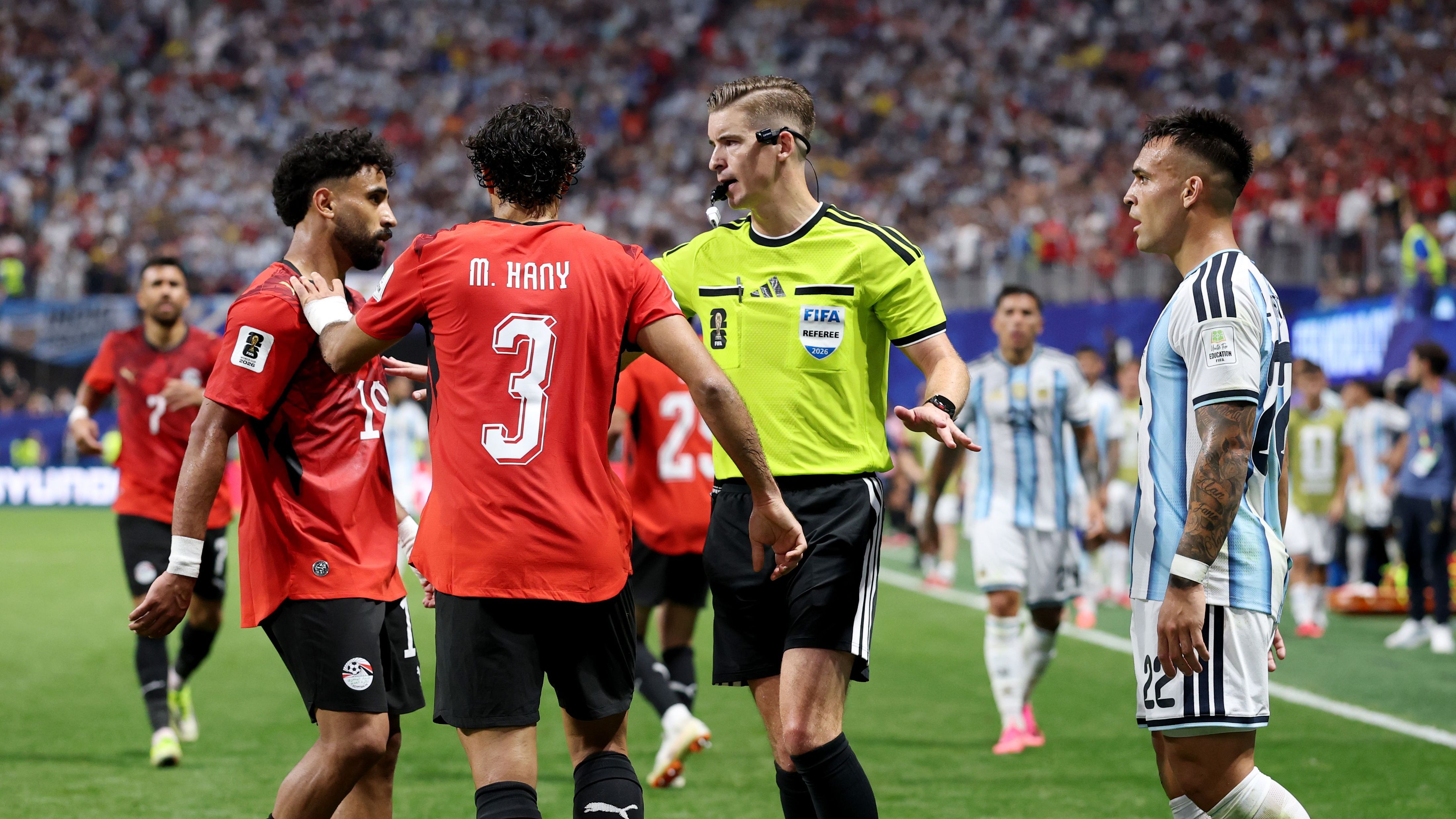
The situation has drawn parallels to a similar incident involving Egypt during the 2026 World Cup. In a closely contested match against Argentina, Egypt’s players and coaching staff felt similarly aggrieved when a goal was ruled out after a review by French referee Francois Letexier. In this instance, a foul earlier in the play led to the disqualification of a goal by Mostafa Zico, an incident that left Egypt’s faction fuming, as they believed the foul was too far removed from the scoring action to warrant intervention.
Just like in the La Liga match, the Egyptian coaching staff argued vehemently against the referee’s decision, questioning the integrity of the review system and its application in moments of high drama. Both situations exemplify the delicate balance referees must maintain in ensuring fairness while managing the expectations and emotions of players and fans alike.
Understanding VAR Intricacies
Recent discussions have emerged around the video assistant referee (VAR) technology used in football, especially following the incidents in both the La Liga and World Cup matches. Platforms like “Archivo VAR” have provided insights into these contentious decisions. Their analyses underscore that as long as the attacking phase has not been interrupted by a change of possession, a foul committed earlier in the sequence can still lead to the annulment of a subsequently scored goal.
This understanding is crucial as it highlights the retrospective nature of VAR reviews and the fact that referees may act indefinitely during an attacking phase if they identify an infringement at the beginning of the play. Thus, while the ambitions of the teams remain high, clarity around the use of technology is vital for maintaining a sense of justice on the pitch. The ongoing evolution of VAR continues to spark debate among fans, players, and analysts alike, especially when emotions run high during critical matches.
In conclusion, these recent events have reignited discussions about the efficacy and application of VAR in critical moments during football matches. The Barcelona versus Real Betis encounter serves as a recent case study in how decisions from the officials can significantly influence outcomes, leaving teams, supporters, and coaches grappling with the unpredictable nature of the game.