
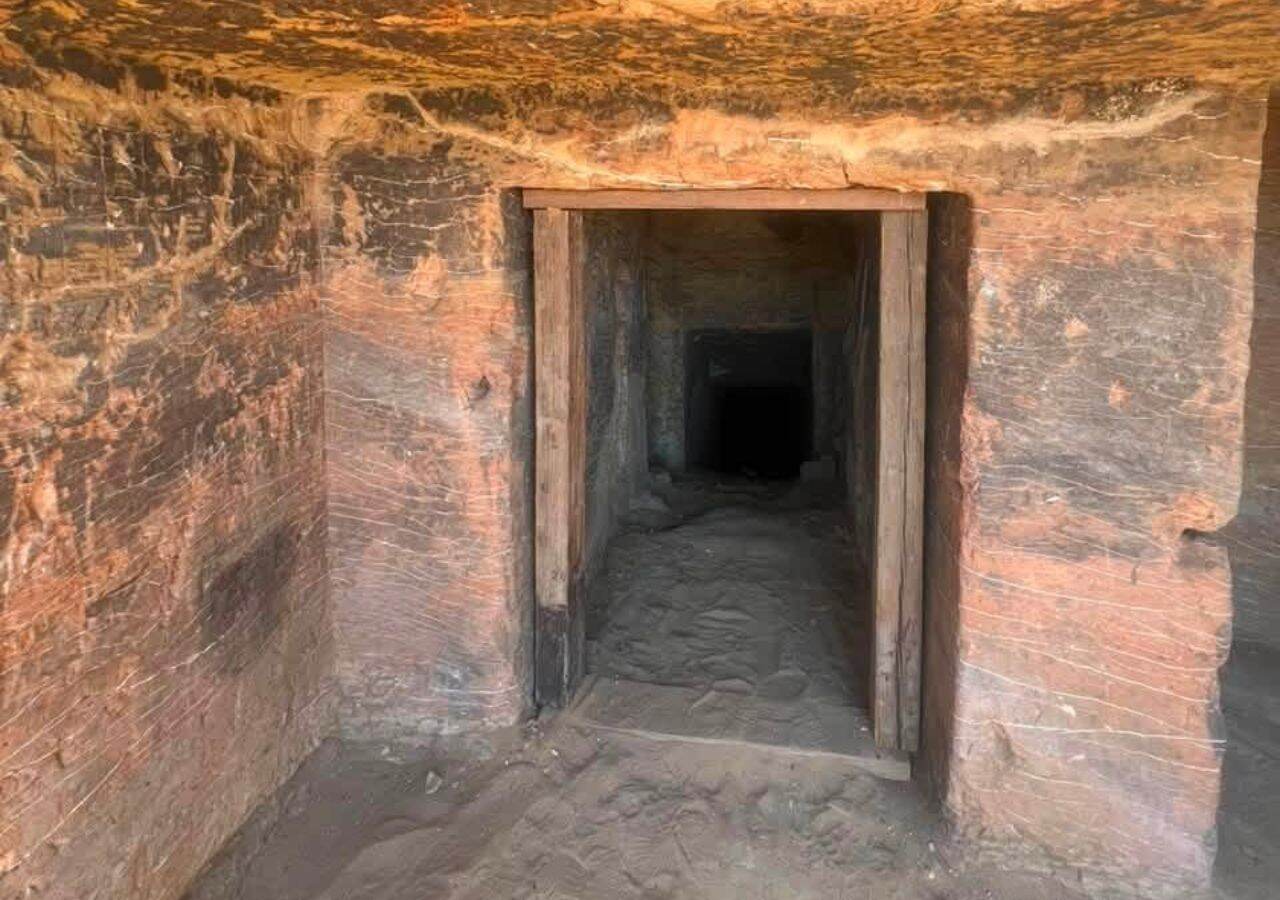
Recently, archaeologists in Egypt made a remarkable discovery: three rock-cut tombs dating back to the New Kingdom period at the Bubasteion necropolis in Saqqara. This significant find emerged from ongoing excavation efforts in the eastern section of the site’s mountain ridge.
Insights from the Tombs
The unearthed tombs feature hieroglyphic inscriptions and various artifacts, which are expected to deepen our understanding of ancient Memphis, one of Egypt’s most vital burial sites. Egypt’s Minister of Tourism and Antiquities, Sherif Fathy, emphasized the importance of this discovery, noting that it highlights the potential of Saqqara to reveal even more historical treasures. He praised the consistent flow of archaeological finds in the area as a testament to its immense historical significance.
Fathy also commended both Egyptian and international archaeological teams, recognizing their contributions to expanding our knowledge of ancient Egyptian civilization. Hisham El-Leithy, Secretary General of Egypt’s Supreme Council of Antiquities, highlighted that the discoveries do more than merely unveil tombs; they bring forth the narratives of those buried there—stories that have been concealed beneath the sands for millennia.
El-Leithy underscored the deeper historical and human significance behind each find, reinforcing the ongoing research into Egyptian society during the New Kingdom era. Such discoveries allow us to re-engage with the past and better comprehend the complexities of ancient life.
Enhancing Egypt’s Archaeological Record
Mohamed Abdel-Badie, the head of the Egyptian Antiquities Sector, noted that these tombs were revealed through a broader study of the Bubasteion necropolis. Excitingly, plans for continued excavation work in unexplored areas are already underway, suggesting that more astounding discoveries may be on the horizon. The rock-cut tombs contribute to the already impressive catalogue of finds at Saqqara, solidifying its status as one of Egypt’s richest archaeological sites.
Amr El-Taibi, General Director of Saqqara Antiquities, provided intriguing details about the individual tombs. The first tomb belonged to Mentuhotep, featuring intricate scenes depicting offering bearers and hunting. Among these scenes, there is a striking image of Mentuhotep seated alongside his mother, Iah-Hotep. The inscriptions reveal several of his titles, including “hereditary prince” and “mayor,” indicating a prominent role within the governance and military structure of his time.
Family and Military Connections in the Second and Third Tombs
The second tomb was linked to Baraq Em Waya, known as Samut, who served as the chief merchant of the House of Ptah. His tomb inscriptions mention his wife, Tuy, and his family, providing context to his social connections.
The third tomb, though severely damaged, belonged to a man named Nehesy, who was the “overseer of the house.” His wife, Neferu Ptah, is also referenced in the inscriptions. Additionally, an intriguing fragment of an inscribed column has been discovered, detailing a military leader’s return from Naharin—a region located north of Syria—thus offering fresh evidence of Egypt’s historical interactions with the Near East.
These discoveries not only add depth to Egypt’s archaeological narrative but also enhance our understanding of the intricate social and political dynamics that defined ancient Egyptian life during the New Kingdom. Through continued excavation and research, the stories of the past are gradually being uncovered, enriching our appreciation of this remarkable civilization.