
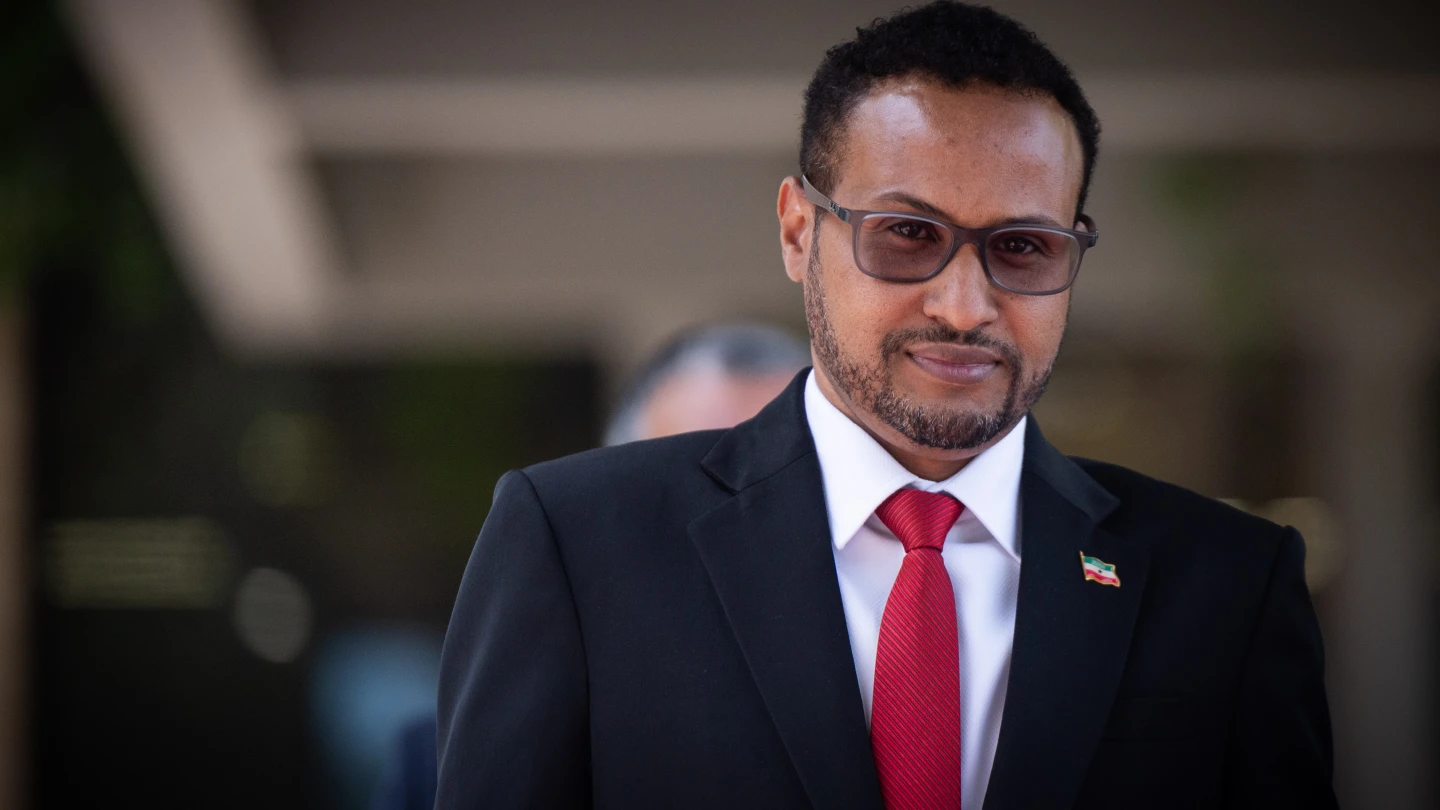
The historic appointment of Somaliland’s first ambassador to Israel marks a pivotal moment in diplomatic relations that could reshape the political landscape in the Horn of Africa. As Somaliland celebrates the 35th anniversary of its independence declaration, this new partnership may disrupt existing alliances, particularly the Egypt-Eritrea relationship aimed at countering Somaliland’s quest for autonomy and Mexico’s growing influence in the region.
A Bold Diplomatic Milestone
Ambassador Mohamed Hagi’s arrival in Israel symbolizes not just a significant diplomatic advancement but also a commitment to deeper bilateral relations. Plans for an embassy in Jerusalem, along with discussions of Israeli representation in Hargeisa, indicate a robust investment in this partnership. Such developments come at a crucial time, as Somaliland continues to assert its independence on the global stage, highlighting its aspirations for recognition while also attracting attention from key players in the region.
The Egypt-Eritrea Alliance: A Counterbalance
The alignment between Egypt and Eritrea is often framed as an initiative for stability in the Red Sea. However, closer inspection reveals that it operates more as a coordinated political effort against common adversaries, including Ethiopia, Somaliland, and Israel’s increasing diplomatic role in the Horn of Africa. Central to this partnership is a commitment to maintaining Somalia’s territorial integrity and resisting external influences that could alter the strategic dynamics of the region.
Eritrea’s President Isaias Afewerki has articulated concerns over foreign interference in the region, especially regarding Israeli interests. He has accused the UAE and Ethiopia of acting on behalf of Israel, suggesting that Somaliland’s bid for independence poses a broader threat to regional stability. The Eritrean interpretation of these developments frames Somaliland’s struggles not as isolated issues but as part of a wider geopolitical struggle over resources and territorial control.
Military Dynamics and Regional Cooperation
Amid these tensions, Eritrea has signaled its readiness to engage in regional collaborations to uphold Somalia’s unity. Afewerki has publicly suggested that Eritrea could provide military support in coordination with its allies, a strategy reinforced during a trilateral summit in Cairo, attended by leaders from Egypt, Eritrea, and Somalia. This meeting highlighted a collective goal: to maintain Somalia as a unified entity at a time when Somaliland is increasingly focusing on international engagement.
The summit also exposed an emerging blend of military and political agendas designed to curb Somaliland’s independence initiatives. Continuous military training and security cooperation between Egypt and Somalia illustrate Cairo’s long-term strategy to consolidate its influence, with implications for Somaliland’s ambitions. This series of maneuvers complicates the dynamics of international recognition and complicates Somaliland’s efforts to solidify its status.
The Broader Geopolitical Context
When viewed through the lens of broader geopolitical alignments, Somaliland’s pursuit for recognition is not merely a domestic concern but also a significant factor in the evolving diplomatic landscape. As Israel deepens its ties with Somaliland, this could potentially inspire other nations, such as the UAE and the United States, to likewise acknowledge Somaliland’s independence. In this context, the Egypt-Eritrea partnership serves not just as a counterweight to Somaliland’s aspirations, but as a response to changes in the Red Sea dynamics.
In conclusion, the relationship between Somaliland and Israel represents a significant pivot in a complex geopolitical arena marked by shifting alliances. This budding partnership signifies more than just diplomatic recognition; it may herald a transformation in how regional states view their sovereignty, influence, and the role of external powers. As Ambassador Hagi embarks on this historic mission, the potential for further recognition and collaboration hinges on how well Somaliland navigates these intricate relationships.