
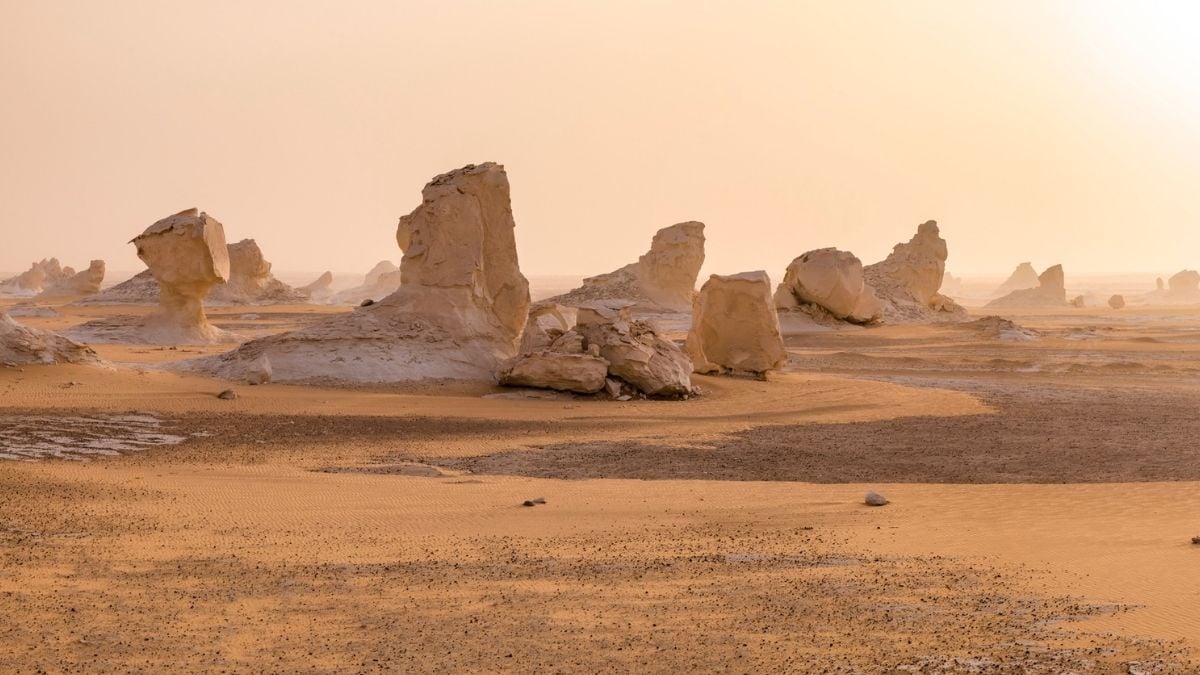
The ancient deserts of Egypt conceal a remarkable history beneath their arid sands. Once, much of this region was submerged under a vast sea, teeming with life and nutrients that nurtured a diverse marine ecosystem. This long-gone sea, believed to have existed during the Cretaceous period, holds the fascinating clues to a vibrant underwater world that flourished along the northern coast of Africa.
Uncovering Ancient Marine Life
Recent paleontological discoveries on the Abu-Tartur Plateau have unearthed evidence of this once-thriving environment. Fossilized shark teeth, numbering at least 14, represent five distinct species, showcasing the rich biodiversity that once inhabited these waters. Led by paleontologist Tarek Yassin from Cairo University, the research team published their significant findings in *Cretaceous Research*, revealing a nutrient-rich marine ecosystem along what was an active phosphogenic shelf margin.
The abundance of phosphorite deposits in the Duwi Formation indicates high marine productivity, where phosphorus was extensively cycled and concentrated. This suggests that the waters of this ancient sea were teeming with life, contributing to a robust food chain. The presence of multiple shark species points to a well-established ecological web that could support various large predators, relying on smaller fish and invertebrates for sustenance.
The Cretaceous Climate and Ecosystems
During the Cretaceous period, from approximately 145 to 66 million years ago, Earth experienced a warm greenhouse climate devoid of polar ice. This climatic condition resulted in elevated sea levels, transforming vast land areas, including northern Africa, into underwater landscapes. Phosphate deposits provide insight into this ancient marine ecosystem, reflecting its complexity and diversity.
The recent findings at Abu-Tartur suggest that these sharks did not merely coexist; they thrived in different ecological niches within the same environment. The morphology of the teeth—from slender, needle-like forms to broader, serrated types—indicates that these species had specialized adaptations, likely targeting various prey and inhabiting distinct marine zones.
Exploring Diverse Ecological Niches
Identifying these fossilized teeth has allowed researchers to classify them into five extinct species: *Cretalamna cf. maroccana*, *Scapanorhynchus cf. raphiodon*, *Serratolamna cf. serrata*, *Squalicorax bassanii*, and *Squalicorax pristodontus*. Notably, two of these species are completely new records for Egypt. The *Scapanorhynchus cf. raphiodon*, characterized by its needle-like teeth, might even represent the first known occurrence of this species in Africa, indicating a diverse and unique marine faunal region during that era.
While the teeth reveal a wealth of information, they also tell a story of ecological segregation. Sharks like Squalicorax may have thrived in nearshore settings, while Scapanorhynchus likely inhabited deeper waters. Such findings underscore the potential for a rich and complex marine ecosystem that continued to be diverse even when sediment accumulation was minimal.
Implications for Future Research
The fossil record at Abu-Tartur contributes to a growing understanding of similar phosphorite deposits across northern Africa, which have shown diverse shark species. These deposits are essential for reconstructing the past marine landscapes of the region. Though today, remnants of this environment have vanished, with the Tethys Sea long gone, the fossilized teeth serve as precious glimpses into a vibrant world now buried beneath the sand.
The researchers speculate that the richness of these ancient waters could be attributed to upwelling, where nutrient-laden waters rose to the surface, fostering primary productivity. This ecological structure would have supported not only the sharks but a multitude of other marine organisms, painting a picture of a dynamic food web capable of sustaining various predators.
In conclusion, the fossil remains found in Egypt’s deserts illustrate an intricate and once-thriving marine ecosystem. These discoveries shed light on the ecological dynamics of the past, inviting further exploration into a world that existed millions of years ago, beckoning researchers to uncover more of its mysteries.