
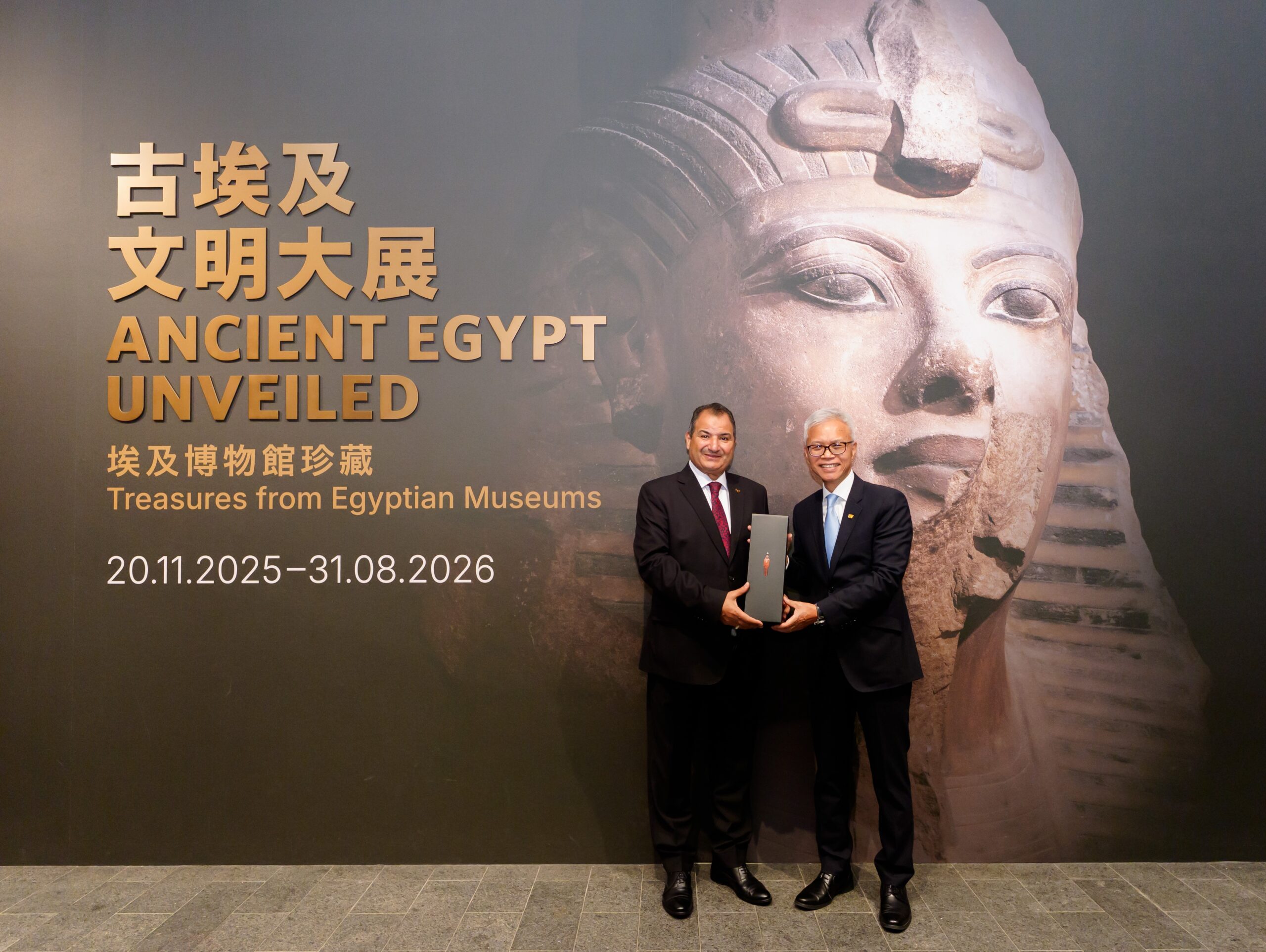
The exhibition titled “Ancient Egypt Reveals Its Secrets: Treasures from Egyptian Museums” recently wrapped up at the Hong Kong Palace Museum after an impressive nine-month run, from November 18, 2025, to August 31, 2026. Attracting over 600,000 attendees, this exhibit illustrates the enduring fascination with ancient Egyptian civilization among Hong Kong audiences.
Highlighting the Exhibition’s Success
During a press event to celebrate the exhibition’s conclusion, Hisham El-Leithy, Secretary-General of the Supreme Council of Antiquities, represented Sherif Fathy, Egypt’s Minister of Tourism and Antiquities. This gathering marked the initiation of plans to return the showcased artifacts to Egypt. Ahmed Hamida, head of the Museums Sector at the Supreme Council of Antiquities, also attended the event to share insights about the exhibition’s achievements.
El-Leithy expressed gratitude to all contributors involved in the exhibition, acknowledging its success and the significant public interest it generated. Throughout its duration, the exhibition took visitors on a storytelling journey that showcased 250 distinct artifacts from various temples and museums along the Nile, presenting a rich tapestry of ancient Egyptian culture and artistry.
Outstanding Artifacts on Display
The exhibition displayed a diverse range of artifacts, including wooden objects and stone statues excavated from the Saqqara site. One of the standout pieces was a remarkable 2.7-tonne quartzite statue of King Tutankhamun, sourced from the Egyptian Museum in Tahrir. Other notable items included a granite statue of King Merneptah from Luxor, a gilded mummy mask from the Hurghada Museum, and various everyday objects that offered a glimpse into the daily life and religious practices of ancient Egyptians.
El-Leithy pointed out the incredible diversity of the artifacts—including ancient papyri, royal gold artworks, and bakers’ models—that not only serve as tangible remains of a remarkable history but also embody the human and cultural narratives of success that Egyptian civilization has to offer. The enthusiasm of visitors, he mentioned, reflects a deeper appreciation of art and culture.
A Platform for Cultural Exchange
The significant visitor turnout highlighted the vital role that culture and heritage play in fostering communication and understanding among different societies. El-Leithy emphasized that international exhibitions like this serve as essential platforms for cultural exchange, bringing Egyptian civilization to a global audience and enhancing Egypt’s appeal as a cultural tourism destination.
He also expressed his gratitude to various teams, including curators, archaeologists, and logistics professionals, whose hard work and cooperation facilitated the successful presentation of the exhibition. The collaboration between Egyptian and Hong Kong teams exemplified the collective effort required to showcase the rich history of ancient Egypt effectively.
Artifact Selection and Future Prospects
The exhibition featured an impressive collection of artifacts spanning various Egyptian museums, such as the Egyptian Museum in Tahrir, Matrouh National Museum, and Luxor Museum of Ancient Egyptian Art. A selection of these artifacts had previously been displayed as part of “On Top of the Pyramid: The Civilization of Ancient Egypt” at the Shanghai Museum in China, further cementing their international significance.
As the artifacts prepare for their return to Egypt, the success of this exhibition not only highlights the importance of preserving cultural heritage but also illustrates the ongoing interest in ancient civilizations worldwide. The exhibition served not just as a display of history, but also as a celebration of humanity’s collective achievements across time and geography.