
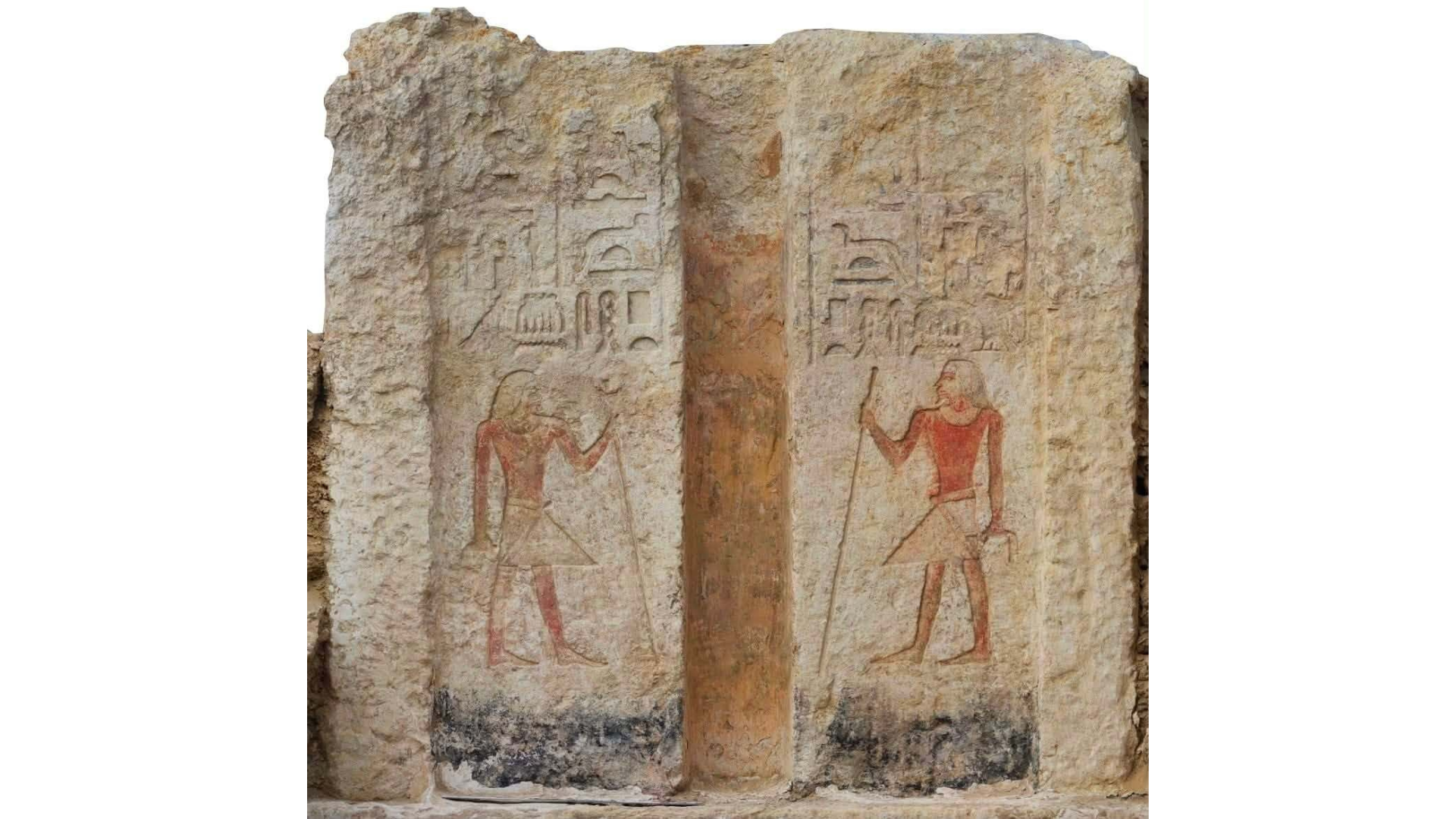
Archaeologists in Egypt have made a significant discovery at Saqqara, unearthing an ancient tomb belonging to an official of high rank. This burial site belonged to Sekhentio-Ptah, who was known as the “keeper of the secrets of royal decrees.” This title has piqued the interest of experts and serves as a testament to the bureaucratic sophistication of ancient Egypt during the Old Kingdom, which spans from approximately 2649 to 2150 B.C.
The Role of Sekhentio-Ptah in Ancient Egypt
The intriguing title of Sekhentio-Ptah might suggest a role steeped in mystery; however, experts indicate it likely denotes a bureaucratic position. According to Ann Macy Roth, a clinical professor of Egyptology at New York University, the title likely implies that he was responsible for overseeing royal documents and managing scribes. Therefore, it can be inferred that he had access to confidential information critical for the smooth operation of the royal administration.
Archaeological Findings in the Tomb
Inside the tomb, a variety of artifacts were discovered, including an offering table, a purification basin, and significant architectural features like two false doors. These false doors served not just a decorative purpose but were believed to symbolize a portal allowing the deceased’s spirit to exit and enter the tomb. The architectural style of these false doors helps date the tomb to the late fifth or early sixth dynasty, approximately 4,350 years ago, confirming its historical importance.
Furthermore, more than 100 shabtis, or ushabtis, were found. These figurines were thought to serve the deceased in the afterlife, a common belief in ancient Egyptian culture. The excavation team also came across a wooden statue of a falcon, possibly related to Horus, a prominent deity in Egyptian mythology, alongside remnants of cartonnage—plastered materials used for mummification. However, the mummy of Sekhentio-Ptah was not identified, raising questions about the tomb’s history.
Insights into Burial Practices
Experts suggest that the tomb may have been reused for subsequent burials, a practice not uncommon in ancient Egypt. Roth notes that some of the shabtis discovered likely belong to later interments, indicating that multiple generations may have been laid to rest within the same structure. Such practices reveal a layered and complex understanding of death and the afterlife within this ancient society.
The excavation took place in the Bubasteion area of Saqqara, a region historically significant for its association with feline burials during the later periods of Egyptian history, particularly the late period (circa 664 to 332 B.C.). While the site is linked to the goddess Bastet, who symbolizes fertility and protection, no specific cat burials were reported in this particular tomb, highlighting the diverse uses of such burial sites over time.
In conclusion, the discovery of Sekhentio-Ptah’s tomb not only enriches our understanding of individual roles within ancient Egyptian society but also opens up discussions about the burial practices and beliefs that persisted over centuries. This excavation highlights the rich historical tapestry of Egypt and continues to yield insights into its remarkable past.