
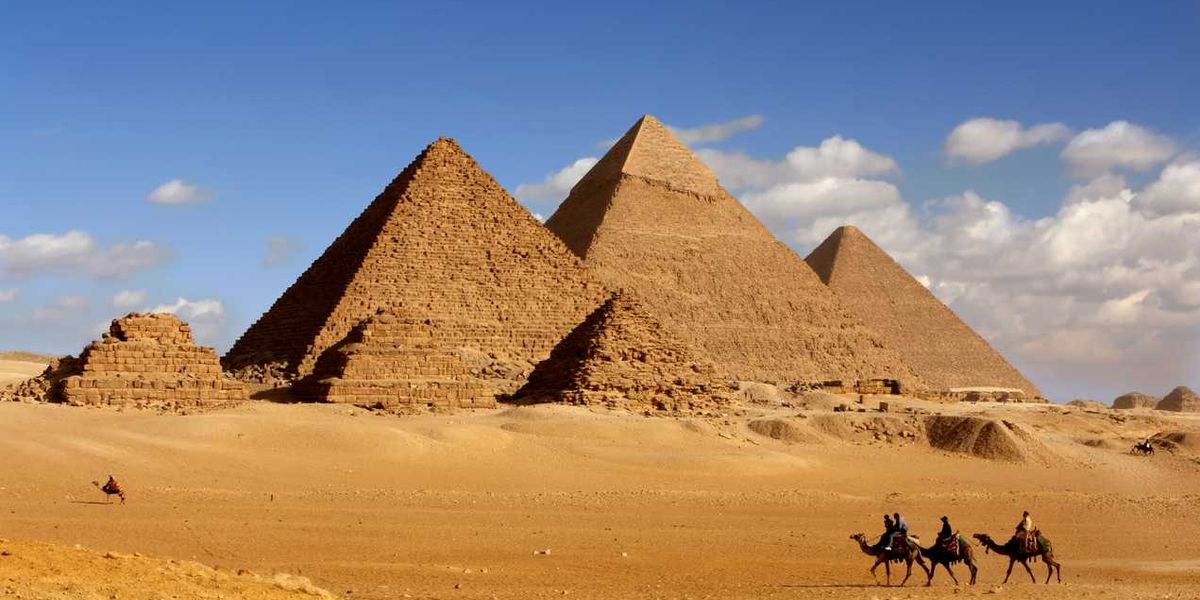
The quest to uncover the secrets of how Egypt’s Great Pyramid was constructed is one of history’s great mysteries. For many years, scholars have pondered how ancient laborers managed to lift and position massive stone blocks, some weighing as much as 15 tons, without any of today’s advanced machinery. With no written records to guide us, the question remains: How did they do it?
The Spiral Ramp Theory
Recent studies suggest that a hidden spiral ramp within the Pyramid of Khufu might provide the answer. According to these findings, an ‘edge ramp’ was used by workers, creating a sloped pathway along the pyramid’s outer edges for each layer added. As each new layer was constructed, this method would cover the previously used ramp, facilitating the continuous transport of stones upward, explains computer scientist Vicente Luis Rosell Roig.
Utilizing this technique likely eliminated the need for massive external ramps, allowing stones to be moved incrementally at each level. The sheer scale of the pyramid is breathtaking; standing at 481 feet tall, with each side of the base stretching 755 feet, it is constructed from an estimated 2.3 million blocks of stone. This revolutionary method could change our understanding of construction techniques used in ancient times.
Estimating Construction Time
The question remains: how long did it take to build this monumental structure? Simulations have estimated that blocks could have been placed at intervals of around four to six minutes. At that impressive rate, the completion timeline for the Great Pyramid would be approximately 14 to 21 years. However, various additional factors—such as quarrying, transporting the materials, and necessary breaks for workers—need to be considered. Including these variables pushes the estimated timeframe to between 20 to 27 years, which aligns with what historians have predicted.
Furthermore, this hidden ramp could also clarify the mystery surrounding the vacant spaces that have been found within the pyramid. Some of these gaps might be remnants of the hidden ramp itself, which could still be intact.
Limits of Ancient Technology
The ingenuity of the builders is remarkable, especially given the constraints of Old Kingdom technology, which lacked iron tools and heavy wheeled transport. According to Rosell Roig, the available materials included copper chisels, water-lubricated sleds, ropes, levers, earthworks, and Nile barges. This strategic use of limited resources speaks volumes about the builders’ skills and adaptability.
Despite these groundbreaking insights, many questions still linger regarding how the ancient builders effectively managed logistics to create such large and precise structures. Understanding these methods may provide further insights into the incredible achievements of ancient civilizations.
The investigation into the construction of the Great Pyramid continues, and while some pieces of the puzzle may have been uncovered, much remains to be discovered. The hidden spiral ramp theory offers a promising lead, but the full scope of ancient ingenuity in the absence of modern technology is still a thrilling mystery waiting to be unraveled.