
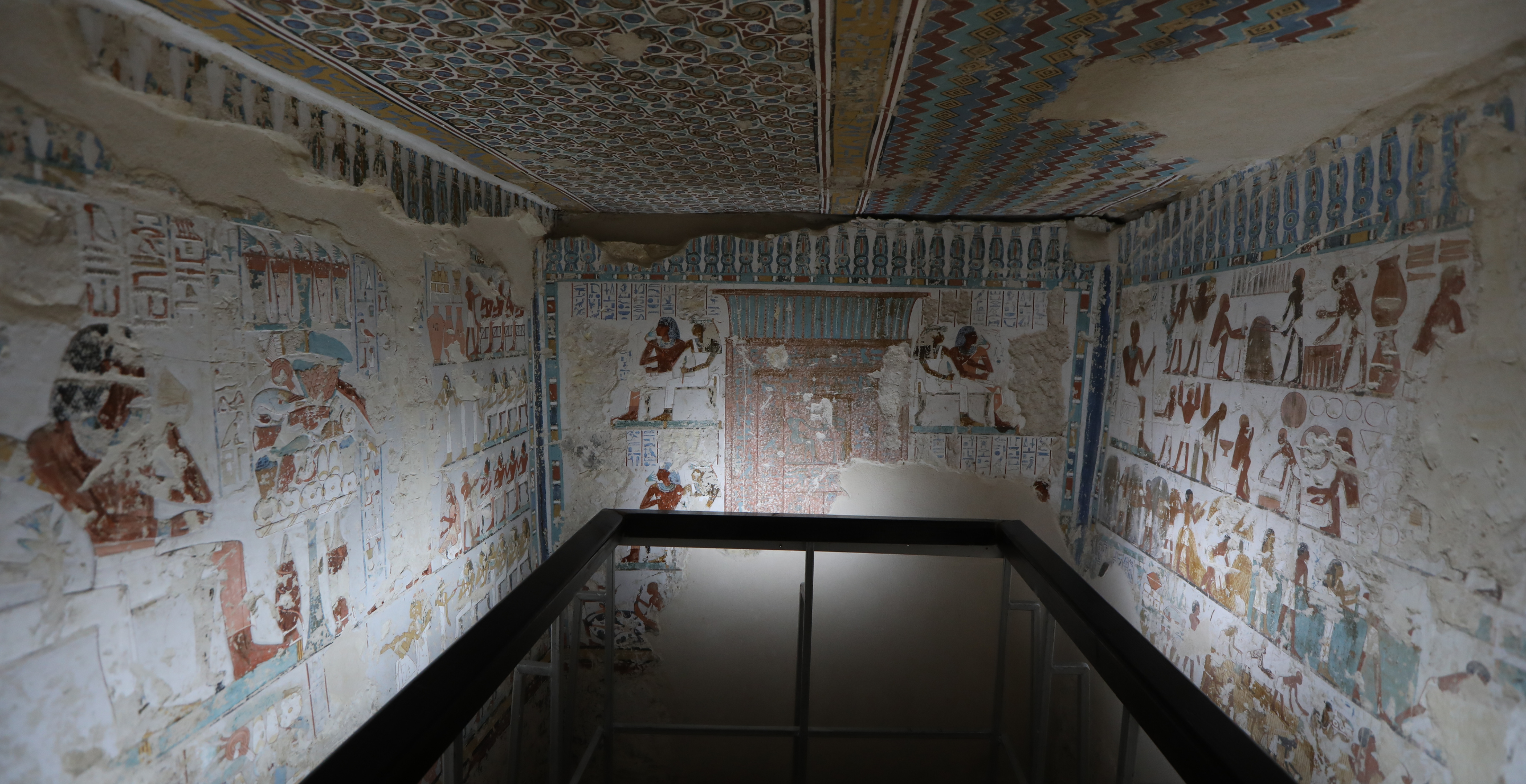
The world of archaeology never ceases to amaze, revealing treasures from our past even after thousands of years. Recently, one such significant discovery has been made in Egypt: a tomb estimated to be over 4,000 years old. This remarkable find is thought to have belonged to a prominent figure from the ancient world, shedding light on the intricacies of life during the Old Kingdom period.
The Tomb’s Remarkable Features
The tomb, located in the Bubasteion Necropolis in Saqqara, is noted for its unique features, including what the ancient Egyptians believed to be a gateway to the afterlife. This site has long been recognized as one of Egypt’s archaeological treasures, making this discovery especially significant for historians and archaeologists alike.
The inscriptions inside the tomb indicate that it belonged to a senior official named Sakhnetio-Btah. The hieroglyphics suggest that he held a high-ranking position, closely associated with royal duties. This intriguing title also places him squarely within the elite circles of the pharaoh’s inner community, suggesting that he played a crucial role in the governance of ancient Egypt.
The Role of Sakhnetio-Btah
Within the tomb’s walls, Sakhnetio-Btah is referred to as the “keeper of the king’s secrets.” This title hints at his vital responsibilities, potentially involving handling sensitive royal documents and decrees for an Old Kingdom pharaoh. The significance of such roles in the administrative framework of ancient Egypt cannot be overstated, as they reveal how governance and confidentiality intertwined in a civilization renowned for its complexity and sophistication.
According to experts, this title signifies that Sakhnetio-Btah was entrusted with significant power and privilege—an indication of his high status during a fascinating era in Egyptian history. This interpretation of his role adds another layer to our understanding of the social and political structures that defined ancient Egyptian civilization.
Official Statements and Implications
In light of this remarkable discovery, Egypt’s Ministry of Tourism and Antiquities quickly released an official statement to highlight the importance of the find. The statement elaborated on how the hieroglyphic inscriptions disclosed both the name and multiple titles of the tomb’s owner. This wealth of information not only elevates the status of Sakhnetio-Btah but also enriches our comprehension of the social hierarchies that existed in ancient Egypt.
Additionally, the tomb contained various ritual objects that hint at the customs of the time. Among these were an offering table, an offering slab, and a purification basin, showcasing the burial practices of that era. Such artifacts not only provide clues about religious beliefs but also highlight the importance of the afterlife in ancient Egyptian culture.
The Ongoing Journey of Discovery
This find underscores the fact that there is still much we don’t know about our collective past. Each new excavation provides insights that help us piece together the vast puzzle of human history. Egypt, with its rich tapestry of archaeological significance, stands as a focal point for such discoveries, yet similar findings occur global-wide, continually expanding our knowledge of different civilizations.
As we reflect on this extraordinary find, the anticipation of future discoveries remains ever-present. It reminds us that history isn’t just confined to textbooks; it’s actively being unveiled, bit by bit, allowing us to appreciate the richness of cultures that have shaped our world. The excitement surrounding what could come next in the realm of archaeology is palpable, promising even more incredible revelations in the time ahead.