
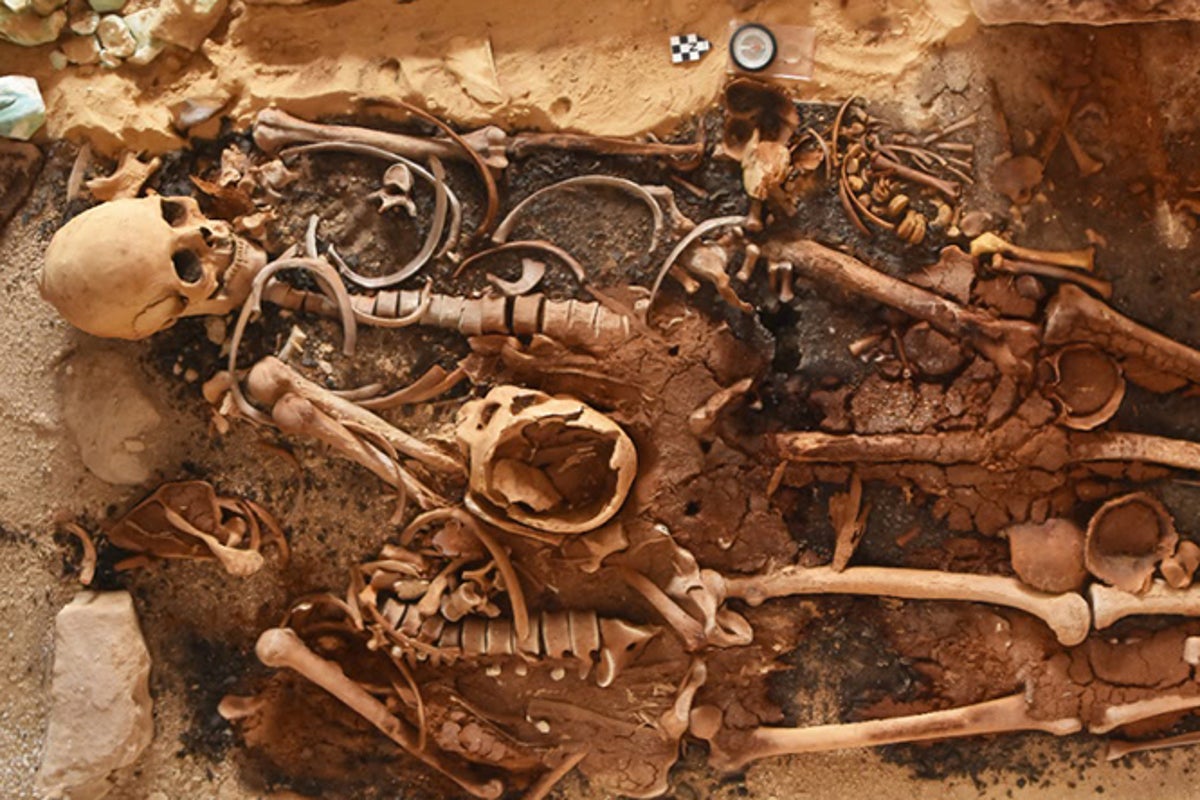
Archaeologists recently made a remarkable discovery along the Mediterranean coast of Egypt, uncovering 18 ancient cemeteries filled with numerous coffins and artifacts, including the intriguing “golden tongues.” This find contributes significantly to our understanding of the region’s historical cultural diversity, particularly during a time when many civilizations interacted.
Significant Archaeological Discoveries
So far, nearly 45 cemeteries have been documented in this coastal region, marking it as one of the most notable areas in ancient Egypt. not only does this discovery reaffirm the region’s historical significance, but it also sheds light on the diverse practices and beliefs of its ancient inhabitants. Among the newly located tombs, 11 were intricately carved into rock formations, potentially reaching depths of around eight meters. The Egyptian Ministry of Tourism and Antiquities reported that the remaining seven were surface structures crafted from limestone.
Most strikingly, researchers found 24 golden pieces placed within the mouths of some deceased individuals, known as “golden tongues.” These artifacts are believed to have held special meaning, serving as conduits for communication with the divine in the afterlife. The preservation state of these tombs is exceptional, with stone slabs sealing them since their construction, providing remarkable insights into ancient burial practices.
Historical Context of the Region
Located approximately 100 kilometers west of Alexandria, these cemeteries are thought to be part of the ancient city of Leukaspis, which Greek geographer Strabo mentioned. Leukaspis thrived from the Hellenistic period until the Byzantine era and reached its peak urban and economic growth during the first three centuries A.D. The assortment of surface burials found nearby further illustrates the city’s social diversity, suggesting that multiple communities coexisted, each with varied customs and beliefs.
Researchers have also unearthed a water well that was later repurposed for burial functions, highlighting the ongoing evolution of funeral practices through the ages. These findings indicate that ancient Egyptian burial traditions and architectural aesthetics carried on into the later Ptolemaic and Roman periods, reflecting a rich tapestry of cultural continuity.
Artifacts and Their Significance
Among the key artifacts unearthed are intact and partly preserved pottery, dishes, camphors, limestone altars, and various architectural elements related to the tombs. Notably, one limestone altar exhibits a “distinctive architecture” and appears to have housed an incomplete marble statue that likely represents the goddess Aphrodite. Additionally, this altar might replicate the “imaginary door” referenced in ancient Egyptian funerary beliefs.
One of the more astonishing finds was a 2.5-meter-long granite coffin, which still had its original cover intact and contained the remains of a plaster sphinx. The skeletal remains discovered in this tomb are currently under study, adding to the wealth of information gleaned from excavation.
Ultimately, the recovered golden tongue artifacts speak volumes about the customs surrounding death in ancient Egypt. Researchers assert that these gold pieces were not merely decorative but served an important symbolic role, providing protection and ensuring safe passage for the departed into the afterlife. This discovery reinforces the idea that the ancient Egyptians placed significant emphasis on the afterlife, shaping their rituals, art, and architecture in profound ways.