
In the highly visual realm of historical cinema, such as in the 2001 film The Mummy Returns, we witness dynamic depictions of women engaged in combat. Although the scene may lean toward dramatization rather than strict factuality, it prompts an intriguing inquiry: Were women in ancient Egypt indeed trained in combat as the legendary Viking shieldmaidens were?
Women of the Royal Court: A New Insight
Recent studies are shedding light on this captivating prospect. A groundbreaking examination of royal skeletons published in Frontiers in Environmental Archaeology reveals that the daughters and sisters of Pharaoh Amenemhat II—who reigned around 1900 BC—were buried alongside weapons such as bows, maces, and daggers. This research endeavor, spearheaded by Zaineb Hashesh at Egypt’s University of Beni-Suef, raises questions about the significance of these items and suggests they were not merely ornamental.
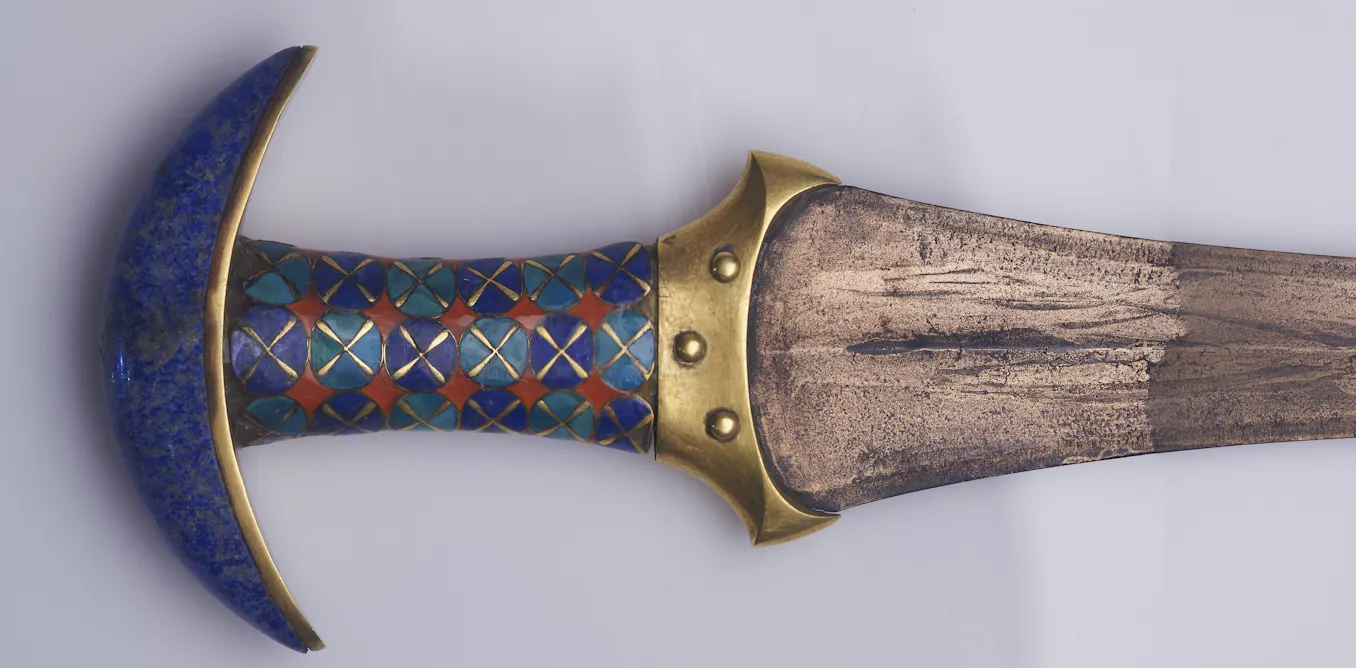
Among the notable artifacts is a stunning dagger interred with Princess Ita, created from lapis lazuli, turquoise, and gold—a testament to the exceptional craftsmanship of the Middle Kingdom era. Princess Ita was part of a group of five royal women placed in lavishly furnished tombs at Dahshur, a royal necropolis located south of modern-day Cairo. This site is also home to the White Pyramid, where Amenemhat II was buried, further establishing its royal significance.
The Skeletons Tell Their Tales
Osteobiography, the study of individuals through skeletal remains, offers valuable insights into their lives. This methodology combines burial context, artifacts, historical records, and skeletal analysis, providing a robust framework for reconstructing ancient narratives. While many archaeological studies focus on large cohorts, the unique figures within these royal tombs—who possessed names, familial ties, and specific burial contexts—are rarer yet offer profound insights.
The case of the Viking cemetery at Birka, Sweden, illustrates this point well. A grave that was long believed to belong to a male warrior turned out to belong to a woman, as confirmed by DNA analysis. Similarly, the findings from the Twelfth Dynasty tombs in Dahshur present a surprising story of female empowerment.
Evidence of Active Lives
Despite the passage of time that has left much of the soft tissue disintegrated, several skeletal remains have survived, allowing for osteological analyses that reveal compelling evidence of physical activity among the women. The preserved bones of the five princesses—along with King Hor—display muscle attachment sites consistent with the repetitive motions associated with archery.
For instance, Princess Noub-Hotep’s skeletal remains indicate pronounced adaptations in her hand bone, suggesting regular bow usage. These markers signify repetitive and habitual activities involving weapons, pointing towards the possibility that the women were engaged in archery or other forms of combat, challenging traditional views of elite women in ancient Egypt as mere passive figures.
Challenges of Elite Life
The skeletal remains provide more than just evidence of weapon usage; they depict a life filled with physical challenges. For instance, Princess Itaweret bore healed trauma consistent with injuries from falls or blows, while King Hor’s remains showed indications of physical stress. Far from the cushioned existence typically assigned to royalty, these findings suggest a life marked by struggle and perhaps a necessity for self-defense.
Further examination unveils signs of nutritional stress and infectious diseases, underscoring the complexities and hardships even those of elite status faced. Such nuances contribute significantly to our understanding of the lived experiences of these royal women, allowing them to emerge as multifaceted individuals rather than mere historical footnotes.
Future Investigations of Dahshur’s Royals
This study is merely the beginning of unraveling the complex lives of the Dahshur princesses. Future endeavors may include DNA retrieval from the remains to unveil family lineages and further microscopic investigations to assess how physical activity patterns evolved over a lifetime. Such research could also compare elite burials with those of working-class Egyptians, revealing broader societal norms and experiences.
As these investigations unfold, we may very well reframe the narrative of these royal women, providing them their rightful place in the annals of history—a recognition of their roles as active participants rather than silent figures within the vast tapestry of ancient Egypt.