
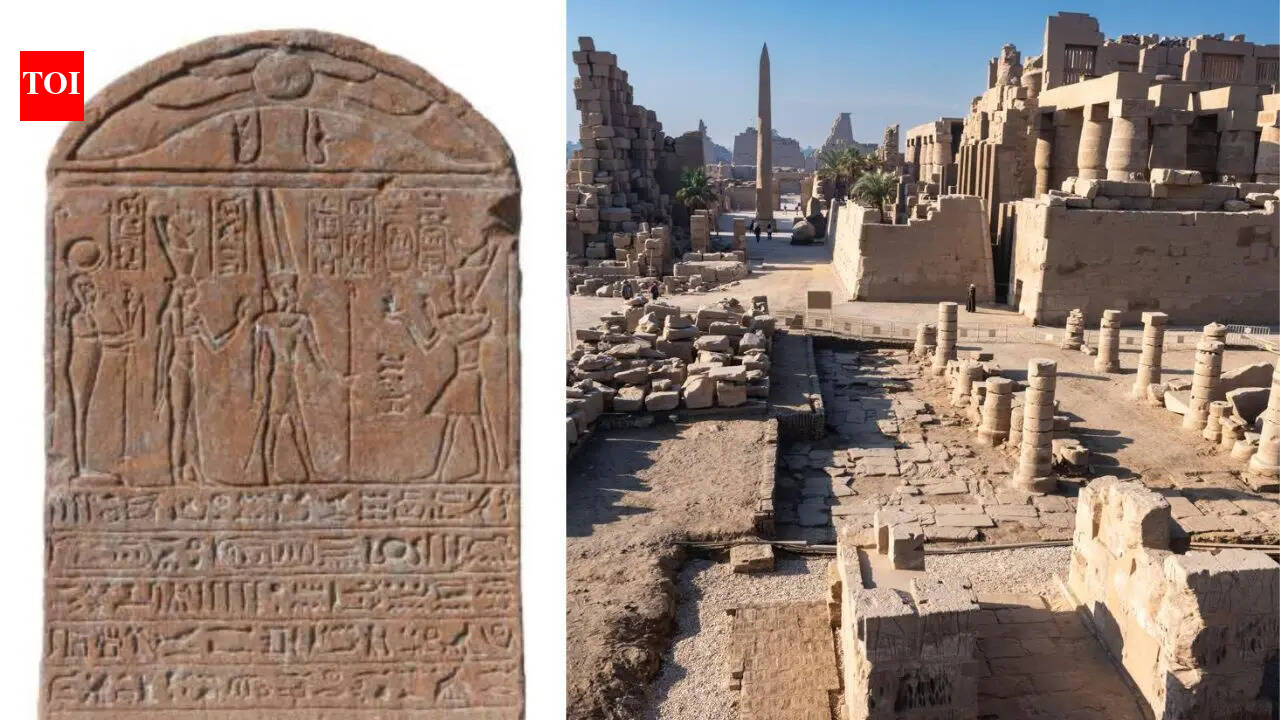
Ancient artifacts often reveal untold stories about the past, and a recent excavation at Egypt’s Karnak Temple complex underscores this notion. Over several years, a dedicated archaeological team has shifted focus from merely restoring to uncovering deeper narratives, with significant findings challenging our understanding of cultural transitions in ancient Egypt. This undertaking has uncovered not only remnants from the reign of Ramses III but hints of a Roman presence that reshaped sacred spaces over time.
Unveiling the Northern Gate of Ramses III
The northern gate linked to Ramses III has faced a tumultuous existence, battling decay throughout its history. Originally constructed during the 20th Dynasty, records reveal it was in a state of disrepair by the 19th century, burdened by vegetation and shifting stone blocks that obscured its initial grandeur. Thanks to the meticulous efforts of an Egyptian-French archaeological team, significant strides have been made in reconstructing the gate from 2022 to 2025. Through a methodical process of dismantling and preserving each stone, the team aims to stabilize and comprehend how the framework originally stood, avoiding myths of an idealized past.
What is particularly fascinating is the discovery of numerous reused stone blocks embedded within this later construction, some of which bear ornamental designs from the era of Amenhotep III. This suggests that the gate itself might have been built using material from even older structures, transforming the site into a compelling architectural tapestry that reflects various dynasties.
Insights from Excavations Around the Gate
As the excavation progressed around the gate, archaeologists uncovered construction phases indicating a rich timeline extending beyond the New Kingdom into both Greek and Roman eras. They found a previously recorded paved road that connects the Ramses III gate to a significant courtyard deeper within the Karnak Temple, indicating a more organized movement throughout the temple complex than was previously understood. The presence of mudbrick installations from later periods suggests multiple layers of occupation, transforming the site into a continuously evolving religious landscape.
This dynamic indicates not only the ancient site’s sacred role but also its adaptability to political changes. From the New Kingdom through the Roman and Byzantine eras, the changing religious landscape reveals how different cultures repurposed the space to assert their influence.
Roman Influence on Egyptian Religious Practices
One of the most striking artifacts unearthed during this excavation is a sandstone stela linked to Emperor Tiberius, measuring approximately 60 by 40 centimeters. Discovered in proximity to the gate, this stone lay within archaeological layers corresponding to later settlements. What makes this find significant is its portrayal of Tiberius in pharaonic style, standing before the Theban triad of deities: Amun-Ra, Mut, and Khonsu. This imagery reflects a fascinating integration of Roman authority within local Egyptian religious traditions.
Instead of being depicted solely as a foreign ruler, Tiberius is shown engaging in customary religious practices, emphasizing how Roman authority was willingly absorbed into existing local belief systems rather than simply imposing itself. Additionally, an inscription on the stela hints at restorative work on temple structures, suggesting it may have served both commemorative and decorative purposes.
The presence of this stela within the Karnak complex illustrates how empires adapt to local cultures, aligning imperial power with established religious practices. This hybrid visual language reinforces the symbiotic relationship between different cultures in ancient Egypt, revealing how authority was legitimized through religious rituals instead of outright conquest.