
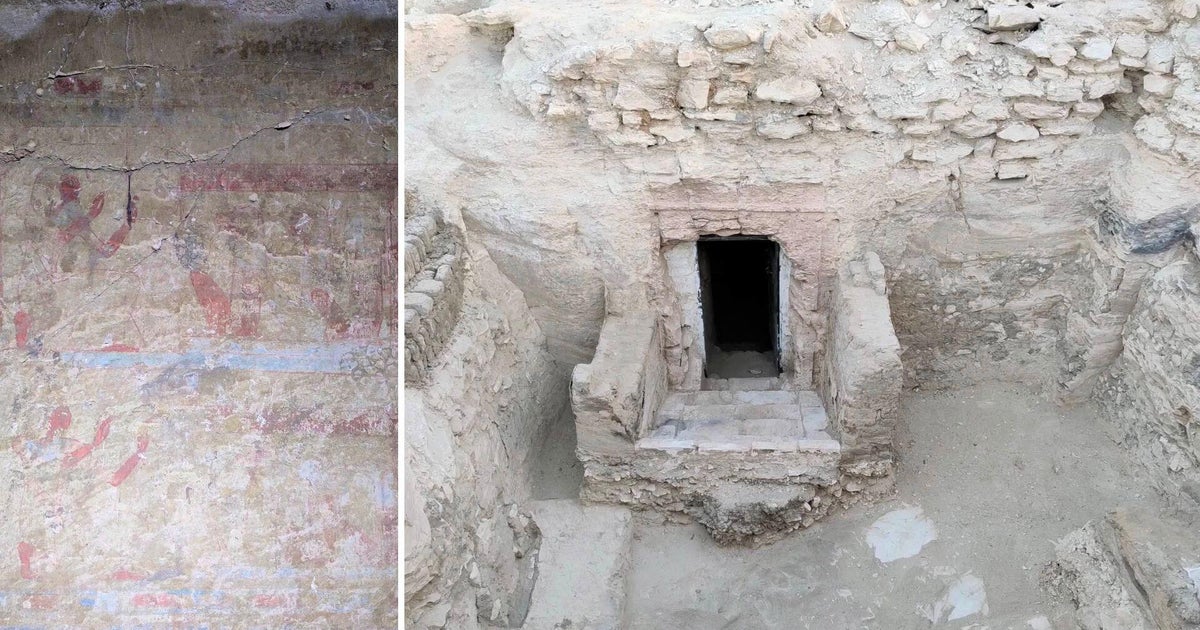
Archaeologists have made a remarkable discovery near Luxor, Egypt, unearthing a tomb that dates back 3,000 years. This significant find is part of Egypt’s ongoing efforts to promote tourism by showcasing its rich archaeological heritage. The tomb is believed to belong to a man named Paser and was revealed by a Dutch excavation team from Leiden University at the Sheikh Abd el-Qurna necropolis. As more discoveries come to light in this historically rich area, authorities are hopeful that these events will attract tourists and bolster the economy.
The Discovery of Paser’s Tomb
According to Egypt’s tourism and antiquities ministry, the tomb was found in a region already known for its burial sites. The tomb is thought to date back to the Ramesside period, which encompasses the 19th and 20th dynasties of ancient Egypt. Its architectural features correspond with traditional layouts from the New Kingdom era (1570-1069 BC). Its design includes an open courtyard that leads to a rock-cut chapel resembling an inverted “T”, along with burial chambers that are carved beneath the surface.
The excavation team has also found other notable architectural elements within the tomb’s courtyard. Among these discoveries are a mudbrick bench intended for a funerary stela and a staircase adorned with slopes, leading to the entrance. Furthermore, inscriptions inside the tomb depict Paser engaging in worship at various shrines and interacting with his wife at an offering table, providing invaluable insight into the lives of ancient Egyptians.
Continuing Archaeological Efforts
The research team has committed to conducting further analyses to identify the individuals buried within the tomb and to better understand its historical significance. This continuous documentation and study aim to shed light on the social and cultural practices of ancient Egyptian society. The treasure trove of information gleaned from Paser’s tomb will undoubtedly contribute to the broader understanding of the time period’s funerary traditions.
In addition to Paser’s tomb, Egypt is experiencing a wave of archaeological discoveries that could significantly impact tourism. Just last year, a prominent tomb of the pharaoh Amenhotep III near Luxor reopened to visitors, showcasing intricate paintings that depict the pharaoh alongside various deities. Such attractions are crucial for Egypt, where tourism remains a primary source of foreign currency.
Recent Archaeological Finds Throughout Egypt
Beyond Luxor, Egypt has seen a series of exciting archaeological discoveries in other regions. For instance, in the northern Beheira province, archaeologists uncovered artifacts linked to a Greco-Roman cemetery that dates over 2,300 years. These artifacts reveal the evolution of funerary practices across six centuries and offer a window into the cultural tapestry of ancient Egypt.
The recent findings, including that of Paser’s tomb, are part of an ongoing research initiative that has been active since 2018. As Egypt continues to emphasize the importance of its archaeological heritage, these discoveries hold the potential not only to educate but also to inspire a new generation of tourists.
In conclusion, the unearthing of Paser’s tomb represents just one facet of the incredible archaeological work being conducted in Egypt. As more sites are discovered and studied, the ancient civilization continues to reveal its rich and complex history, inviting both scholars and tourists to explore its wonders.