
For over 3,000 years, the ancient city of Mesen was referenced in historical texts, yet its exact location remained a mystery. Recent archaeological findings at Tell Abu Seifi, located near the Suez Canal in Egypt’s northern Sinai, may have finally uncovered the lost city’s whereabouts. A damaged stone inscription found at the site provides essential clues that link it to Mesen, known for its association with the Egyptian god Horus and its strategic military route towards the Levant.
The Stone Inscription Revealed
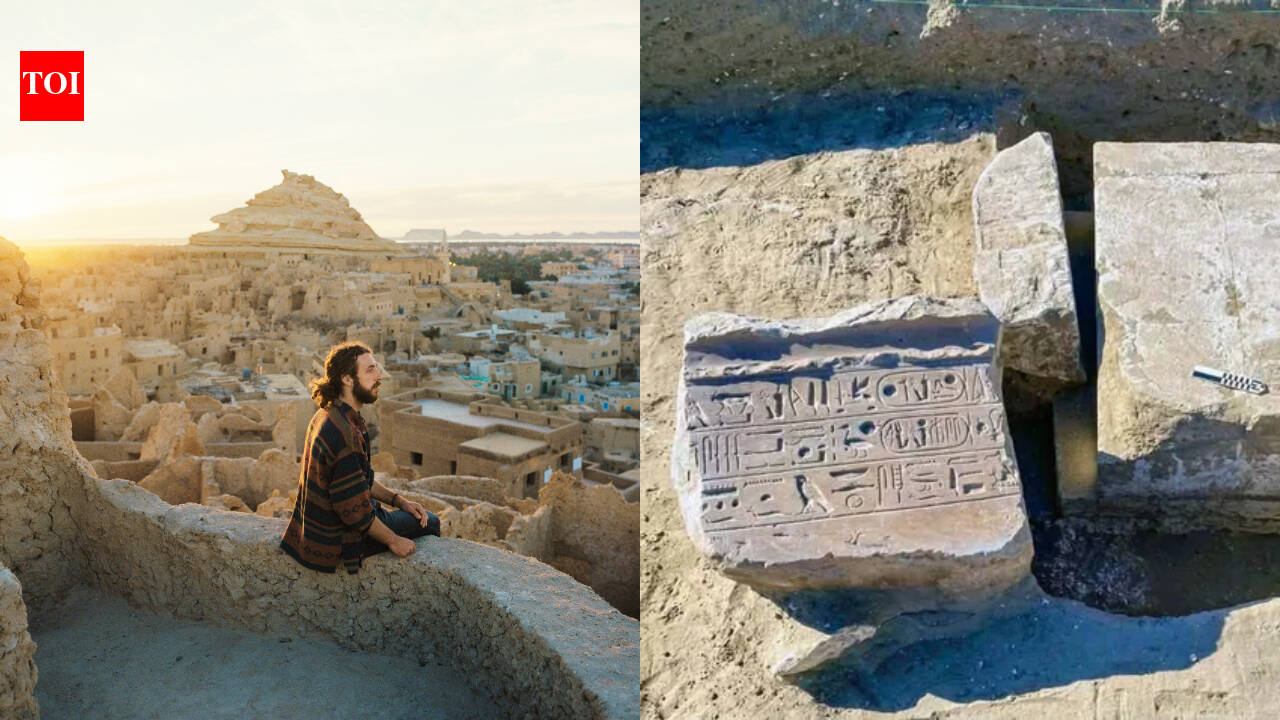
The centerpiece of this discovery is a large sandstone lintel inscribed on three sides, despite being fragmented. The inscriptions include titles belonging to the Pharaoh Ramesses II, who ruled from approximately 1279 to 1213 B.C. Notable references detail restoration work on a statue of Horus. Most crucially, the text identifies Horus as the divine protector of Mesen. This connection carries significant weight, considering Mesen’s historical mentions, which often lacked a geographical anchor.
Archaeological Evidence of a Lost City
In addition to the inscriptions, archaeologists have found remnants of a temple dedicated to Horus at Tell Abu Seifi. Although this structure is heavily eroded, its presence suggests that the site was once home to a significant religious center. Furthermore, the discovery of a mudbrick enclosure wall and its gateways points towards a more substantial urban settlement. Notably, artifacts like a bronze seal from the Ptolemaic period (roughly 304 to 30 B.C.) affirm the enduring connection between the site and Horus. Coffins excavated in the area also carry inscriptions that link back to Mesen, reinforcing this relationship.
A City Through the Ages
Should Tell Abu Seifi indeed prove to be ancient Mesen, the site may have flourished for centuries, extending its historical relevance much beyond the New Kingdom period. The artifacts found indicate that the veneration of Horus persisted well into the Ptolemaic era, signifying that Mesen was not just a fleeting name in ancient records but a hub of cultural and religious significance over time. However, at present, archaeologists cannot provide a definitive estimate of its population or the full scope of its urban landscape.
Ongoing Mysteries and Future Prospects
While the findings bolster the possibility of identifying Tell Abu Seifi as Mesen, archaeologists urge caution. The mystery surrounding the city is far from resolved, and further excavations and analyses are needed to cement this identification. The degradation of the Horus temple raises concerns that vital evidence may already be lost. Nevertheless, after approximately 3,200 years, the combination of inscriptions and artifacts at Tell Abu Seifi could finally guide researchers to a city that has lingered as merely a name within ancient Egyptian history. If confirmed, this location could provide invaluable insights into the culture and practices of a civilization that shaped human history for millennia.