
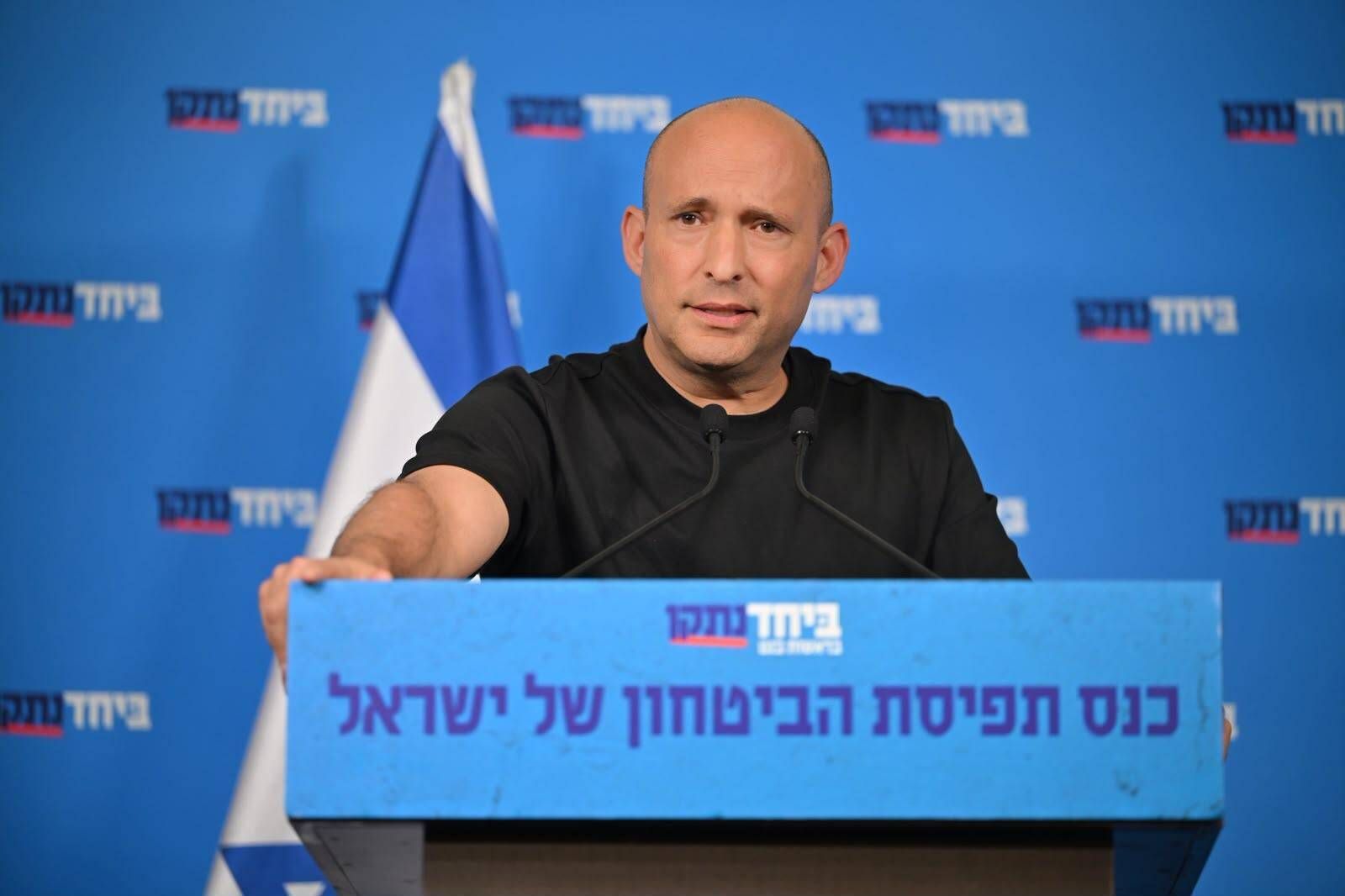
Former Prime Minister Naftali Bennett recently addressed security challenges facing Israel, highlighting significant flaws in the current government’s approach during the B’Yachad party’s National Security Conference. He attributed ongoing issues to what he termed the “October 7th government,” suggesting that it operates under outdated security paradigms from the day before the recent conflicts erupted. Bennett advocated for a holistic national security strategy focused on military, economic, diplomatic, and internal strength.
Concerns About Gaza and Hamas
Bennett criticized the notion that external actors like Turkey and Qatar could effectively manage security in the Gaza region. He contended that the assumption these nations could safeguard residents near the Gaza Envelope is fundamentally misguided. The former prime minister expressed disappointment over the current government’s failure to act decisively against Hamas, arguing that in the wake of the October 7 attacks, there was an opportunity to dismantle the terrorist organization. Instead, he accused them of surrendering, stating that decisions impacting Israel’s security were being dictated outside its borders, particularly in Doha.
To amend this situation, Bennett proposed a significant policy shift, advocating for Egypt to take a central role in Gaza rather than allowing Turkey and Qatar to exert influence. He insisted that any party facilitating their involvement is obstructing genuine efforts to neutralize Hamas. He also highlighted the alarming reality that Hamas has not only retained its strength but has bolstered its ranks and rearmament capabilities since October 7. Bennett emphasized that current regulations prohibit Israeli forces from targeting armed terrorists unless there is an immediate threat, which he views as counterproductive. Under his leadership, he promised that Israeli military operations would not cease until Hamas is fully disarmed and its armaments are removed from Gaza.
Qatar’s Role and Iranian Threats
Bennett took a firm stance against Qatar, calling for its formal designation as an enemy state. He accused Qatar of financing the tragic events of October 7, which he claimed compounded Israel’s internal challenges. He urged Jewish communities and international allies to sever ties with Qatar, framing it as a nation that jeopardizes Israel’s security interests.
On the Iranian front, the former prime minister proposed a reinvigoration of Israel’s deterrence strategy. He suggested that if Hezbollah were to launch attacks against Israel, the response should be directed at Iran, given their role in supporting such proxies. Bennett recalled his previous administration’s actions, noting that Israel had successfully conducted military strikes inside Iran in retaliation for proxy aggression. His vision entails an aggressive strategy aimed at contributing to the Iranian regime’s collapse through a combination of military, political, economic, and technological measures.
Comprehensive Reforms and Future Directions
Bennett also advocated for broad reforms within Israeli society, including the implementation of mandatory military conscription that would encompass ultra-Orthodox men. He emphasized the necessity to revamp the education system to better prepare future generations for the challenges ahead. Furthermore, he called for the establishment of a national public diplomacy entity similar to the Intelligence Unit 8200, aimed at enhancing Israel’s global communication strategy.
In line with promoting stability, Bennett endorsed the expansion of the Abraham Accords, suggesting that Israel should actively pursue normalization agreements with nations such as Saudi Arabia and Indonesia. These diplomatic efforts, he argued, could play a vital role in strengthening Israel’s position and fostering regional cooperation amid ongoing security threats.
In summary, Bennett’s address underscored a critical re-examination of Israel’s national security framework. Emphasizing a multi-pronged approach to security and diplomacy, he called for decisive action against both Hamas and Qatar, while advocating for structural reforms within Israeli society to secure a more stable future.