
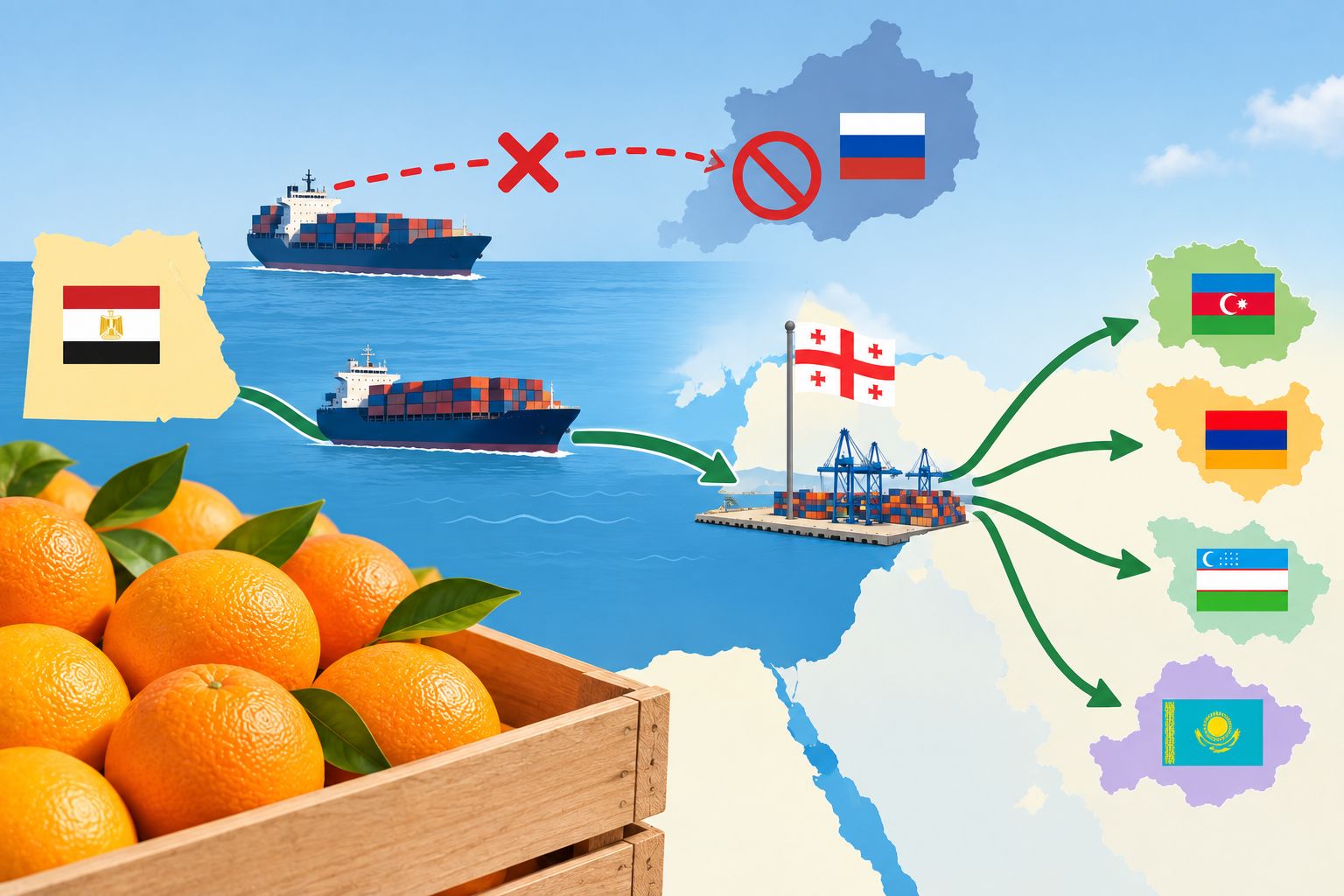
As Egypt gears up for a new citrus export season, exporters are facing intense anxiety due to disruptions along a vital trade route. Analysts from EastFruit indicate that Egypt’s citrus exports, a significant contributor to the nation’s agricultural revenue, are in jeopardy due to recently escalated shipping issues.
Shipping Disruptions in the Black Sea
In late August, MSC, the world’s largest container shipping line, halted new bookings to and from Novorossiysk in response to escalating risks in the Black Sea region. This decision was prompted by a concerning incident involving the MSC ULSAN III vessel, which highlighted the precarious nature of commercial shipping in the area. The situation grew dire after Türkiye reported drone attacks on two civilian vessels and an attack on the RMS Team container ship en route to Novorossiysk. The incident raised alarms internationally, leading Akkon Lines to suspend service to Russian ports by August 27, citing safety concerns for crews and cargo.
Alternative Routes Through Georgia
While the disruptions severely hinder traditional routes, Georgia’s Black Sea ports continue to operate as viable alternatives. Fedir Rybalko, an international fresh-produce trade specialist, believes that the Georgian port of Poti can accommodate some of the redirected cargo. Poti could not only serve the burgeoning markets in Georgia, Armenia, and Azerbaijan but also cater to key citrus-importing regions such as Central Asia, particularly Uzbekistan and Kazakhstan. This alternative route could be pivotal for Egyptian exporters looking to mitigate risk.
The Importance of Citrus Exports
Egypt is renowned as one of the top citrus exporters globally, with around 2 million tonnes shipped in 2025 alone. Even slight adjustments in logistics can impact hundreds of thousands of tonnes of produce, affecting numerous growers and trading companies. The urgency to find alternative transport routes is heightened by existing disruptions impacting routes through the Red Sea and Gulf, making it imperative for exporters to identify reliable options promptly.
Potential Benefits of Poti as a Logistics Hub
Russia is Egypt’s second-largest market after the European Union, often accepting fruit that does not meet the stringent standards of EU destinations. This reliance on the Russian market complicates efforts to redirect exports elsewhere. Poti offers an innovative multimodal corridor connecting Egypt to the Black Sea, Georgia, Azerbaijan, and beyond, facilitating access to the expanding Central Asian market.
Moreover, establishing a logistics hub in Poti could streamline the export process by including unloading, repacking, and customs clearance, thus enhancing the distribution of cargoes to various markets. If this corridor demonstrates competitive costs and transit times, it may allow Egyptian exporters to diversify their logistics and strengthen their foothold in Central Asia and the Caucasus. Furthermore, reduced delivery costs could encourage greater consumption in price-sensitive markets, unveiling new opportunities for Egyptian citrus suppliers to expand their reach.