
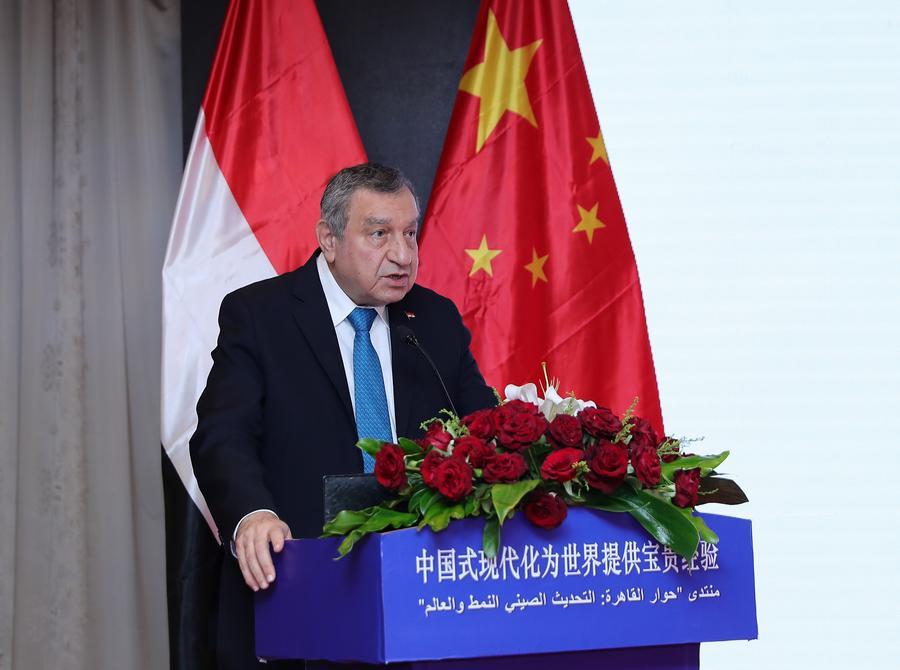
China’s Global Development Initiative (GDI) is emerging as a vital framework for enhancing the role of developing nations, particularly in the Global South, in the realm of global governance. Former Egyptian Prime Minister Essam Sharaf asserts that the GDI not only amplifies the voices of these countries but also opens up a multitude of developmental opportunities at a global level.
The Role of China in Global Development
According to Sharaf, the GDI represents a substantial shift in how development is approached globally. “After decades of economic and social transformations, China has gained significant experience and is increasingly willing to share its strategies and resources to aid other nations,” he pointed out during a recent interview. The initiative has played a crucial role over the past five years by placing development back at the forefront of global discourse, especially in an era marked by geopolitical tensions, economic rivalries, and crises.
He emphasizes that development should not fall victim to global conflicts but rather should remain a collective priority for the international community. “Peace and development are intricately linked; sustainable prosperity cannot flourish in a world rife with disparities,” Sharaf noted, emphasizing the necessity of addressing development gaps to pave the way for sustainable peace.
Investing in Stability and Peace
Sharaf remarked on the significant insights gleaned from the GDI, highlighting that investing in development is, in essence, an investment in stability, peace, and the bright future of societies. He indicates that the GDI’s scope extends beyond mere economic metrics, focusing on improving living conditions, tackling poverty, ensuring food and energy security, and enhancing health and education systems.
As he delves into the complexities of global governance, Sharaf maintains that the GDI enhances multilateralism by encouraging the participation of developing countries in international decision-making processes. He believes this shift signifies a transition from traditional governance frameworks to more inclusive models that embrace a partnership approach among nations.
Challenges and the Digital Divide
Sharaf addresses the pressing global challenges, including climate change and food security, which necessitate collaborative solutions rather than isolated efforts by individual countries. True multilateralism, he argues, is characterized by ensuring that every nation has a voice and that their needs and aspirations are factored into shaping a collective future.
Looking ahead, Sharaf foresees the digital landscape as a crucial domain for the GDI’s continued evolution, particularly with the rapid advances in artificial intelligence (AI). He warns that if technological advancements remain accessible solely to affluent countries, the world could witness a more profound digital divide, exacerbating existing developmental gaps.
Sharaf advocates for the “Digital South,” which extends beyond mere improvements in internet connectivity and infrastructure. He envisions a robust initiative that focuses on developing human capital, sharing knowledge, fostering digital education, and ensuring equitable access to advanced technologies.
The GDI has a pivotal role to play in bridging the gap between digital and equitable development, ensuring that emerging technologies benefit developing nations. Sharaf also refers to the establishment of the World Artificial Intelligence Cooperation Organization, emphasizing its goal of fostering international collaboration and promoting safe, inclusive AI development. He expresses optimism that the GDI will contribute to shaping a global narrative in which technology serves as a common asset for all humanity rather than a privilege for a select few nations.