
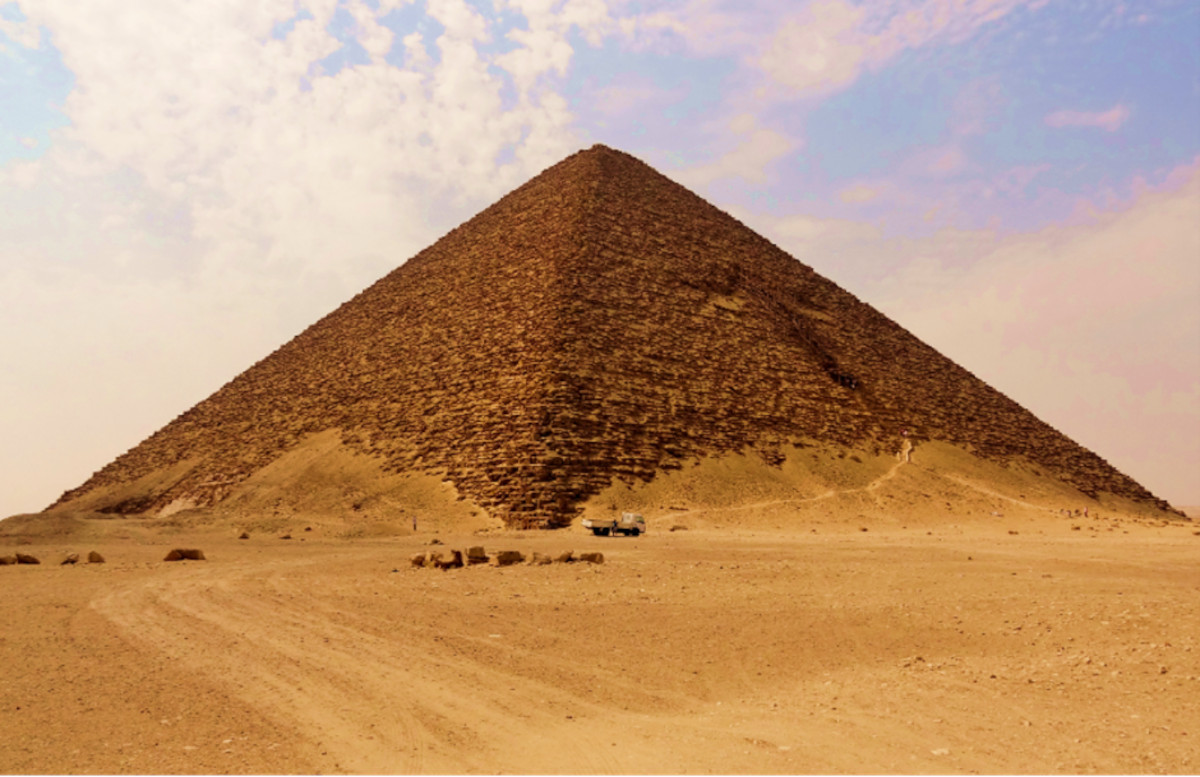
Recent studies have unveiled a surprising twist regarding the massive constructions near the Red Pyramid in Dahshur, Egypt. Instead of serving as stone transport ramps for the construction of nearby pyramids, these structures may in fact be remnants of an ancient dam. This significant discovery reshapes our understanding of the site and sheds light on the ingenuity of ancient Egyptian engineering.
New Insights into Ancient Egyptian Engineering
The structures adjacent to the Red Pyramid have long intrigued archaeologists and historians. Traditionally viewed as ramps facilitating the movement of colossal stones, recent findings challenge this long-held belief. Geologist Dr. Matthew Adams and his team have presented evidence indicating that these formations could be remnants of an ancient dam. This revelation not only alters the narrative surrounding the Red Pyramid but also highlights the advanced engineering techniques employed by the ancient Egyptians.
The Purpose of the Structures
If these structures indeed served as a dam, one might wonder about their intended purpose. Ancient Egyptians were experts in managing water resources, and a dam could have been essential for irrigation. The Nile River was pivotal for agricultural practices, and the ability to control and direct its waters would have maximized crop yields. These discoveries imply that the engineers of Dahshur were not merely focused on monumental constructions; they were also devoted to ensuring the sustainability of their civilization through advanced water management.
Implications for Future Research
The revelation that these structures may be part of an ancient dam opens up new pathways for research in Egyptology. Scholars now need to reconsider their assumptions about the functions and classifications of various ancient architectural forms. Future archaeological efforts could shed light on other similar structures, potentially revealing more about the intricate relationship between ancient Egyptians and their environment. This ongoing exploration reinforces the idea that understanding history requires adaptability and an open mind.
Preserving Egypt’s Rich Heritage
As these new insights gain traction, the preservation of Egypt’s archaeological sites becomes even more crucial. Every new discovery provides a clearer picture of how civilizations interacted with their landscape and resources. It is vital for both researchers and local authorities to work in tandem to protect these sites from deterioration and illicit activities. By safeguarding these cultural treasures, we ensure that future generations can explore and understand the complexities of ancient Egyptian society.
In conclusion, the recent examination of the structures near the Red Pyramid provides a richer context for understanding ancient Egyptian engineering. The idea that they functioned as a dam rather than stone transport ramps illustrates the sophistication of ancient technologies used for resource management. As researchers delve deeper into these findings, the implications for our understanding of ancient societies continue to grow, making clear that history is often more complex than it seems.