
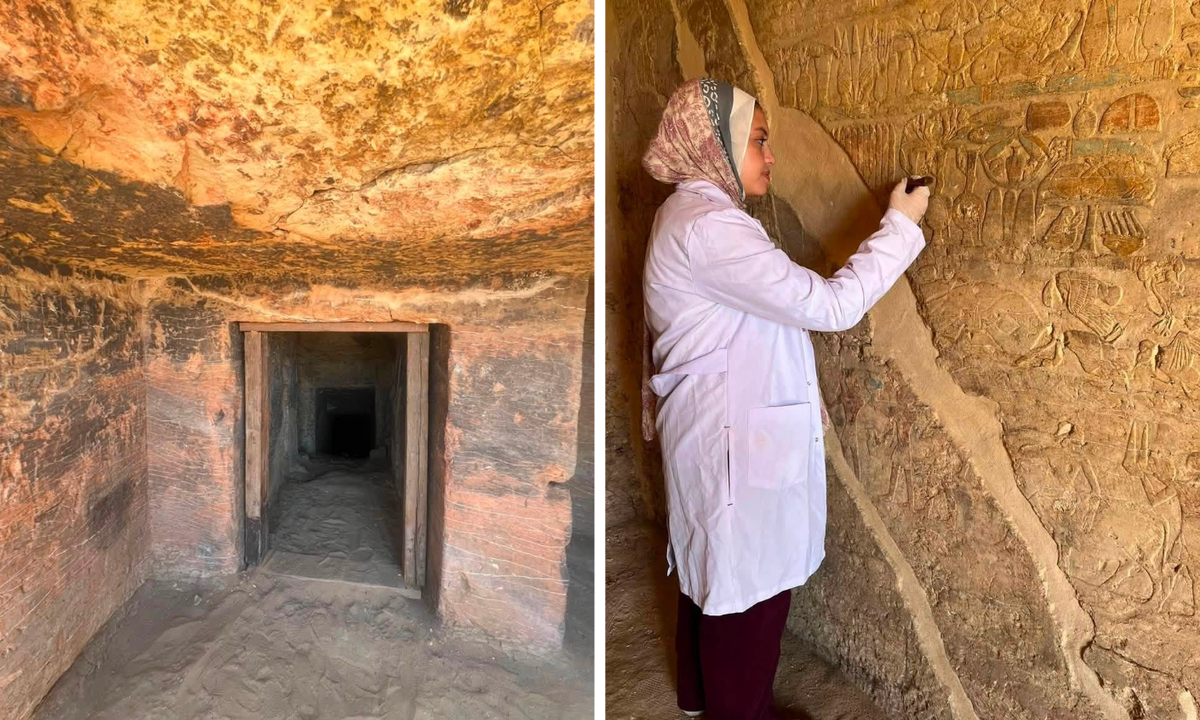
The recent unearthing of three Ancient Egyptian tombs at the Bubasteion Necropolis in Saqqara has unveiled significant historical insights into the New Kingdom period, which spans from approximately 1550 BC to 1070 BC. These discoveries have sparked excitement among archaeologists and historians, offering fresh perspectives on Egypt’s military and diplomatic relationships with surrounding regions during an era of expansion and power.
Significance of Inscriptions in the Tombs
According to Mohamed Abdel-Badie, head of the Egyptian Archaeological Department, one tomb contains an inscription referencing a military commander returning from northern Syria. This inscription not only confirms the tomb’s dating to the New Kingdom but also highlights Egypt’s historical military and diplomatic ties with neighboring territories. The mention of Syria underscores a complex relationship, suggesting that the Egyptians were actively engaged in military campaigns and diplomatic missions well beyond their borders.
Insights into Social Hierarchies
Another noteworthy tomb belonged to Mentuhotep, a prominent military and administrative figure of his time. The carvings on the walls depict various hunting scenes and offerings, along with a striking image of Mentuhotep seated beside his mother, Iahhotep. These artistic elements suggest that Mentuhotep’s family enjoyed a high social status, shedding light on the familial and societal structures prevalent among elite classes during the New Kingdom era.
The third tomb is attributed to a merchant named Pareemwaya, also known by the name Samut. Inscriptions reveal details about his family, including his wife, mother, and four sons. Such comprehensive records provide a rare glimpse into domestic life and social dynamics among significant figures of the period. These family-specific inscriptions enrich our understanding of individual lives and familial structures in ancient Egypt.
The Bubasteion Necropolis and Its Rich History
Located approximately 19 miles south of Cairo, the Saqqara necropolis served as the burial site for the ancient Egyptian capital of Memphis. Designated as a UNESCO World Heritage Site in 1979, it features numerous mausoleum crypts belonging to royalty as well as the famous Pyramid of Djoser, the earliest complete stone building tradition in history. The area includes tombs of high-ranking officials, reflecting the long-standing tradition of elaborate burials, which persisted through different dynastic periods, including the Ptolemaic and Roman eras.
Hisham Alithi, secretary general of Egypt’s Supreme Archaeological Council, emphasized that the importance of these findings goes beyond the physical discovery of tombs; it involves relinquishing aspects of history that have been hidden for millennia. Each tomb opens a window into the past, inviting scholars to piece together the narratives of individuals who contributed to Egypt’s rich historical tapestry.
Comparative Importance of Discoveries
The Egyptologist Steve Harvey commented that the recent findings are comparable in significance and artistic merit to earlier discoveries made by renowned archaeologist Alain Zivie, who revealed tombs of crucial historical figures. These artifacts not only deepen our understanding of the New Kingdom but might also illuminate the often-overlooked earlier periods of Egyptian history. The tomes from Saqqara, especially those dating to the early parts of the 18th Dynasty, could redefine our knowledge about the elite individuals who were laid to rest in this historic necropolis.
While Aidan Dodson from the University of Bristol agrees that these recent tombs broaden the range of individuals known to have been buried in the Bubasteion, he urges caution in assessing the claims made about the military commander’s tomb. The tapestries of Egypt’s interactions in the Levant require careful scrutiny and publication to better understand their lasting significance. As researchers continue to analyze these important discoveries, our comprehension of Egyptian imperialism and social stratification during the New Kingdom will only deepen.