
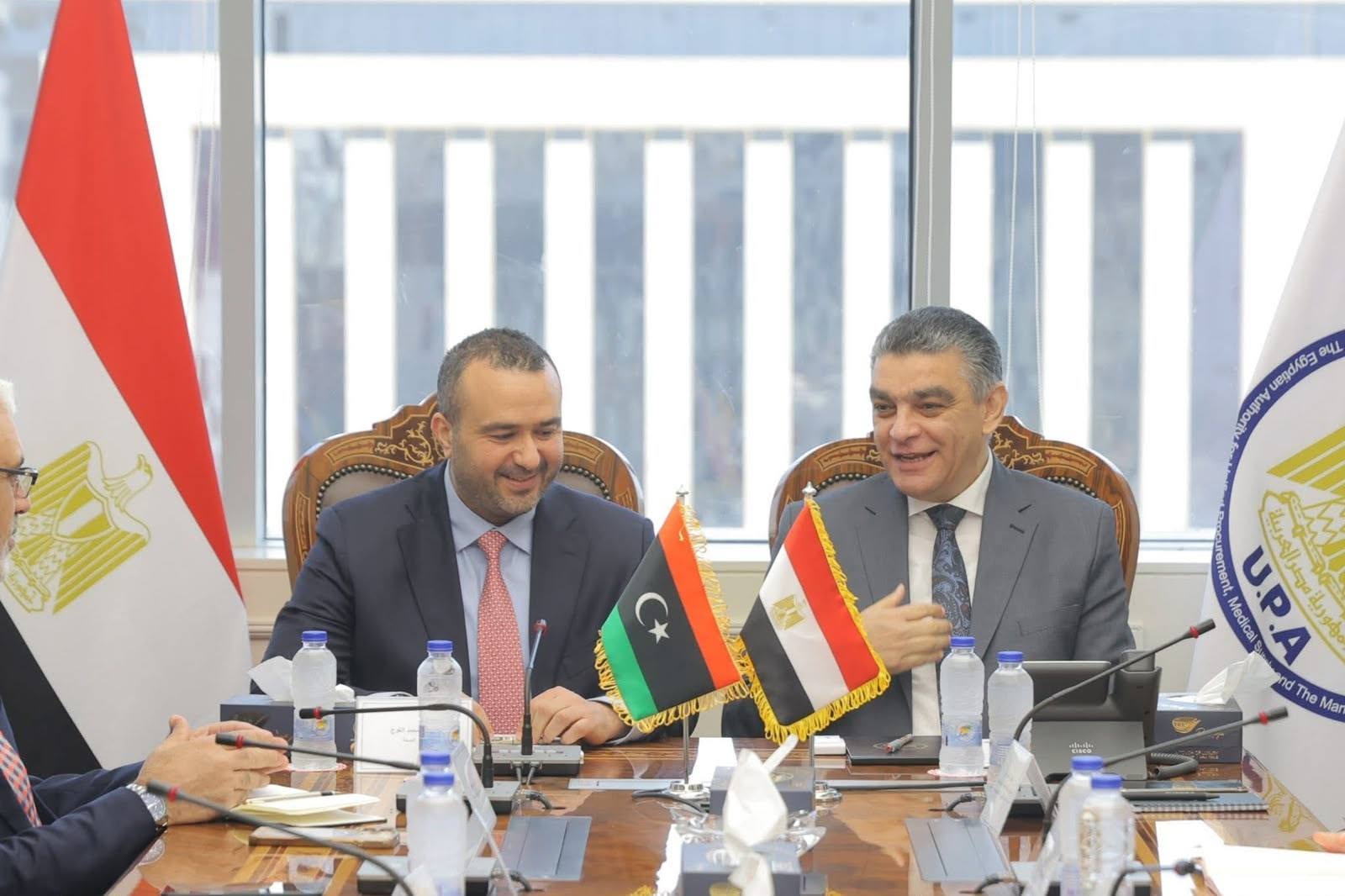
Egypt and Libya are actively pursuing deeper collaboration in the healthcare field, with a strong emphasis on pharmaceutical supply chains, medical industry localization, and health infrastructure development. This initiative emerged during a recent meeting between high-ranking officials from both countries, aimed at enhancing their partnership and sharing expertise.
Strengthening Bilateral Ties in Healthcare
The meeting saw Hisham Stait, the Chairperson of Egypt’s Unified Procurement Authority (UPA), welcome Libyan Health Minister Mohamed Al-Fouj and his delegation. The gathering highlighted the historical and fraternal relations that bind Egypt and Libya, reinforcing their commitment to collaborate in various sectors, particularly healthcare. Both nations are eager to reinforce their cooperation as part of a broader vision for regional development.
The Libyan delegation included notable figures such as Mohamed Al-Atouq, Advisor to the Minister for Pharmaceutical Affairs, and Adel Al-Tajouri, Director of Planning, among others. Their participation signifies Libya’s genuine interest in collaborating on healthcare issues, including the procurement of Egyptian pharmaceuticals and medical equipment.
Egypt’s Unified Procurement Authority: A Model for Reform
During the discussions, Stait elaborated on the foundation and objectives of the Unified Procurement Authority, integral to Egypt’s healthcare reform strategy. This authority plays a vital role in modernizing the nation’s healthcare system by overseeing the centralized procurement of medical supplies, pharmaceuticals, and other essential resources. This system aims to ensure high quality while maximizing cost-effectiveness.
Stait highlighted the achievements within Egypt’s pharmaceutical sector, noting an increase in manufacturing facilities from around 150 to nearly 180. Egypt has made noteworthy strides in localizing the production of medical supplies, aligning with broader goals for sustainable healthcare growth. The success of this localization initiative is crucial, as it not only supports the local economy but also enhances the region’s ability to respond to healthcare demands.
Incentives for Local Manufacturing
Stait also shared valuable insights into the incentives that the UPA provides to companies that aim to enhance local manufacturing. These incentives include off-take agreements and assured market shares, designed to cultivate investment and bolster domestic production capabilities. This approach is fundamental to achieving long-term sustainability in the healthcare industry.
Moreover, Stait outlined Egypt’s strategic medical warehouses, which adhere to international standards for storage and management of pharmaceuticals and supplies. These facilities are integral to maintaining a secure and sustainable stockpile, significantly contributing to Egypt’s medical and pharmaceutical security through sophisticated infrastructure and smart operational systems.
Towards Future Collaboration
The Libyan delegation expressed significant interest in Egypt’s warehouse model, noting its effectiveness in modern medical supply chain management. This interest indicates Libya’s eagerness to leverage Egypt’s expertise in building a robust healthcare foundation.
In his closing remarks, Minister Al-Fouj commended Egypt’s leadership in regional healthcare advancements and expressed Libya’s intention to learn from Egypt’s successful experiences, particularly in areas of pharmaceutical quality and medical training programs.
By the end of the meeting, both parties affirmed their commitment to ongoing collaboration in healthcare services, pharmaceutical supply, and the localization of medical industries, aiming for mutually beneficial outcomes that will enhance public health in both nations.