
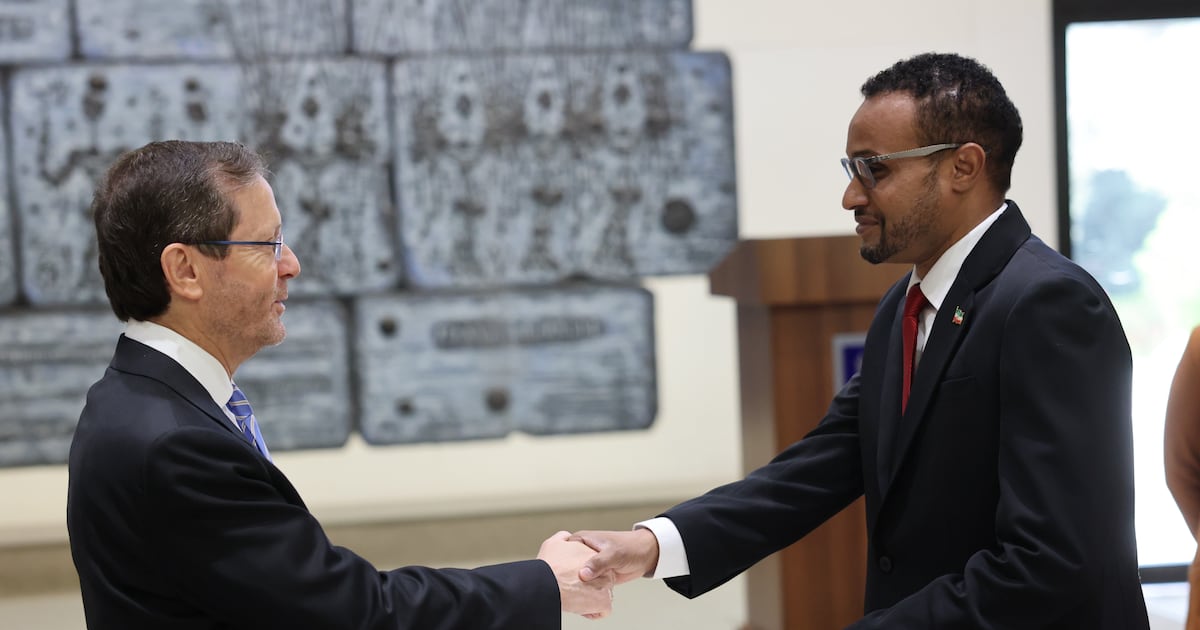
Egypt has issued a stern condemnation of Somaliland following its decision to establish an embassy in Jerusalem, labeling the act a “clear violation of international law.” This diplomatic move has sparked tensions in the region, playing into the larger geopolitical landscape shaped by ongoing disputes and alliances.
Egypt’s Concerns Over Somaliland’s Embassy in Jerusalem
Cairo has been a vocal opponent since Israel recognized Somaliland as a sovereign entity in December, marking the first such acknowledgment since the region seceded from Somalia in 1991. As the only country to take this step, Israel’s recognition is seen by Egypt as a direct challenge to its influence within the Horn of Africa. This concern arises amid Egypt’s broader efforts to isolate Ethiopia, a neighboring nation with which Egypt is entangled in a complex dispute regarding Nile water resources. The establishment of the Somaliland embassy is perceived by Egyptian officials as an unsettling precedent that may jeopardize their strategic interests in a region where they aim to exert dominance.
Strategic Implications for Egypt
Furthermore, Egypt views Israel’s actions not only through the lens of international law but also as an attempt to secure strategic positioning along the Red Sea, an area of heightened importance due to the geopolitical tensions involving Houthi rebels in Yemen. These rebels, backed by Iran, have been known to target shipping routes, raising concerns for maritime safety and regional stability. The Egyptian government sees the opening of the Somaliland embassy as giving Israel a foothold in a volatile area that threatens its national security.
Official Reactions to Somaliland’s Decision
The Egyptian Foreign Ministry made its stance clear during a recent meeting between Egypt’s Foreign Minister, Badr Abdelatty, and Somalia’s Foreign Minister, Abdisalam Abdi Ali, in Seoul. Abdelatty’s condemnation emphasized that Somaliland’s embassy plan in “occupied Jerusalem” represents a flagrant disregard for international validity and the legal status of the city. Jerusalem holds significant historical, cultural, and religious values for multiple faiths, and the international community largely views it as territory occupied by Israel since the 1967 Arab-Israeli War, an annexation not recognized by most countries.
Impact on Regional Diplomacy
The political landscape is further complicated by emerging diplomatic relations between Israel and Somaliland. Following the announcement, Israeli Foreign Minister Gideon Saar expressed optimism about enhancing bilateral ties, suggesting that this initiative may lead to a strengthening of cooperation between the two nations. Nevertheless, as Egypt fortifies its partnerships within the Horn of Africa, including military presence in Somalia and collaborative ventures in Djibouti and Eritrea, it seeks to counterbalance Israel’s growing influence in the region.
The backdrop of Egypt’s water security concerns adds another layer to the diplomatic stir. With a population that heavily relies on the Nile River for its freshwater supply, Egypt considers efforts by Ethiopia to control the river a direct threat to its survival. The establishment of Somaliland’s embassy in Jerusalem is perceived not just as a diplomatic affront but also as a potential undermining of Egypt’s long-standing strategic interests in the region.
As the situation continues to evolve, the implications for both regional stability and international relations remain to be seen. Egypt’s vehement response underscores the delicate balance of power in the Horn of Africa and the complexities inherent in navigating longstanding historical grievances, territorial disputes, and emerging diplomatic alliances.