
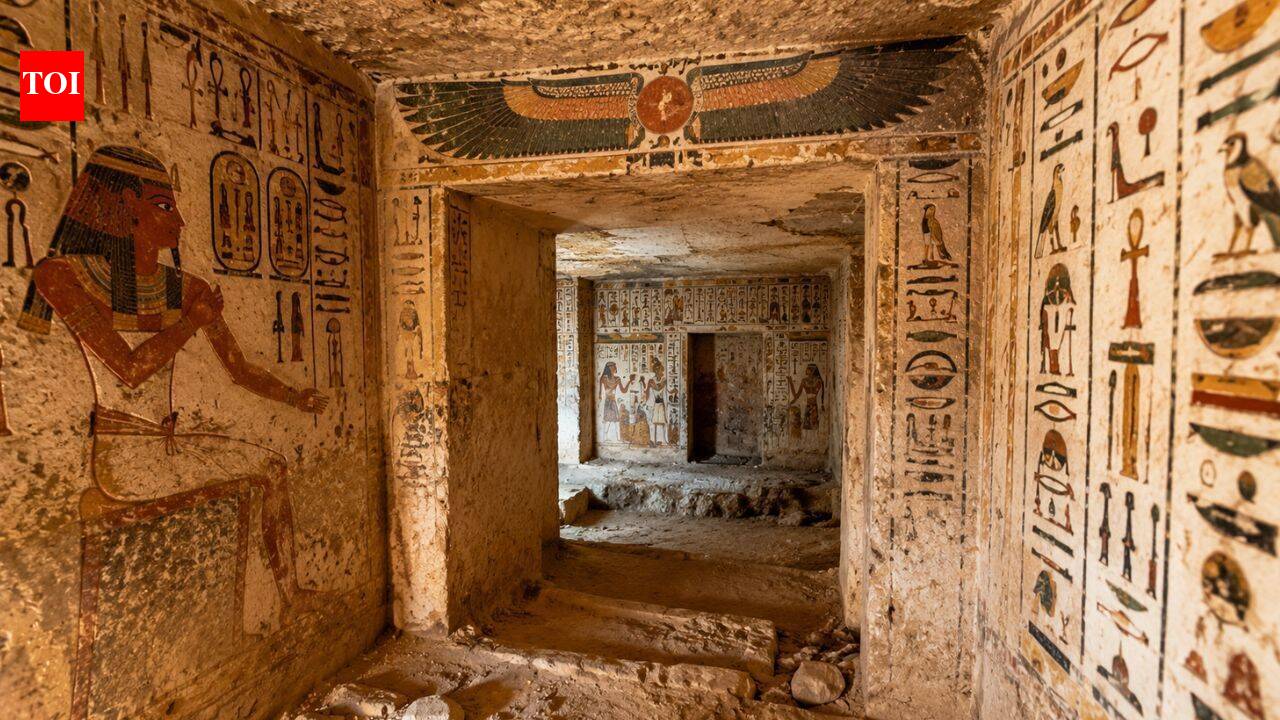
In a stunning archaeological breakthrough, a team of Egyptian and British researchers has unearthed the long-lost tomb of King Thutmose II, situated near Luxor. This discovery marks a significant moment in Egyptology, as it is the first royal tomb uncovered since the iconic tomb of Tutankhamun was discovered in 1922. The find is deemed one of the most remarkable archaeological achievements of this century, rekindling interest in Egypt’s rich history.
Unveiling the Lost Tomb of Thutmose II
The monumental discovery was made by a collaborative effort between Egypt’s Supreme Council of Antiquities and the New Kingdom Research Foundation, led by Dr. Piers Liserland from the British side. Initially, the team suspected the tomb may belong to one of the wives of the Thutmosid kings due to its proximity to the burial sites of significant queens, such as that of King Thutmose III and Queen Hatshepsut. However, the narrative shifted dramatically when researchers discovered broken alabaster vessels inscribed with the name of King Thutmose II, thereby confirming the tomb’s true identity. The inscriptions presented him as the “deceased king” alongside references to Queen Hatshepsut, hinting at her possible role in orchestrating his burial.
Insight into the Tomb’s Contents
The tomb itself reveals glimpses of both its original glory and the deterioration caused by time. Official reports indicate that floods severely damaged the site shortly after Thutmose II’s burial, impacting much of the tomb’s artifacts. The layout features a corridor adorned with white plaster that leads into the main passage and finally descends into the burial chamber, which is about 1.4 meters lower than the corridor. Dr. Liserland noted the simplistic design of the tomb, suggesting it may have influenced the architectural styles of subsequent royal tombs in the Eighteenth Dynasty, thereby providing invaluable insights into the evolution of ancient Egyptian burial practices.
The Historical Significance of King Thutmose II
Thutmose II reigned from approximately 1493 BC to 1479 BC and is recognized as the fourth pharaoh of the Eighteenth Dynasty. He was the son of Thutmose I and Mutnofret, his secondary wife. Although his reign involved minor military engagements in Nubia and Sinai, he is chiefly remembered because of Hatshepsut, who many historians argue wielded effective power during his rule. Following Thutmose II’s death, Hatshepsut ascended as pharaoh, subsequently associating her name with several of his monuments.
The Eighteenth Dynasty is often regarded as a golden age in ancient Egyptian history, characterized by remarkable military prowess, monumental architecture, and an enduring period of stability. The recent discovery of Thutmose II’s tomb fills a crucial gap in our understanding of this era, as it completes the search for all known royal tombs from this illustrious dynasty.
Future Exploration and Understanding
Dr. Liserland has emphasized that research will persist in the surrounding area to uncover the fate of the tomb’s original contents, which may have been relocated after ancient floods. The significance of this find extends beyond a mere archaeological milestone; it offers a new lens through which to view the complexities and intricacies of royal life in ancient Egypt.
After being concealed for over 3,500 years, the rediscovery of King Thutmose II’s tomb not only enhances our knowledge of the Eighteenth Dynasty but also revitalizes public interest in Egypt’s ancient civilization, ensuring that its history continues to inspire and educate generations to come.