
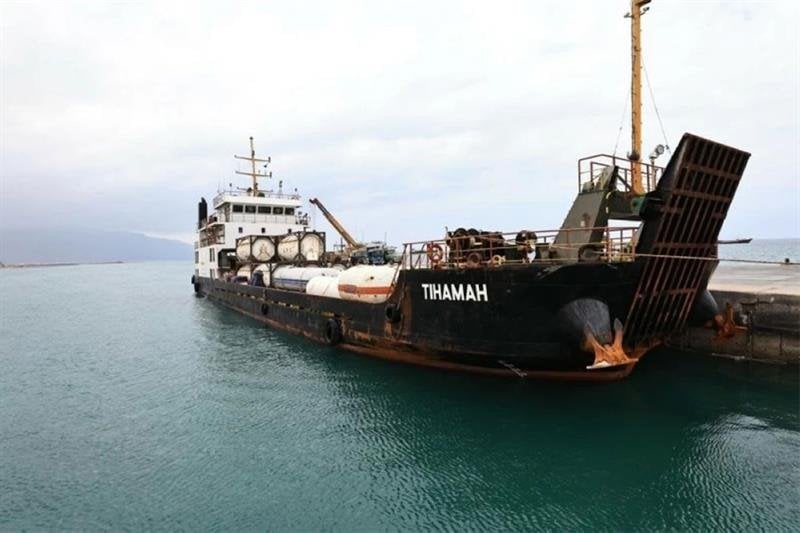
Egyptian authorities have publicly distanced themselves from the cargo ship Tihama, which was recently attacked by the Houthis, resulting in the deaths of six people. Officials declared that claims regarding the ship’s Egyptian ownership are incorrect, emphasizing that it is owned by a Yemeni national. This statement arises amid a backdrop of ongoing accusations and tensions involving the Houthis and their military operations.
Ownership and Management of the *Tihama*
Although the Tihama is registered under Tanzanian jurisdiction, its management details presented a complex picture. Sources indicate that the manager and representative listed for the ship is Blue Sea For Management Marine, linked to an address in Alexandria, Egypt. In response, Egypt’s Ministry of Transport issued a clarification denying any ties to the ship. The Ministry highlighted that Blue Sea For Management Marine is neither registered with the Egyptian Chamber of Shipping nor is it licensed to function as a maritime agency within Egyptian waters. Moreover, officials confirmed that the Tihama has never docked at an Egyptian port and was not on course to do so during the time of the attack.
The Houthis’ Perspective on the Attack
In the wake of the attack, the Houthis claimed responsibility, portraying the Tihama as a vessel transporting military supplies for Saudi forces. They framed the assault as part of their broader counter-campaign against what they describe as ongoing Saudi military hostilities. Eyewitness reports indicate that the Houthis have been engaged in an offensive against the government-held port of Al-Mocha for several days. The assault on the Tihama resulted in the tragic loss of six lives—four crew members and two Coast Guard personnel—with ten additional individuals suffering injuries.
Conflicting Accounts and Civilian Casualties
Yemeni officials characterized the Tihama as a civilian ferry operated by a licensed private entity, primarily used for transporting passengers and supplies between destinations like Aden, Djibouti, and Socotra. They noted its previous roles in delivering essential goods like gas to Socotra Island as evidence of its non-military function. This contrasting narrative raises questions about the true nature of the vessel’s operations and its involvement in the ongoing conflict in the region.
Additionally, Egypt’s Transport Minister condemned the attack, asserting that such actions pose a severe risk to navigational safety within the Red Sea. The Ministry’s statement underscores the broader implications of maritime assaults on regional security, expanding the ramifications beyond just the immediate conflict zone.
Unclear Role of the *Tihama* in Ongoing Hostilities
The precise involvement of the Tihama in the wider conflict remains somewhat ambiguous. A spokesperson for the Joint Forces operating in the region indicated a willingness to target ferries allegedly transporting military assets for the Houthis, emphasizing the need to protect civilians on board. Observers and analysts following the incident noted that there was no visible military cargo associated with the ship, even as it docked for repairs. This obscurity surrounding the Tihama’s true operational role complicates the narrative of the ongoing conflict and highlights the critical need for clear and accurate information in such volatile circumstances.
As the situation unfolds, the intersection of maritime security, civilian safety, and military operations will likely remain a focal point of concern for international observers and regional stakeholders alike.