
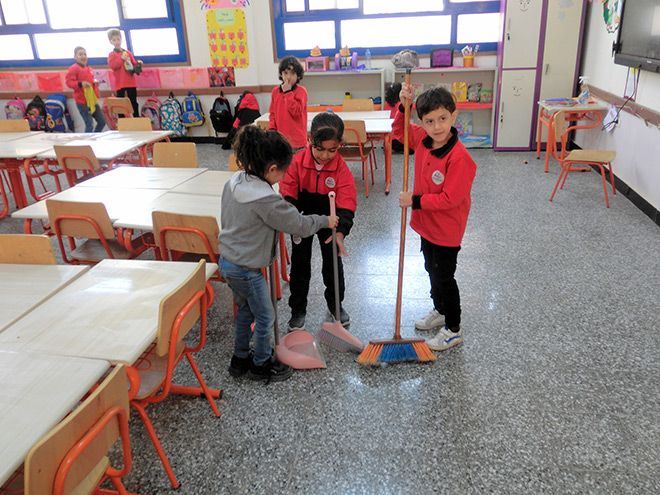
Egypt is making significant strides in enhancing its educational system by adopting Japanese methods aimed at fostering self-reliance and cooperative learning among students. This initiative reflects a broader commitment to elevate educational standards across the nation.
Expansion of Egypt-Japan Schools
Egypt’s Minister of Education and Technical Education, Mohamed Abdel Latif, announced a plan to significantly increase the number of publicly funded Egypt-Japan Schools (EJS) from 69 to 500 over the next five years. This strategic move aims to integrate Japanese educational practices widely, enabling a more holistic approach to student development. These schools focus on various key practices that are commonly found in Japan, such as “nicchoku” (responsibility for class duties), “gakkyukai” (homeroom gatherings), and “gakko gyoji” (school events). Additionally, a compulsory weekly period dedicated to “tokubetsu katsudo” (extracurricular activities) is being introduced as part of the core curriculum.
Teacher Training Initiatives
To facilitate these extensive changes, Egypt is also introducing Japanese-style educational techniques to around 18,000 public elementary schools countrywide. In collaboration with Hiroshima University, the Egyptian government is embarking on an ambitious teacher training program. This initiative began with a team of around 10 educational specialists sent from Japan to train teachers on-site. The goal is to educate 200 teachers in the initial two years, escalating to 5,000 annually thereafter. The training curriculum developed by Hiroshima University encompasses a comprehensive year-long program worth 30 course credits, aimed at equipping educators with the tools necessary for implementing Japanese educational methodologies.
Strengthening International Partnerships
The relationship between Egypt and Japan in the educational sector dates back to the 2016 announcement of the Egypt-Japan Education Partnership by former Prime Minister Shinzo Abe and President Abdel Fattah el-Sisi. This partnership serves as a foundation for ongoing educational support from Japan, which includes financial assistance for school infrastructure and the deployment of former educators as volunteers in Egyptian schools. The Japan International Cooperation Agency contributed 18.6 billion yen (approximately $118.3 million) towards these initiatives, demonstrating a robust commitment to education.
A Vision for the Future
Mohamed Abdel Latif envisions the agreement with Hiroshima University as a pivotal moment for Egypt’s educational landscape. He expresses admiration for the resilience of the people of Hiroshima, particularly in how they prioritized education in the aftermath of adversity, such as the atomic bombing. Latif hopes to emulate this resilience in Egypt’s educational reforms. By integrating Japanese practices into the curriculum, the aim is to create a generation of self-reliant and capable students who can significantly contribute to their communities and the nation as a whole.
With the shared objective of transforming education in Egypt, the collaboration with Japanese educators signals a commitment to nurturing essential social skills, character development, and a cooperative learning environment. The coming years will showcase the potential of these efforts to create a more dynamic, engaging, and effective educational system.