
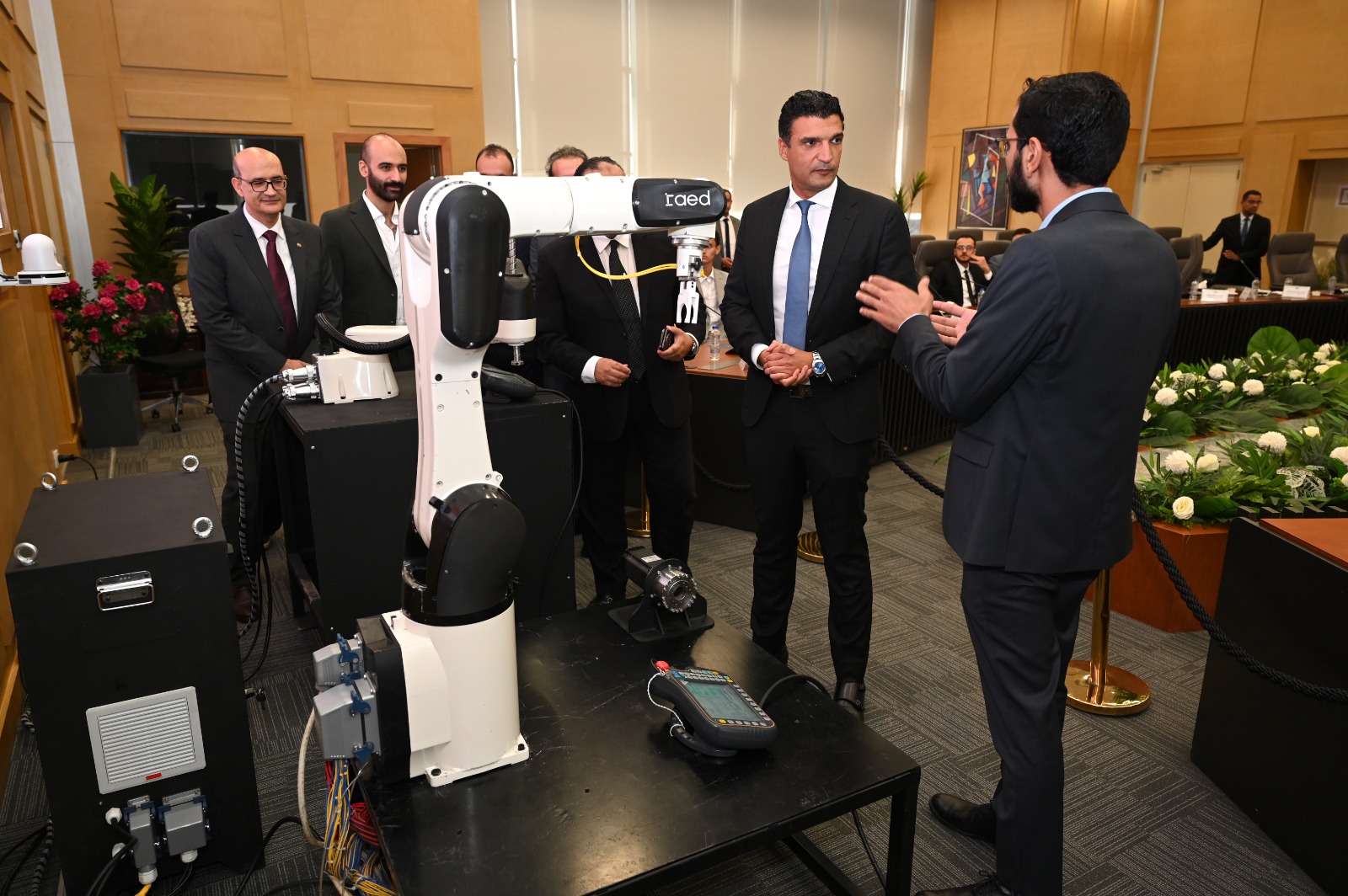
Egypt has marked a significant milestone in its industrial sector with the launch of its first locally developed industrial robot. Spearheaded by Egyptian engineers and the technology firm Raed Bots, this groundbreaking initiative aims to bolster domestic manufacturing and showcase the nation’s potential in technology.
The Launch of Egypt’s First Industrial Robot
Khaled Hashem, Egypt’s Minister of Industry, attended the unveiling of the robotic innovation, which was a collaborative effort between the Industrial Modernization Center (IMC), Raed Bots, and Qubee. The robot is designed for real-world industrial applications, signaling a forward-thinking approach to local technology development. Notable attendees included Ayman Elbayaa, the Assistant Minister of Industry, Sherif Massoud from Mansoura University, Mahmoud El-Saeed, CEO of Raed Bots, and Ali Abu Zeid, CEO of Qubee.
During the ceremony, Hashem emphasized that this milestone represents a crucial step toward advancing local technology and deepening manufacturing capabilities. He pointed out that technology and innovation are essential catalysts for industrial growth and competitiveness. The government’s goal is to create factories that are not just production-oriented but also more efficient and adaptable in the face of industry challenges.
Embracing the ‘Made in Egypt’ Concept
The Minister elaborated on the evolution of the ‘Made in Egypt’ initiative, highlighting the increasing capabilities of the nation in manufacturing and technological innovation. Hashem articulated that this concept is becoming more dynamic, reflecting Egypt’s ongoing improvements in integrating with global supply chains. He also praised the contribution of young Egyptian engineers in developing the robot, underscoring their capacity to innovate and turn advanced knowledge into practical industrial applications.
To strengthen the local production of machinery and assembly lines, Hashem indicated that focusing on enabling industries is a significant component of Egypt’s industrial strategy. He stressed the importance of not just developing robots but also showcasing their real-world capabilities to enhance the confidence of manufacturers regarding locally built automation technology.
Assessing Performance and Future Goals
The new robot currently boasts an impressive 80% local component ratio, with goals to reach 90% as the team aims to locally manufacture its motor. Hashem announced the ministry’s commitment to collaborating with Qubee to monitor the robot’s performance in practical industrial environments, ensuring it meets operational expectations.
During the launch event, a demonstration of the robot was held, allowing attendees to witness its functionalities firsthand. Ayman Elbayaa from the IMC articulated that bridging the gap between innovation and tangible industrial use is essential for advancing Egypt’s manufacturing landscape. The launch demonstrates a marked shift toward localizing technology and fostering the development of smart manufacturing capabilities.
In addition to the robot’s unveiling, the event featured the signing of three important cooperation protocols. The first agreement between the IMC and Raed Bots focuses on providing technical support services to manufacturing facilities. Another agreement aims to supply robots for packaging applications, while the third protocol involves the collaboration of Mansoura University and Raed Bots to provide educational robots for research and training endeavors.
In conclusion, Hashem urged for enhanced collaboration among industrial enterprises, universities, and technology sectors. He reiterated that successful partnerships could empower Egypt to produce innovative solutions that are competitive in both local and international markets. The launch of this locally developed robot is just the beginning of an exciting journey for Egypt’s technological and industrial future.