
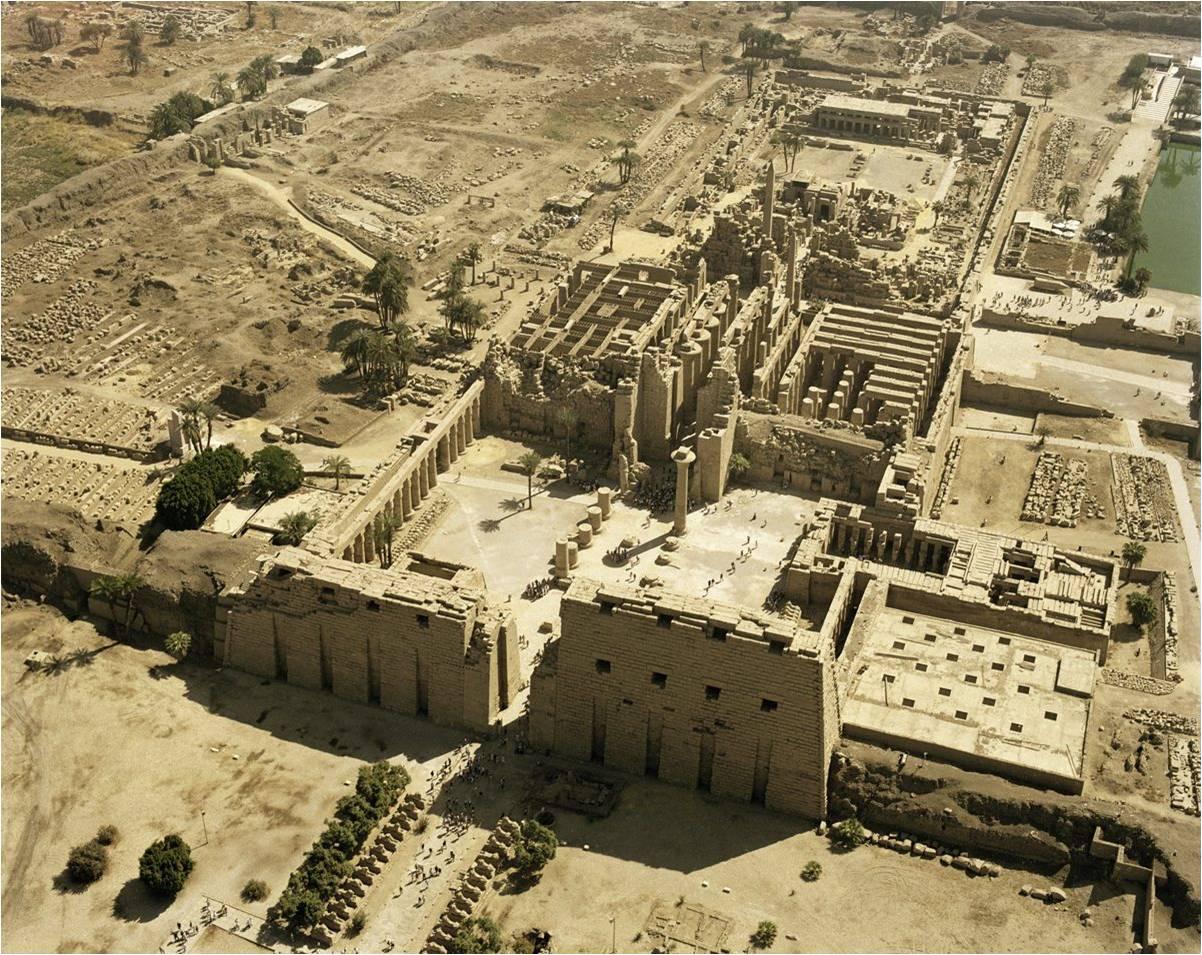
An exceptional archaeological discovery has been made at Karnak’s Temple of Montu, where a collaborative Egyptian-Chinese team has unearthed two ancient sacred lakes. This significant find sheds light on the rich historical and cultural significance of the site, offering new insights into the religious practices of ancient Egyptian civilization.
The Historical Significance of the Discovery
The twin sacred lakes, believed to date back to the Pharaonic era, were integral to the religious rituals dedicated to the war god Montu. These bodies of water were not merely decorative; they played a crucial role in the ceremonial life of the temple, serving as a place for purification rituals. Their discovery enhances our understanding of the architectural and spiritual complexities of ancient Egyptian worship practices. Historical records suggest that lakes like these were centers of pilgrimage, drawing worshippers from far and wide, eager to participate in the aquatic rites associated with the deities.
Impact of the Egyptian-Chinese Collaboration
This find exemplifies the benefits of international cooperation in archaeology. The Egyptian Antiquities Ministry and the Chinese archaeological team have teamed up on this project, illustrating the importance of knowledge sharing and collaboration in uncovering the mysteries of the past. Such partnerships not only bring diverse expertise together but also foster greater appreciation for the shared global heritage. Techniques and methodologies from both countries have been employed, enhancing the precision and depth of the excavation process.
Exploring the Architecture of Carnak’s Temple
The architecture of Karnak’s Temple is testament to ancient Egyptian engineering prowess. As one of the largest religious complexes ever built, its temples, pylons, and sacred lakes were meticulously designed to reflect the grandeur associated with the divine. The newly found lakes provide an opportunity for historians and architects to study the interaction between natural waterways and temple structures. Understanding this relationship is crucial for comprehending how ancient Egyptians viewed their environment and integrated it into their spiritual lives.
Future Research and Preservation Efforts
The discovery of the sacred lakes opens up an avenue for further research into ancient Egyptian religious practices. Archaeologists are expected to conduct extensive studies on the artifacts and features surrounding these lakes, including potential offerings or inscriptions that may have been left behind. Preservation of these newly uncovered sites will also be a priority, as sustaining their condition will allow for future generations to experience the richness of Egyptian history. Importantly, ongoing education about these findings will foster increased interest in Egyptology, inspiring future archaeologists and historians.
The unearthing of the twin sacred lakes at Karnak’s Temple of Montu not only enriches our understanding of ancient Egyptian culture but also highlights the importance of international collaboration in exploring our shared history. As the excavation progresses, more revelations may emerge, further illuminating the profound legacy of this ancient civilization.