
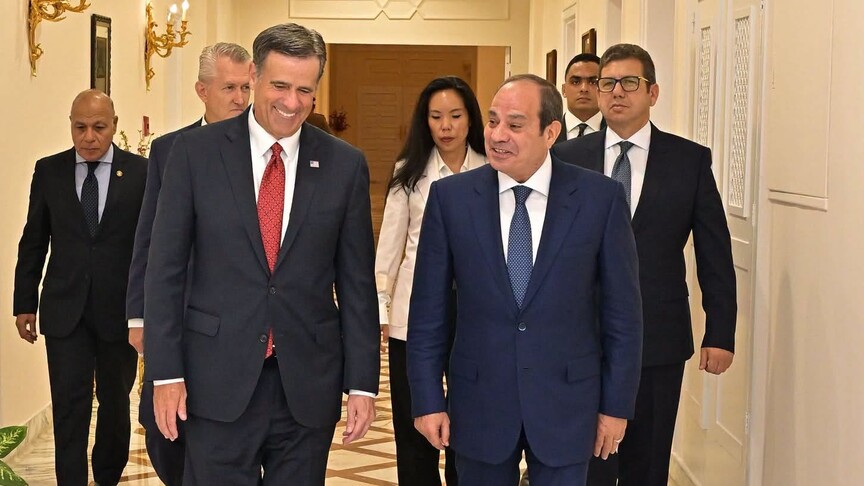
Egyptian President Abdel Fattah al-Sisi recently held discussions with CIA Director John Ratcliffe in Cairo, highlighting the urgent need for a resolution to the ongoing crisis involving Iran. This meeting underscores the strategic importance of regional stability and the implications of international navigation in the Middle East.
Call for Diplomatic Solutions
During their conversation, President Sisi emphasized Egypt’s strong commitment to facilitating diplomatic efforts aimed at resolving the Iranian crisis. He articulated Cairo’s unwavering support for negotiations that would bolster regional security and ensure safe international maritime routes. The success of such diplomatic endeavors is crucial not only for Egypt but also for the broader stability of the Middle East. Sisi firmly rejected any actions that threaten the sovereignty and security of Arab nations, advocating for the resolution of conflicts through peaceful means and addressing their underlying causes.
Escalating Regional Tensions
Tensions in the region have intensified since the U.S. and Israel launched military operations against Iran in February. This prompted Iran to retaliate by targeting nations hosting U.S. military assets and even leading to the temporary closure of the Strait of Hormuz, a crucial maritime corridor for oil and gas shipments. Although an agreement between Washington and Tehran was struck in June to halt hostilities and reopen these vital waterways, the accord has since unraveled due to disagreements over security arrangements and navigation protocols.
The Importance of Ceasefire Agreements
In addition to addressing the situation with Iran, President Sisi called for the strict implementation of the ceasefire agreement in Gaza. He praised the efforts of mediators to uphold the ceasefire and reiterated Egypt’s commitment to establishing conditions that protect civilians and facilitate humanitarian assistance. Sisi’s focus on brokering a lasting truce aligns with a broader vision aimed at creating an environment conducive to political dialogue and exploring a two-state solution to the Israeli-Palestinian conflict.
Progress and Challenges in Gaza
The engagement around Gaza is part of a larger framework put forth by U.S. President Donald Trump, who introduced a 20-point plan to end the hostilities in September 2025. The plan encompasses several critical measures, including the release of Israeli captives, the disarmament of Hamas, and the establishment of a technocratic administration. However, challenges persist, with Israel continuing to maintain control over approximately 70% of the Gaza Strip, insisting that Palestinian factions disarm before any military withdrawal can take place. The ongoing conflict has devastated the region, leading to a tragic loss of life and significant infrastructural damage, with nearly 74,000 casualties reported since October 2023.
In summary, the discussions between President Sisi and CIA Director Ratcliffe reflect the complex interplay of regional politics and the pressing need for cohesive international responses to crises. As diplomatic efforts evolve, the focus on establishing secure and peaceful environments for both Iran and Gaza remains paramount for long-term stability in the Middle East.