
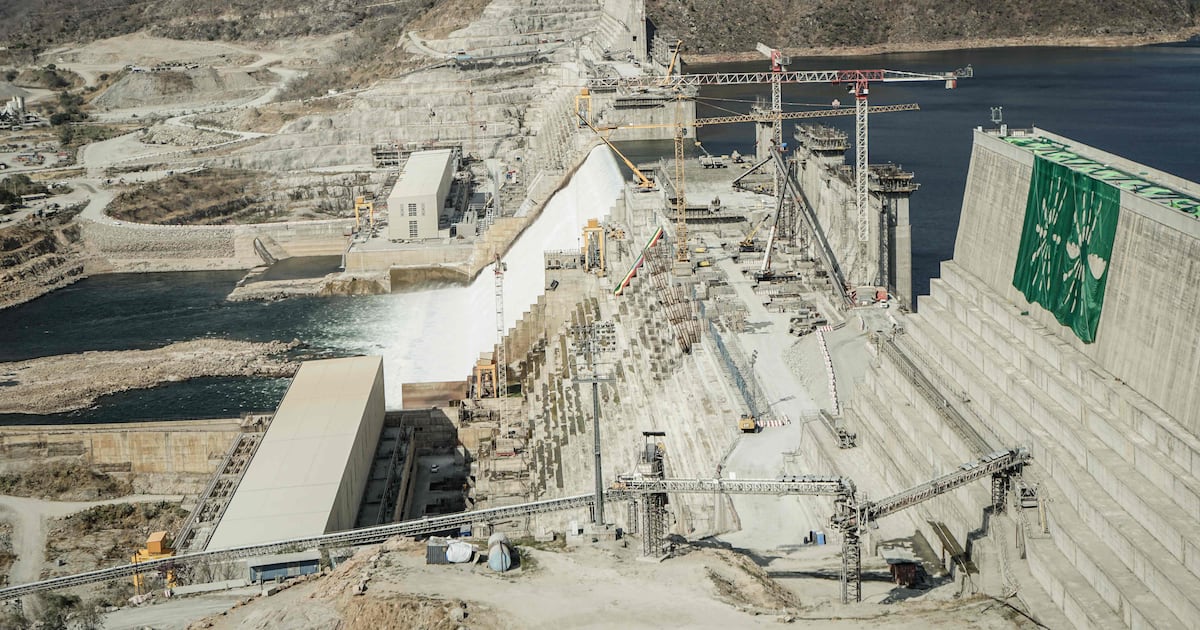
Egypt is steadfast in its commitment to finding a diplomatic resolution to its ongoing conflict with Ethiopia regarding the contentious Grand Ethiopian Renaissance Dam (GERD). Prime Minister Mostafa Madbouly articulated this stance during a recent interview, emphasizing that the Nile River holds vital significance for Egypt’s national security.
National Security and Water Resources
During the CNN Business Arabic interview, Madbouly expressed that the Nile is indispensable for Egypt, supplying approximately 95% of the nation’s water resources. He underscored the existential nature of the Nile’s significance, as any threat to this water source poses a profound risk to the country’s stability. In a further escalation of tensions, both Egypt and Ethiopia last week expelled diplomats, signaling deteriorating relations. Leaders from Egypt, Eritrea, Sudan, and Somalia convened to reinforce their alliance, aiming to address concerns raised by Ethiopia regarding its accusations of external interference in its internal matters.
Egypt’s Diplomatic Approach
Madbouly dismissed Ethiopian narratives that portray Egypt as an impediment to African development. He affirmed that Egypt supports growth initiatives across the continent provided they do not adversely affect its interests, particularly concerning the Nile. He stated, “International law governs such rivers, establishing that all nations sharing a river are stakeholders in its water resources.” This reflects Egypt’s long-standing position to seek a diplomatic approach in negotiations related to the GERD. President Abdel Fattah El Sisi has reiterated this strategy, emphasizing that while Egypt strives for peaceful resolutions, it will not compromise the vital interests of its nation or its people.
Water Management and Cooperation
Madbouly articulated specific, non-negotiable principles surrounding the management of the GERD, including regulations that mandate Egypt’s prior consent regarding operational decisions. He stressed the necessity for a collaborative framework in managing the dam’s operations, especially to safeguard downstream nations in times of drought. The prime minister pointed out that the challenge of prolonged droughts necessitates careful planning, as the dam’s refill process could drastically affect Egypt’s water availability.
Infrastructure Investment and Economic Growth
In addition to foreign policy challenges, Madbouly defended Egypt’s substantial infrastructure investment program, which aims to lay down the foundation for sustainable economic growth following years of political instability. He noted that Egypt previously lacked adequate energy and essential services, making such investments imperative. The government has taken the initiative in infrastructure development, citing that political uncertainty has hindered private investment in long-term projects.
As a result of these efforts, Egypt’s economy has shown signs of recovery, with a reported growth rate of 5.1% for the fiscal year 2025/26, an increase from 4.4% in the previous year. Additionally, the government aims for a growth target of 5.4% in the current fiscal cycle, indicating a positive outlook based on the domestic economy’s underlying productive capacity rather than transitory external support. Officials remain optimistic that the growth trajectory, driven by robust sectors, is sustainable and integral to the nation’s long-term development.
In summary, Egypt is navigating complex challenges regarding the GERD while simultaneously pursuing essential infrastructure advancements to bolster its economy and secure its water resources.