
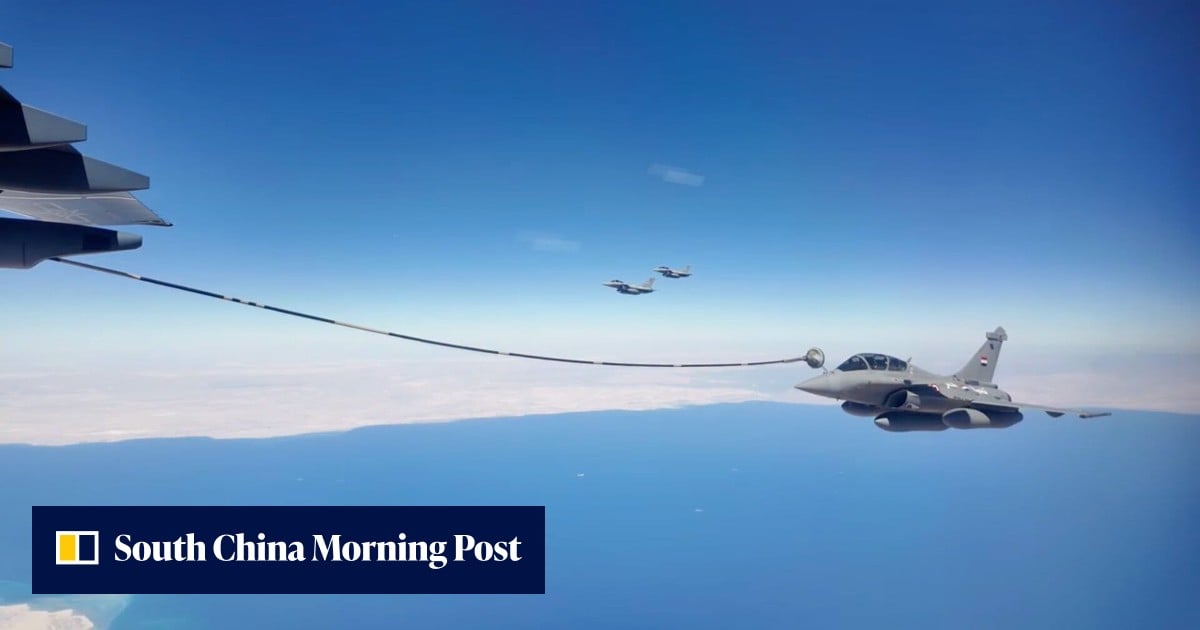
In a significant display of international defense collaboration, recent images show a Chinese YY-20 aerial tanker refueling a French-built Rafale fighter jet operated by Egypt. This event underscores the potential for enhanced multinational air operations and may also improve the YY-20’s appeal in the global defense market.
Joint Military Exercises Highlight Versatility
Released by the Egyptian military, the photographs capture the aerial refueling process during the “Eagles of Civilisation 2026” joint exercise, which began last month. This exercise is taking place across various air bases in Egypt and aims to boost military collaboration among participating nations. The YY-20, also known as the YU-20, operates as an aerial refueling variant of China’s Y-20 strategic transport plane, primarily designed to extend the operational range and endurance of aircraft in flight.
The Significance of Multi-Platform Refueling
What makes this incident particularly noteworthy is that the Rafale fighter jet is reportedly the first Western-made aircraft seen receiving fuel from a Chinese tanker. Last year, a YY-20A had already demonstrated its capability to refuel Egyptian MiG-29 planes during the previous “Eagles of Civilisation” drills. This versatility highlights the YY-20’s potential to support both Western and Eastern military jets, marking a significant step forward in the realm of military interoperability.
Additionally, these various platform demonstrations align with China’s strategic objective to enhance its long-range military capabilities. Chinese J-16 fighter jets recently completed a 6,000 km (3,730-mile) journey to Egypt, utilizing YY-20 tankers for in-air refueling throughout the transit. This large-scale operation indicates the effectiveness of Chinese aerial refueling assets in extending operational scope beyond Chinese borders.
Broader Military Implications
According to reports from the People’s Liberation Army (PLA) Air Force, the YY-20A did not just serve as a basic refueling unit but also functioned as an airborne command post during the latest military maneuvers. This capability suggests a pronounced shift in how aerial tankers could be leveraged, implying that their roles may extend beyond merely extending the range of combat aircraft to include comprehensive air operation coordination over long distances.
Michael Bosack, a director at the Parley Policy Institute, emphasized the strategic opportunities this presents for Beijing. The ability to refuel foreign aircraft boosts military interoperability and offers potential marketing avenues for the YY-20 on the global stage. By demonstrating these capabilities, China is not only showcasing its technological advancements but also enhancing its influence within international military circles.
In summary, the YY-20’s role during the “Eagles of Civilisation 2026” exercises exemplifies the importance of collaborative military efforts and the potential for expanded operational reach. These developments have implications not only for China’s military readiness but for its ability to engage with partner nations, further strengthening defense ties around the world.