
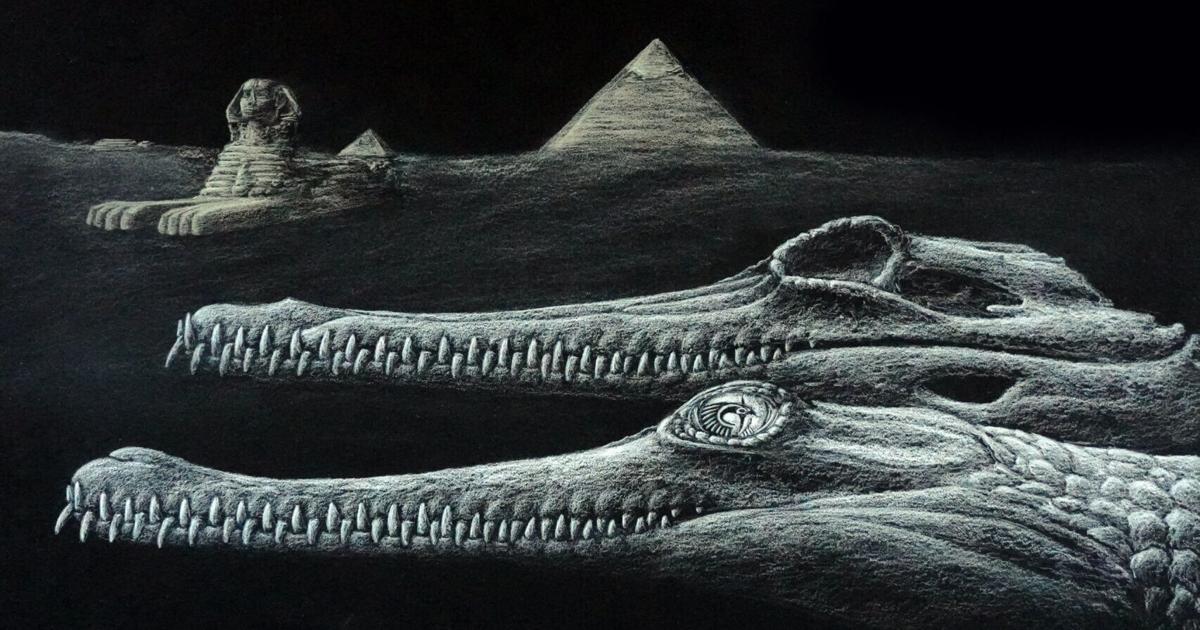
A fascinating discovery has emerged from the depths of history: a new species of ancient crocodile, named Herugavialis cairensis, has been identified by scientists. This species not only intrigues paleontologists but also pays homage to an Egyptian deity. What makes this find remarkable is its existence in the very same geological formations used to construct the Great Sphinx of Giza.
Uncovering Herugavialis cairensis
The insights obtained from examining Herugavialis cairensis provide valuable information about the evolution of crocodiles. Scientists believe that this species once inhabited the wetlands around ancient Egypt, where they likely contributed to the ecosystem’s balance. The crocodile’s physical traits, specifically its unique snout structure, hint at adaptations for a specialized diet, possibly feeding on fish or other aquatic life. This discovery casts a new light on the biodiversity that existed during that era and raises further questions about the environment of ancient Egypt.
Researchers conducted their investigation in the same formation where the Great Sphinx is located, yielding remnants that suggest a rich history of life in this region. The fossils exhibit a distinctive morphology that sets Herugavialis cairensis apart from other known crocodilian species, indicating that it may have occupied a unique ecological niche. This has implications for our understanding of the evolutionary pathways taken by reptiles in response to changing environmental conditions.
The Significance of the Name
The choice to name this crocodile after an Egyptian god reflects not only the cultural significance of ancient Egypt but also the deep-rooted relationship between humans and wildlife in history. Herugavialis is derived from “Heru,” an ancient deity associated with the sky, often depicted as a falcon. This connection emphasizes the potential importance of crocodiles within ancient Egyptian culture, where they may have been revered for their power and grace.
Naming species after historical figures or deities is a common practice in scientific nomenclature. It allows researchers to draw connections between their findings and the cultural landscapes from which they originated. In the case of Herugavialis cairensis, it bridges the gap between paleontology and ancient history, showcasing how current scientific discoveries can resonate with age-old traditions and beliefs.
Future Implications and Research
The discovery of Herugavialis cairensis represents a starting point for ongoing research into the prehistoric ecosystems of Egypt. As scientists continue their excavation and analysis, they hope to uncover more fossils that could provide additional insights into the interactions between species during that period. This work may help reconstruct the environmental dynamics that led to the flourishing of both animal life and the eventual rise of ancient civilizations.
Understanding these early crocodilians can also shed light on modern species, offering lessons on adaptation and survival. As climate change presents new challenges to wildlife today, studying the past can inform conservation strategies for current species facing similar existential threats.
In summary, the identification of Herugavialis cairensis opens the door to a wider understanding of the biological history of ancient Egypt while honoring the rich tapestry of its cultural heritage. Scientists hope that this significant find will inspire further research and exploration, particularly in the biodiverse and historically rich regions of the world.