
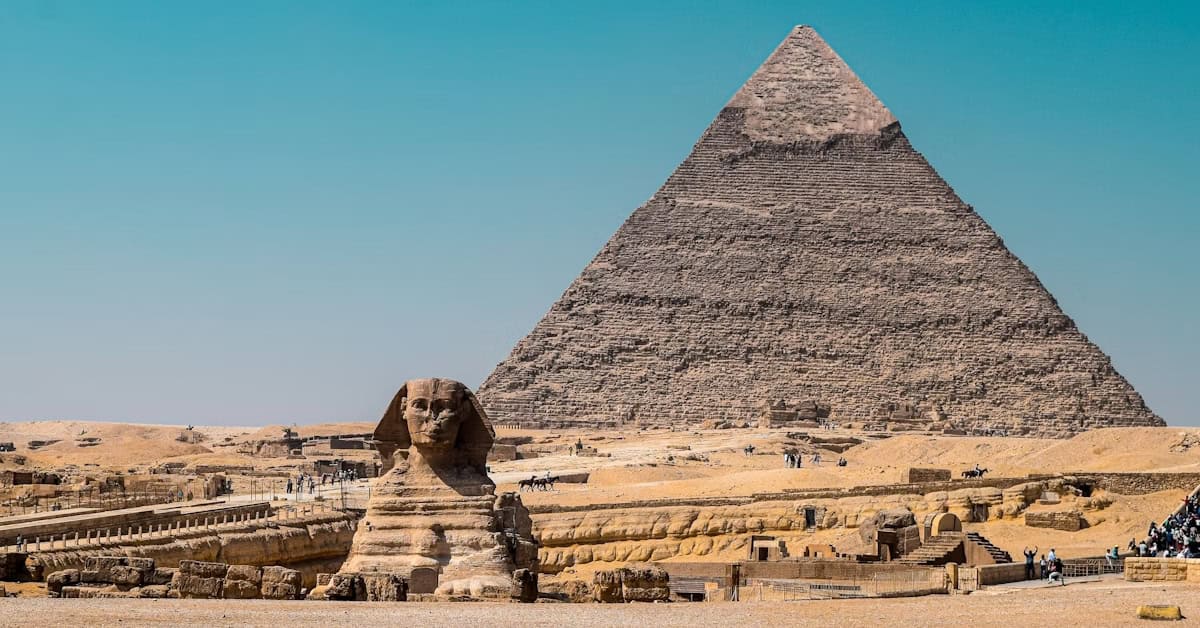
In the serene expanse of Laconia, located in southern Greece, there exists a structure that has ignited debates among historians and archaeology devotees—a stunning pyramid in Vigklafia. This lesser-known monument is believed by some to predate many well-known ancient sites in Egypt. While overshadowed by its more famous counterparts, the Vigklafia pyramid beckons questions regarding its builders, the time of its construction, and the interpretations that may have persisted for centuries. Nearby, an unusual carving resembling a sphinx adds another layer to this archaeological mystery, suggesting a deeper historical narrative waiting to be discovered.
The Enigmatic Pyramid of Vigklafia
Despite Egypt being renowned for its iconic pyramids, Greece holds its own set of intriguing ancient structures, including a small number of pyramids that have sparked ongoing debates among scholars. While the Pyramid of Hellinikon and the Pyramid of Ligourio are often highlighted, many of Greece’s pyramids, including the one in Vigklafia, remain shrouded in mystery. Experts are divided over their ages, with some suggesting they hail from the Classical era, while others argue that these structures may be far older than previously believed.
The Pyramid of Vigklafia stands as an elusive example. Its pyramid shape, though subtly weathered, remains intact despite centuries of erosion and displacement. Folklore suggests that the pyramid may have originally been far larger, but over time, local inhabitants used its large stones for more modern constructions like storage sheds and sheep pens. Although partially dismantled, the core of this enigmatic structure still commands attention today.
One of the major hurdles for historians lies in the fact that the Laconia pyramid has never undergone formal excavation. Without scientific studies, the true purpose of this structure remains speculative. Was it a fortification designed to protect the coastal areas? A grand burial site for a long-forgotten ruler? Or perhaps a storeroom for valuable goods? Until proper archaeological investigations are undertaken, the pyramid will remain one of the Mediterranean’s best-kept secrets, leaving a trail of questions in its wake.
The Sphinx of Laconia: Natural Wonder or Man-Made Artifact?
In close proximity to the Vigklafia pyramid, another enigma lies in the form of a weathered rock structure dubbed the “Sphinx” of Laconia. This ancient formation, seemingly rising from the bedrock, prompts guesses about its origins. Though years of natural erosion have softened its edges, many observers believe they can still discern the shape of an iconic guardian, a creature often featured in classic Greek art.
What is particularly remarkable about this find is that Greek sphinxes are typically small, seen in paintings, sculpture, or as modest statues. The discovery of such a large figure in the landscape poses questions for historians and archaeologists alike: Is this the result of early engineering prowess, or merely a natural occurrence? This ambiguity adds to the fascination surrounding the site.
The Urgency to Investigate Vigklafia and Its Sphinx
Recent plans to construct a nearby power plant have brought renewed attention to these ancient wonders. While the construction does not pose an immediate threat to the relics, it has sparked a dialogue among locals who are eager to preserve the historical integrity of their environment.
The significance of the Vigklafia pyramid is underscored not only by its impressive dimensions—actually making it one of Greece’s largest pyramidal structures—but also by its intriguing design. Spanning approximately 57 by 52 feet and encircled by a deep trench on three sides, it might have served as a highly secure fortress instead of simply a monument. Although scattered pottery suggests human presence around 2,500 years ago, many believe that more extensive archaeological work would reveal an even older foundation.
The passage of time has certainly dealt a heavy blow to the site: many of its massive rocks have been repurposed, and exposure has contributed to erosion. Given these factors, a comprehensive examination is crucial for uncovering the true story behind this monument. Until then, the Vigklafia pyramid remains an open-air puzzle, drawing curious travelers and scholars alike to contemplate the possibilities of its past and the guardianship it may have once provided.