
Ancient Crocodile Species Unearthed in Egypt
A groundbreaking discovery has been made in the world of paleontology: scientists have identified an ancient species of crocodile. This remarkable finding was hidden within the layers of rock that were historically used to create iconic sites such as the Great Sphinx of Egypt.
Unveiling the Fossil
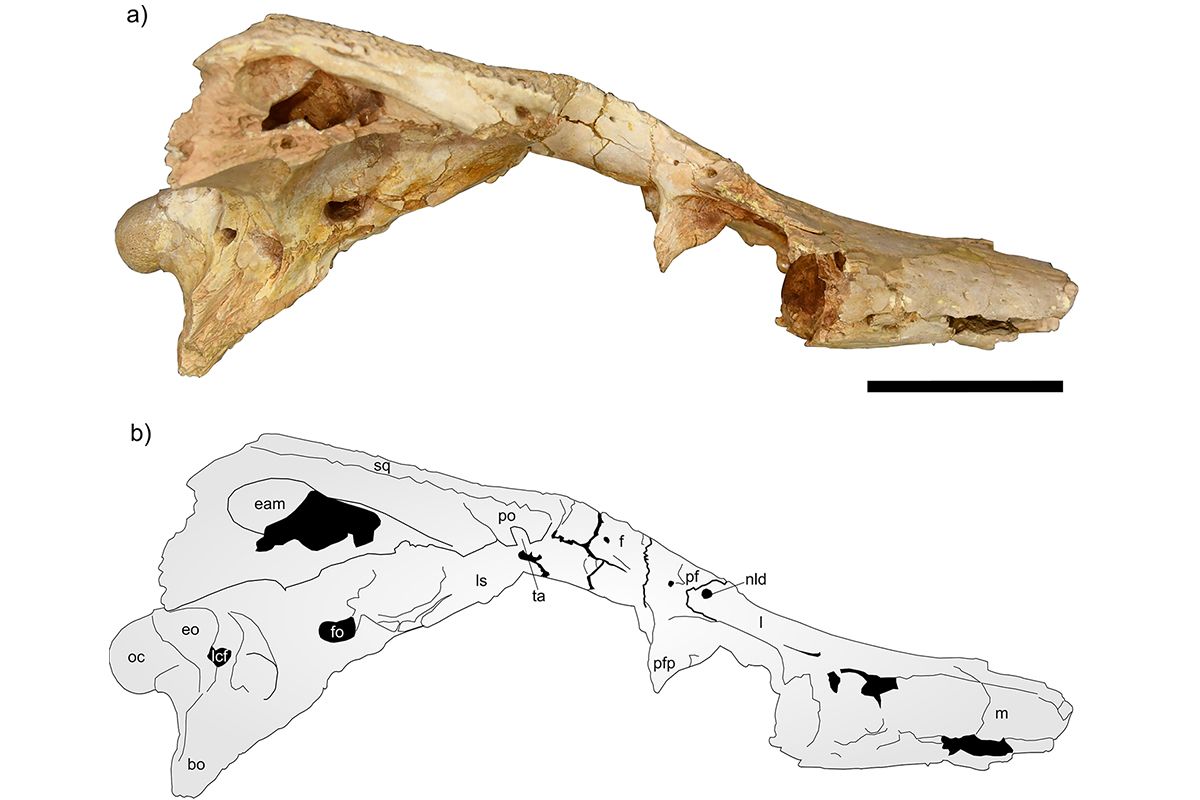
The research, detailed in a study published in the Royal Society Open Science journal on October 7, reveals a new species of gharial—a group within the crocodilian family distinguished by their long, slender snouts. The fossil was uncovered from the Mokattam Formation, a significant geological layer known for housing numerous ancient fossils, including those of sharks and whales. This rock formation also played a vital role in constructing monumental structures, including the Great Pyramid of Giza and the Sphinx, dating back to around 2500 B.C.E.
Interestingly, the fossilized remains of this newly classified gharial bear a striking resemblance to the Sphinx itself; both display the peculiar absence of the tip of their noses. To reflect this connection, researchers have named the new genus Herugavialis, invoking the name of Heru (or Horus), an Egyptian deity associated with significant historical and cultural monuments.
Ecosystem and Evolutionary Significance
The species, designated as Herugavialis cairensis, constitutes one of six gharial species known to have evolved in the Mediterranean during a 43 million-year span from 66 to 23 million years ago. According to Paul Burke, a co-lead author of the study, there is potential for even more undiscovered species hidden within these geological layers. The current living relatives of this ancient gharial include only two species: the Indian gharial and the false gharial, both of which face endangerment.
Delving deeper into evolutionary studies, the research compared the Herugavialis fossil with various other known crocodilian relatives. This analysis confirmed that Herugavialis is distinct enough to warrant its own genus, highlighting the incredible diversity that once existed among these ancient reptiles.
A Potential Goldmine for Paleontological Discoveries
The lead author of the study, Philip Mannion, suggests that the Mokattam Formation could hold even more significant discoveries. The fossil remains suggest there might be larger and more varied fossils yet to be unearthed within this ancient geological treasure. “It’s very likely that other fossils will continue to be discovered in this formation, particularly from animals that thrived in shallow marine environments,” Mannion stated, hinting at the rich prehistoric history still waiting to be uncovered.
As scientists continue to explore these ancient layers of rock, we can anticipate thrilling new findings that will further illuminate our understanding of ancient ecosystems. The discovery of Herugavialis not only enriches the narrative of crocodilian evolution but also serves as a reminder of the secrets that lay within Earth’s geological history.
In summary, the unearthing of this ancient crocodile species underlines the importance of geological formations in understanding our planet’s past, and the findings signal a hopeful future for further paleontological explorations in Egypt and beyond.