
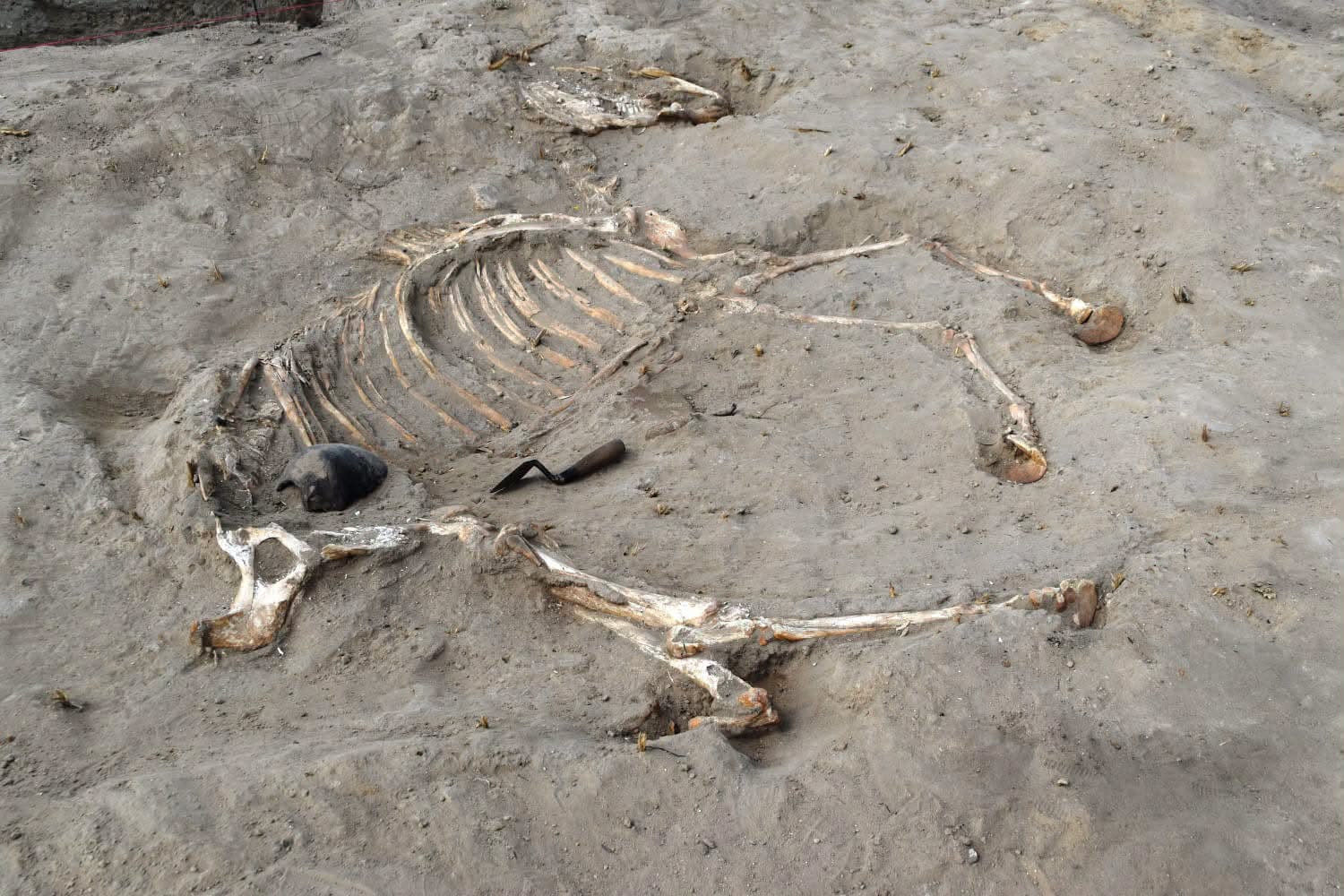
An exciting archaeological discovery has emerged from northern Egypt, where a team has uncovered significant artifacts at a New Kingdom fortress. Situated at Tell Al-Abqain, this site has unveiled not only a rare horse burial but also inscriptions associated with the famed King Ramesses II. These findings provide a unique glimpse into military and daily life during ancient times.
Insights into Fortress Life Through Excavations
Recent excavations have revealed a well-preserved mud-brick residential complex that dates back over 3,000 years. The complex features a main thoroughfare approximately four meters (13 feet) wide, running from east to west and connecting to a secondary street leading to a limestone entrance. Within this ancient structure, archaeologists discovered storage grain silos and cylindrical pottery ovens, which were likely used for food preparation. Such features align with similar discoveries made in another significant settlement in Egypt, emphasizing the consistent living conditions across different locations.
Parts of this complex contained substantial pottery jars, some of which still held charred wheat grains, suggesting the inhabitants had a stable food supply. Additionally, there were living quarters located near wells in the fortress’s southeastern section. Previous expeditions in this area had unveiled three stone wells etched with the titles of Ramesses II, further enhancing our understanding of the site’s historical significance.
The Significance of the Horse Burial
One of the most noteworthy discoveries is the complete burial of a young male horse, believed to belong to a medium-sized, agile breed. This horse might have been used for various purposes, including military assignments or logistical support with chariots. The careful positioning of its body and head points to intentional burial practices, highlighting the importance of horses in ancient Egyptian society.
In proximity to the horse burial, cylindrical alabaster and limestone objects were found, potentially parts of a harness used for chariot horses. This contributes further evidence of martial activities that took place within the fortress, underscoring its defensive role along Egypt’s western frontier.
Inscriptions and Religious Artifacts from the Past
The excavation also yielded fragments of a limestone stela featuring a hieratic inscription linked to King Merneptah, marking it as a monumental find for the Beheira region. The inscriptions laud the king’s power, comparing him to the god Seth and invoking the divine name of Ptah. In addition, another limestone stela was found bearing the royal names of Ramesses II, adding layers of significance to the excavation.
Among additional artifacts were scarabs inscribed with the names of Ramesses II and Seti I, alongside other religious symbols, including amulets shaped like fish, lotus flowers, and various deities. These finds reflect the rich cultural and religious practices that thrived in the fortress community.
Excavations at Tell Al-Abqain remain ongoing, as researchers continue to uncover additional artifacts that will further illuminate the lives and practices of those who inhabited this strategic fortress during Egypt’s New Kingdom period. The findings here play a crucial role in understanding Egypt’s historical defenses and the societal structures that supported them. With each artifact unearthed, we gain deeper insights into a fascinating chapter of ancient history.