
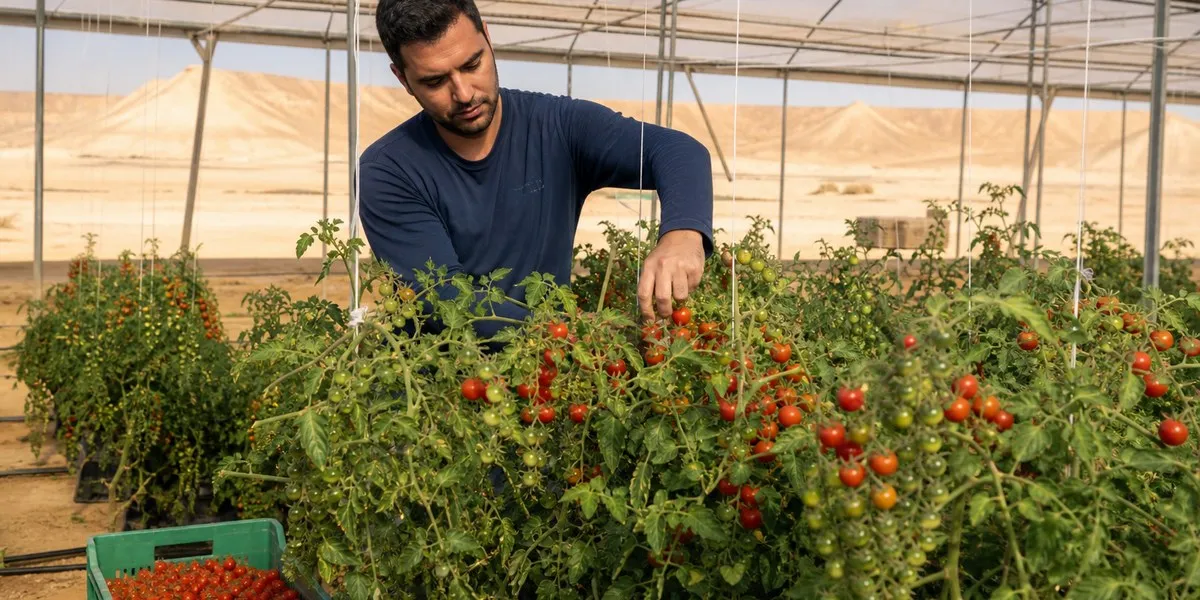
Noam Efrat, a dedicated 33-year-old farmer, cultivates cherry tomatoes in Kadesh Barnea, a small agricultural community situated just 300 meters from the Egyptian border. Relocating from Metula in 2022 with his wife, Noa, and their son, Negev, Efrat has embraced the challenges and rewards of farming in this unique landscape. His family has been involved in agriculture since 1995, when his parents started growing cherry tomatoes after moving from Beersheba, despite lacking prior experience.
A Day in the Life of a Farmer
Efrat’s daily routine begins at 5:30 a.m. with a short, five-minute commute to the farm. Mornings are typically reserved for intensive work in the greenhouses, after which he returns home to escort his son to kindergarten. Once back at the farm, Efrat continues his efforts until noon. As temperatures rise, he adapts his schedule, returning to the greenhouses later in the day when the heat diminishes. This flexible work routine is influenced by the amount of daylight, ensuring he maximizes productivity while maintaining a work-life balance.
Aside from his farming duties, Efrat also serves in the Israel Defense Forces reserves, having completed over 300 days since October 7. This military background complements his extensive education, which includes a degree in environmental and computer sciences, followed by a master’s in agroinformatics from Ben-Gurion University. His commitment to both the land and his service highlights the multifaceted life of a modern Israeli farmer.
Navigating Agricultural Challenges
The agricultural landscape in Kadesh Barnea poses unique challenges, especially concerning water resources. Efrat utilizes brackish underground desert water and desalinated water to sustain his crops. The region’s cool desert nights are particularly conducive to tomato cultivation, contributing to the sweetness of his cherry tomatoes. Local farmers also diversify their crops, growing cucumbers, wine grapes, peppers, and salicornia, adapting to the specific conditions of the area.
Moreover, Efrat actively participates in the Gesher L’Dorot project, aimed at preserving the history of communities in the Nitzana region. His location near the border presents additional difficulties, including threats from smuggling activities conducted via drones. Efrat reports that these drones are often used to transport illegal goods, including ammunition and weapons, intended for groups operating in southern Israel. This context underscores the complexities of farming in proximity to such border challenges.
Community and Personal Impact
The vibrant community of Kadesh Barnea, consisting of 87 families, plays a crucial role in Efrat’s life, offering a sense of stability and support amid external challenges. However, residing near the border also brings its share of complications, such as limited access to specialized medical services. Efrat faced this reality when his son required ear surgery, necessitating a trip to Jerusalem.
In conclusion, Noam Efrat’s journey as a farmer in Kadesh Barnea encompasses not just agriculture but also community, resilience, and adaptability. Through his dedication to sustainable farming practices and engagement with regional history, he embodies the spirit of modern Israeli agriculture, navigating the complexities of his environment while contributing positively to his family and community. As Efrat continues his work, his story serves as an inspiring example of determination in the face of adversities inherent in border living.