
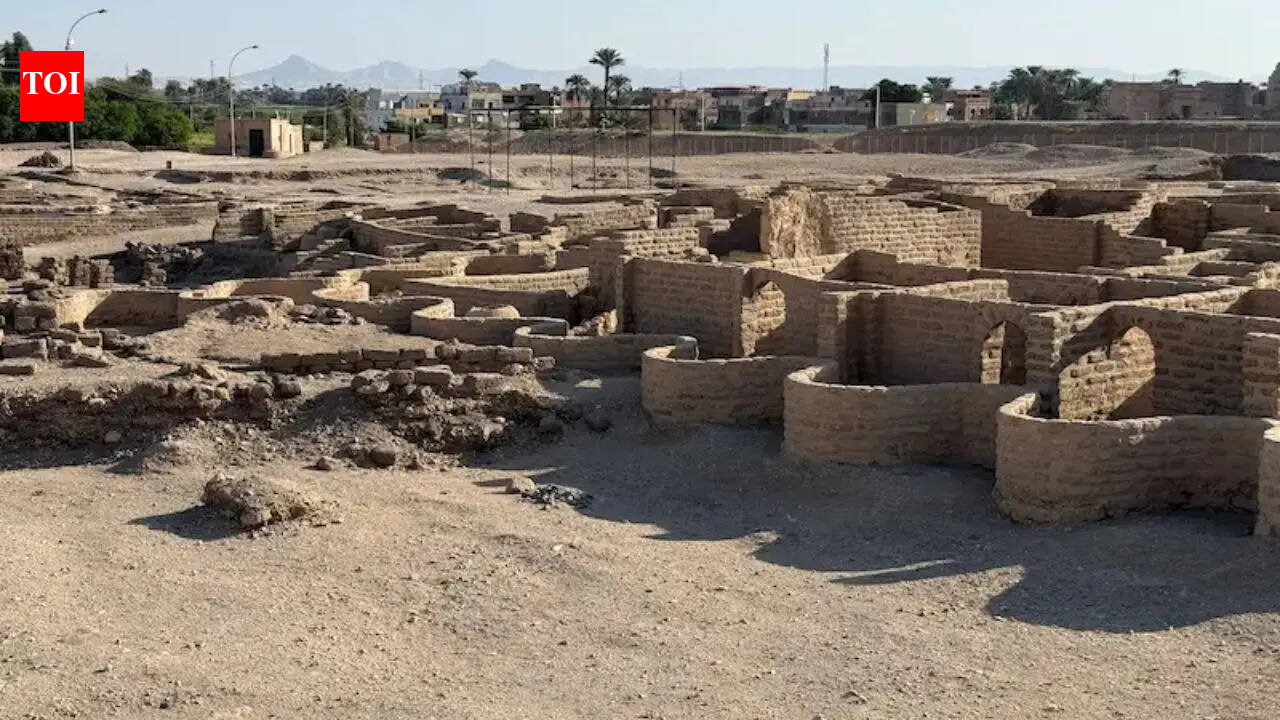
The Lost Golden City of Luxor, an awe-inspiring archaeological find, has reshaped our understanding of ancient Egypt. Discovered beneath the sands near modern-day Luxor, this sprawling settlement dates back over 3,000 years and reveals a fascinating glimpse into the daily lives of ordinary Egyptians during the golden age of Pharaoh Amenhotep III.
The Discovery of Luxor’s Lost Golden City
In 2020, an Egyptian archaeological team, led by the renowned Zahi Hawass, stumbled upon this extraordinary site while searching for the mortuary temple of Tutankhamun. What began as a quest to uncover royal artifacts quickly evolved into an exploration of a vast urban landscape. Instead of isolated remains, the team uncovered mud-brick walls extending for considerable distances. As they excavated further, streets, courtyards, and storage areas emerged, painting a clearer picture of a lively settlement that thrived during the reign of Amenhotep III, one of Egypt’s most influential pharaohs.
The level of preservation at the site astonished researchers, with walls standing up to three meters high and artifacts strewn about as if the residents had just vacated. The uncanny state of the city has led experts to draw comparisons with Pompeii, where everyday life remains remarkably well-preserved, providing invaluable insights into ancient societies.
The Significance of the Rise of Aten
Historians believe this settlement was known as the Rise of Aten, functioning as a crucial administrative and industrial center during Egypt’s New Kingdom period. The city supported various royal construction projects and served as a hub for a considerable workforce contributing to the empire’s economy. Under Amenhotep III, Egypt expanded its trade networks, amassing wealth and prestige. The Rise of Aten emerged as an essential locale where officials, artisans, and laborers collaborated to sustain the royal court.
The presence of royal seals stamped on mud bricks throughout the city strongly indicates state control, reflecting the sophisticated management of resources and labor during this era. The site also holds significant religious implications; its connection to Aten, the sun disk deity, may shed light on the transition from traditional Egyptian practices to the monotheistic worship introduced by Akhenaten, the successor of Amenhotep III.
Insights into Daily Life: Kitchens and Food Production
Among the most intriguing findings within Luxor’s Lost Golden City are the remnants of kitchens and food production areas. Archaeologists uncovered a large bakery complex, complete with ovens and storage jars holding traces of ancient provisions. The scale of these kitchens suggests a well-organized food distribution system that catered to the needs of the settlement’s inhabitants.
Some jars contained remnants of dried meats and grains, while one vessel even bore a hieratic inscription detailing the contents, preparation date, and the butcher’s name. Discoveries like these offer rare glimpses into the everyday lives and routines of common Egyptians, enhancing our understanding of their social dynamics.
Craftsmanship and Industry: Building Ancient Temples
The Lost Golden City also served as an industrial center, hosting workshops where artisans crafted glass items, ornamental tiles, and amulets like scarabs. Archaeologists discovered various molds and tools used for production within these workshops, which likely played a pivotal role in constructing the grand temples of ancient Thebes. Even the mud bricks produced here bore the official seal of Amenhotep III, underscoring the centralized control and organization at this significant site.
In summary, the discovery of the Lost Golden City of Luxor has opened new avenues for exploring the complexities of ancient Egyptian life. From its administrative and industrial significance to its daily routines and artisanal practices, this archaeological site is pivotal in understanding one of history’s most intriguing civilizations.