
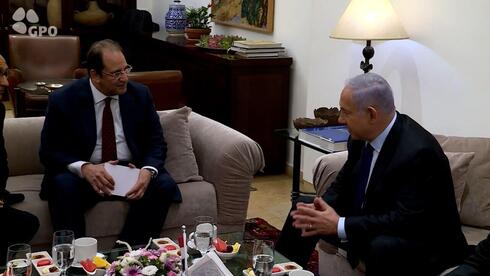
Prime Minister Benjamin Netanyahu recently admitted that he was made aware of a potential threat from Hamas prior to the devastating events of October 7. This acknowledgment came during an interview with Channel 14, where he revealed that Egyptian intelligence chief Abbas Kamel visited Israel about a week and a half before the attack to issue warnings about an imminent assault.
### Warning Signals from Egyptian Intelligence
Two days after the massacre, sources affirmed that Kamel had sent a clear message to Netanyahu’s office indicating that a significant operation was being organized by Hamas. A senior Egyptian official conveyed this urgency, stating it was an unusual situation. Despite these warnings, the Prime Minister’s Office refuted the report, leading to questions about the seriousness of the intelligence received.
Netanyahu claimed he did not engage in any dialogue with Kamel during his brief visit. “Since when does an intelligence chief speak to a head of state? It’s never happened to me,” he stated, denying direct communication. However, this raises eyebrows given that just two years prior, Kamel had been received by Netanyahu at his residence, where they were seen shaking hands and engaging in discussion.
### The Visits and Their Implications
The context of Kamel’s visit on September 26 is crucial. The Egyptian leader reportedly sent his intelligence chief with a strong warning about Hamas’s plans and even recommended that Israel ease economic restrictions in Gaza to prevent further escalation. This visit lasted only 59 minutes, indicating the urgency of the situation, and a former Israeli official highlighted that the brevity of this meeting acted as a significant message itself.
According to investigations, a plane associated with Egyptian intelligence made a quick landing at Ben Gurion Airport, emphasizing the critical nature of the information Kamel was bringing. As Netanyahu attended a memorial ceremony two hours after Kamel’s departure, he articulated a lesson learned from the Yom Kippur War—that no threat should ever be underestimated.
### Accountability and Security Concerns
Netanyahu’s emphasis on wanting to uncover whom Kamel met during his short visit illustrates his concern over accountability in the security apparatus. “I’m seeking answers from the security and law enforcement authorities as to who else was involved in this meeting,” Netanyahu stated, hinting at a deeper investigation into the implications of Kamel’s warning.
Notably, Kamel’s escalating anxiety regarding Hamas was also reported, bolstering earlier claims and underscoring the pressing need to heed intelligence warnings. As more details about the intelligence operations between Egypt and Israel come to light, it will be crucial to address the lessons learned from this alarming situation not only for future security measures but also for diplomatic relations.
The unfolding narrative will likely have significant repercussions on how Israel engages with its neighbors and handles intelligence strategies moving forward—especially in relation to Hamas and potential future threats. The questions remain whether these warnings were adequately prioritized within Israel’s defense systems and what protocols can be put in place to prevent such oversights in the future.