
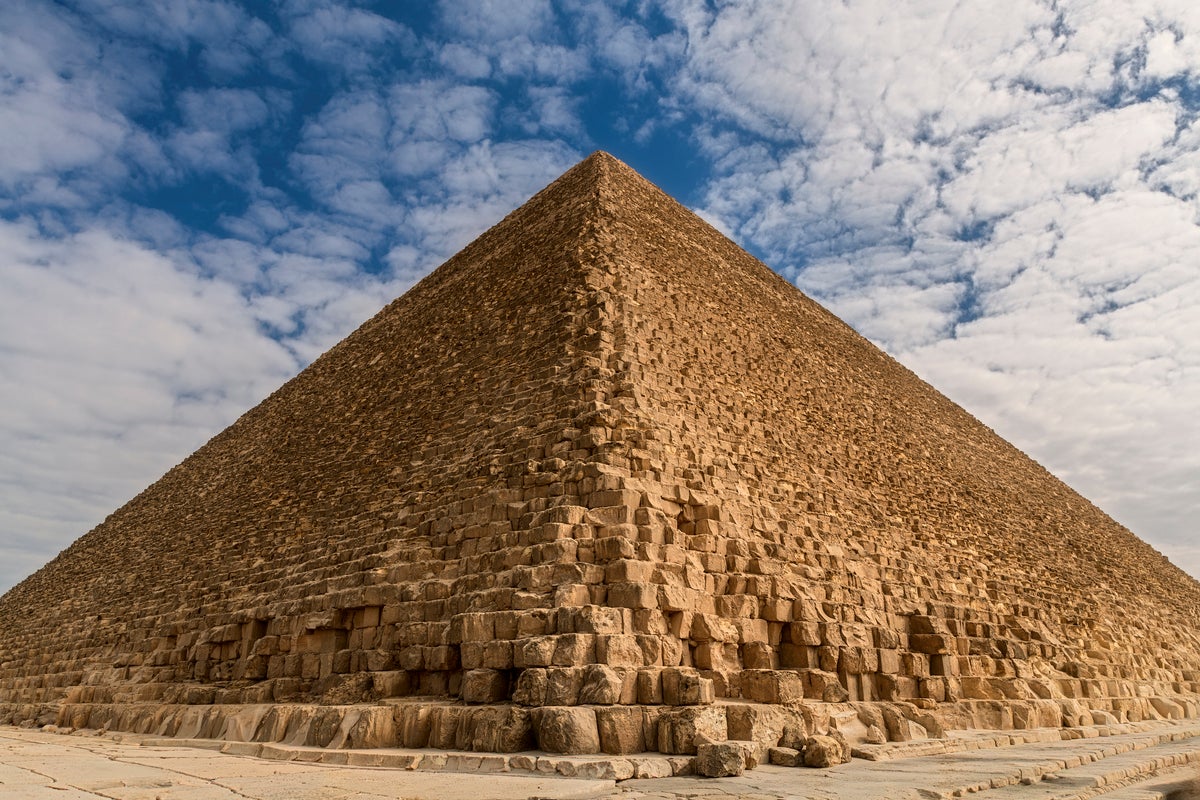
The Great Pyramid of Giza, known as the Khufu Pyramid, has intrigued historians and scientists alike since its construction over 4,600 years ago. This iconic structure has endured numerous geological disturbances, including significant earthquakes in 1847 and 1992, raising questions about how it has withstood the test of time. Recent research sheds light on the hidden features within the pyramid that may have bolstered its resilience against seismic events.
Understanding the Pyramid’s Resilience
A recent study published in Scientific Reports provides invaluable insights into the structural integrity of the Great Pyramid. Researchers conducted extensive measurements to identify the structure’s “fundamental frequency,” which informs how buildings behave during seismic activity. Lead author Mohamed ElGabry, a professor at Egypt’s National Research Institute of Astronomy and Geophysics, compares this frequency to the sway of a swing. A structure’s response to shaking depends not just on its weight, but also on how it moves in relation to both external forces and the ground beneath it.
ElGabry’s team discovered that the Great Pyramid has a natural frequency of approximately 2.3 hertz, significantly higher than the ground frequency of 0.6 hertz. This frequency disparity plays a crucial role: structures resonating with the same grounding frequency can experience amplified forces during an earthquake, which can lead to catastrophic failure. Given that the Khufu Pyramid’s frequency is much higher, it appears to mitigate the potential impact of seismic tremors.
The Role of Internal Features
The study also highlights unique internal features within the pyramid that help reduce seismic risk. Among these are “pressure-relieving chambers,” strategically placed within the structure. These chambers likely serve to dissipate seismic energies, further protecting the pyramid from quake-related damage. In addition, the pyramid was constructed on a robust limestone plateau, which provides foundational stability essential for withstanding geological shocks.
ElGabry emphasizes that engineers today conduct similar assessments to ensure modern buildings can endure earthquakes. However, the insights gained from studying the Great Pyramid are groundbreaking, as this is the first occasion such evaluations have been applied to this ancient edifice. He notes, “The findings indicate how ancient builders ingeniously adapted their designs to achieve durability against the forces of nature.”
Ancient Ingenuity in Design
Interestingly, it remains uncertain whether the ancient Egyptians possessed explicit knowledge of these seismic principles. ElGabry asserts that they did not have access to the modern understanding of physics, yet their designs reflect a remarkable intuitive grasp of structural stability. The construction techniques seen in the Great Pyramid and other ancient structures, such as the Bent Pyramid, indicate that builders were effectively “learning by doing.”
These historical methodologies highlight the Egyptians’ ability to observe and adapt their constructions through trial and error, tailoring their designs to the environmental conditions they faced. The optimization of materials and structural elements illustrates a sophisticated level of engineering that would impress modern architects and engineers alike.
Ultimately, the Great Pyramid of Giza stands not only as a marvel of ancient architecture but also as a testament to the ingenuity of civilizations long past. The combination of its unique structural traits and the methods employed by its builders has allowed it to weather the ages, reminding us of the enduring legacy of human innovation.