
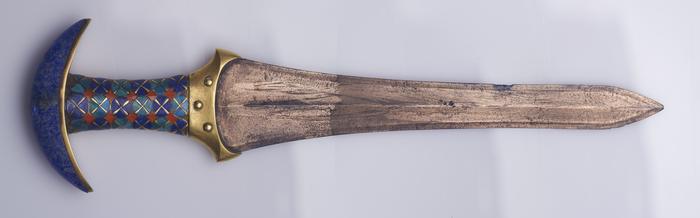
In a remarkable discovery in Egypt, researchers from Beni Suef University have unearthed a dagger dating back to the 14th century BCE. This find highlights the rich tapestry of ancient Egyptian civilization and its craftsmanship. The dagger’s intricate design and the materials used provide insights into the culture and technologies of the time.
Significance of the Discovery
The recently uncovered dagger has garnered significant attention for its historical implications. Dating to the era of the 18th Dynasty, the weapon offers a tangible connection to a period characterized by artistic and political flourishing in ancient Egypt. Researchers believe that the dagger was likely a symbol of power and might have been used in ceremonial contexts.
The analysis of materials used in the dagger’s construction is equally revealing. The blade, crafted from a type of meteoric iron, underscores the advanced technological capabilities of ancient Egyptian artisans. This suggests a level of sophistication in metallurgy that challenges previous assumptions about the materials available to ancient cultures. The presence of such materials also indicates that the Egyptians had developed extensive trade networks, allowing them access to resources not found locally.
Insights into Ancient Egyptian Life
Artifacts like the dagger provide critical insights into the daily lives of ancient Egyptians. The attention to detail in its design reflects not only aesthetic preferences but also social hierarchies. The prominence of weaponry in tombs suggests that martial prowess was highly regarded in this era, emphasizing the importance of power dynamics in ancient Egyptian society.
Furthermore, the discovery encourages a reevaluation of the role of technology in ancient civilizations. As researchers continue to study this find, they aim to understand the broader implications of technological advancements on status, trade, and even warfare within the context of the ancient world. This dagger, therefore, is more than just an object; it’s a key to unlocking the complexities of an extraordinary civilization.
Continuing Research and Future Discoveries
The excavation team, led by Zeinab Hashesh, is committed to ongoing research in the region. The significance of this find may prompt further archaeological pursuits, enhancing our understanding of the 18th Dynasty and its contributions to history. The researchers are particularly interested in exploring other potential sites that could yield similar artifacts, thereby shedding more light on the cultural practices of ancient Egyptians.
Future studies will likely focus on the dagger’s contextual significance within burial practices and societal structure. By integrating multidisciplinary approaches, including chemistry, material science, and anthropology, scholars aim to create a more comprehensive picture of the ancient Egyptian world. Each discovery has the potential to answer question about not just the past, but also the evolution of human civilization itself.
In summary, the recent discovery of the dagger in Egypt is not only a testament to the advanced skills of ancient craftsmen but also a catalyst for further exploration into the complexities of their society. As researchers continue to delve into these findings, we can anticipate a richer understanding of a civilization that has long fascinated and inspired wonder worldwide.