
China’s recent military exercises in Egypt coincide with Xi Jinping’s state visit, highlighting a growing partnership. The activities not only serve as a demonstration of China’s military capabilities but also indicate a strategic shift in defense procurement for Egypt.
Military Collaboration: A New Chapter
The joint military exercise, titled Eagles of Civilisation 2026, marks the second collaboration between Chinese and Egyptian air forces. Initiated on August 21, this engagement brought a significant number of Chinese aircraft to Egypt after a 6,000 km flight. Unlike the previous year’s exercise, this year featured a more extensive and diverse Chinese contingent, showcasing an array of fighter jets, aerial tankers, and surveillance aircraft. The increased presence aims to highlight equipment that Beijing hopes Egypt and other Middle Eastern nations may consider purchasing, potentially replacing Russian military supplies.
As noted by defense experts, there’s a compelling push from China, underlined at the highest levels of leadership, to position itself as a preferred source of non-Western military equipment for Egypt. Historically, Egypt relied heavily on Russia, having received 46 MiG-29M fighters between 2017 and 2021. However, the country appears to be reconsidering its options, particularly after rejecting a lucrative deal for Su-35S fighters from Russia in 2018. This shift may stem from Egypt’s dissatisfaction with the Su-35’s performance compared to Western-made jets, suggesting a growing openness to Chinese offerings.
An Overview of Chinese Aircraft
China’s military arsenal includes various aircraft that could interest Egypt. Among them, the J-16 fighter stands out as a showcase model rather than an exportable asset. This multirole fighter has been highlighted during the exercises as a representation of China’s advanced military capabilities. However, geopolitics restrict its sale due to prior agreements with Russia.
In contrast, the J-10C fighter has generated substantial attention, being actively promoted by Chinese authorities ahead of Xi’s visit. This medium-weight fighter has a complex origin story, influenced significantly by technology transfers from Israel in the late 20th century. Its operational success, especially noted in Pakistan, points towards its capability and potential suitability for Egypt’s defense needs.
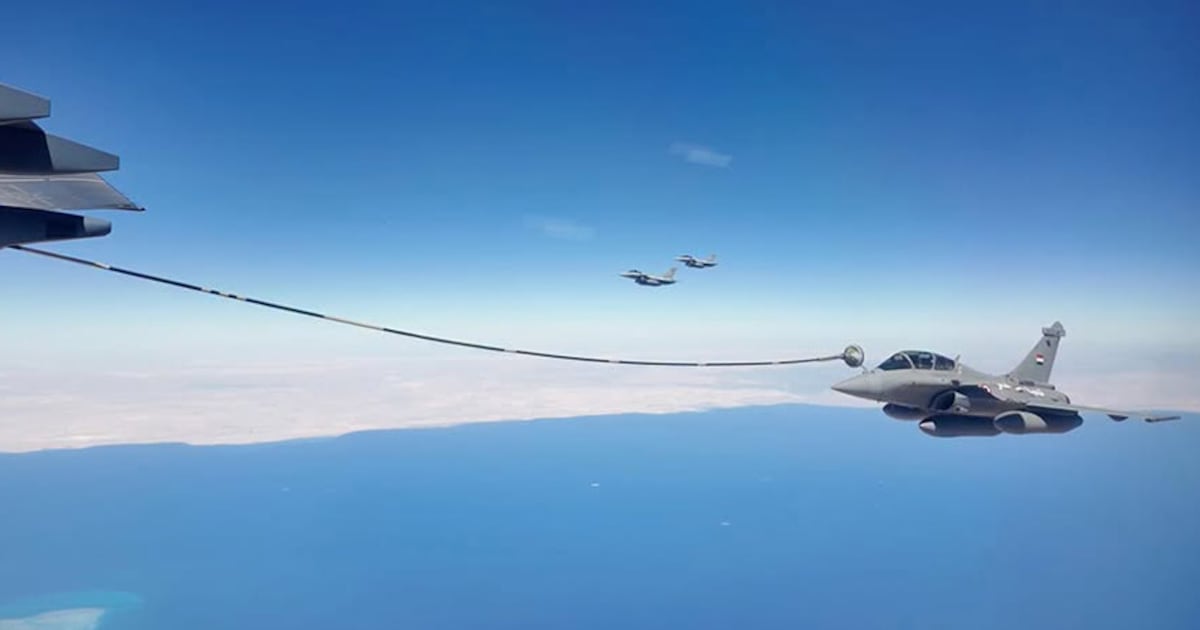
Another aircraft of interest is the J-35, a stealth fighter that could elevate Egypt’s military standing within the Arab world if acquired. Though it was not part of this exercise, its potential sale remains an enticing prospect. Meanwhile, the YU-20 aerial refueling tanker demonstrated cross-compatibility by successfully refueling an Egyptian Rafale fighter, showcasing operational versatility.
Strategic Implications and Future Prospects
The exercises and equipment display in Egypt signify more than an exchange of military assets; they represent an integrated approach to combat operations that combines aerial and ground support systems. With Egypt’s defense imports declining sharply, the allure of Chinese products is becoming increasingly relevant. Nevertheless, turning to China for military supplies could have significant geopolitical repercussions, especially concerning U.S and European interests in the region.
A decision to pursue advanced Chinese aircraft like the J-10C or J-35 could spark heightened security concerns in Washington and Paris, potentially leading to sanctions under the Countering America’s Adversaries Through Sanctions Act. This legislation has previously impacted nations that have opted for Russian military hardware. As the Egyptian government navigates its historical reliance on U.S military assistance, the repercussions of this choice will shape future defense collaboration in the Middle East.
As Xi Jinping wraps up his visit to Egypt, the decision-making process surrounding defense procurement remains uncertain. The evolving dynamics suggest that Egypt must weigh the immediate benefits of diversified military sourcing against long-standing political alliances.