
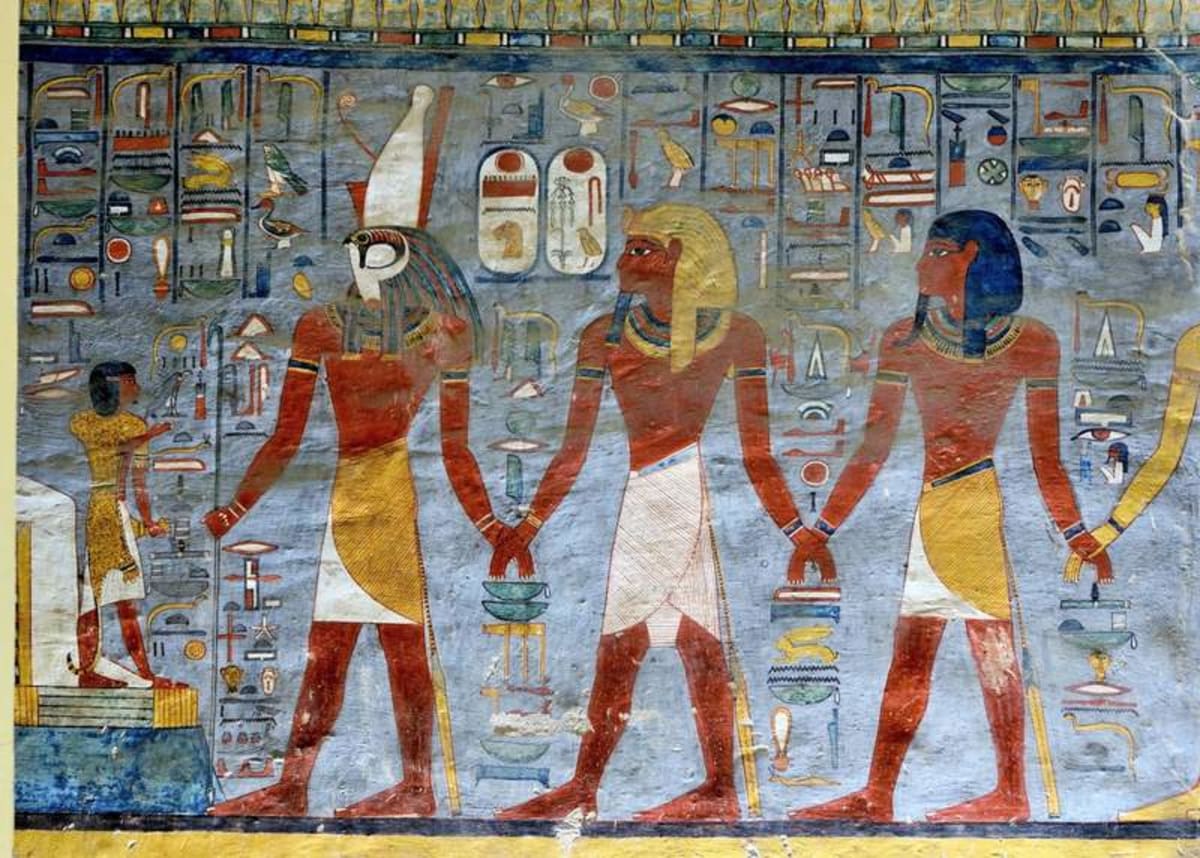
Animal glue, traditionally derived from skin and bones, has long been believed to be the primary binding agent in ancient Egyptian paint. However, new findings indicate that some paint layers also included proteins from sesame and moringa seeds, two materials not previously associated with ancient Egyptian artistry. This discovery suggests that artisans adapted their techniques and utilized available resources rather than adhering to a strict formula.
Innovative Testing Methods Reveal New Insights
Clara Granzotto, a researcher from the Globe Institute at the University of Copenhagen, spearheaded a collaborative study involving institutions including the prestigious British Museum and the Ny Carlsberg Glyptotek. The research analyzed 28 small samples of paint and glue obtained from 14 objects dated between approximately 1425 BCE and 400 CE, covering a remarkable span of 1,800 years.
The objects tested ranged from wooden coffins to fragments of tomb murals and painted limestone used in architectural settings. Initially, each sample underwent infrared screening to detect any protein content, followed by a more detailed proteomics analysis. This method disintegrates ancient proteins into shorter segments, allowing for a comparison with existing protein databases. The findings were illuminating; many proteins showed visible signs of degradation, indicating authenticity from ancient materials rather than modern restorations.
Diverse Sources of Glue in Ancient Egyptian Art
The study revealed that cattle collagen was the most frequently identified protein in the samples, confirming its common role in glue production derived from skin, bones, and other connective tissues. Some paint exhibited a mix of collagens from various animals, including sheep, goats, donkeys, and horses. For instance, a specific green layer on a wooden coffin featured a blend of cow and goat protein, indicating a diverse approach to material selection.
Interestingly, the data did not establish any correlation between the source animal and the type of objects, colors used in the paint, or even their historical significance. Such findings suggest that artists likely relied on readily available animal by-products, possibly from local butchery practices, to craft their artworks.
Uncovering Non-Traditional Ingredients
Further investigation led to the discovery of proteins from egg and wheat in the paint samples. A green paint fragment from the Tomb of Nebamun, dated around 1350 BCE, contained proteins originating from both chicken egg whites and yolks, indicating that whole eggs could have been intentionally utilized as a binding agent for paints. While these findings present significant insights, the researchers cautioned against jumping to conclusions, suggesting that future studies may be required to rule out contamination from conservation efforts.
Moreover, wheat proteins were identified, hinting that artists may have purposefully included flour-based substances in their paint mixtures. Samples from another tomb also contained proteins from barley and rye, suggesting that ancient Egyptians had a diverse range of grain products at their disposal.
Introduction of Unconventional Plant Proteins
In an unexpected twist, the study also identified sesame proteins in two distinct artworks, one from a Nebamun fragment and the other from a Greco-Roman coffin. The findings indicated that sesame, as well as moringa proteins, were uncommon yet present in ancient pigments, suggesting further diversity in paint formulation. Notably, the absence of contaminants in control samples confirms the integrity of these findings.
Moringa, intrinsically linked to the ancient Egyptian deity Ptah, adds a layer of cultural significance beyond its practical uses. Researchers speculate that the tree’s connection to craftsmanship might have led artisans to employ moringa in their artworks either as a tribute or for its protective qualities.
Future Research Directions
While this groundbreaking study provides insights into ancient Egyptian art materials, researchers acknowledge that their sample size limits broad generalizations. The selected artifacts were not randomly chosen; they were specifically curated based on type, dating, and provenance. Consequently, the prevalence and specific uses of these newly identified ingredients across other Egyptian artworks remain largely unexplored. Further testing on a wider range of artifacts could shed light on additional uses of sesame, moringa, egg, and grain in ancient paint formulations, deepening our understanding of the artisans’ methods and cultural practices.
The full findings of this study are documented in the journal Science Advances, indicating a significant advancement in our knowledge of ancient Egyptian artistic techniques and materials. If you’re interested in more articles like this, consider subscribing to our newsletter for an array of engaging content.