
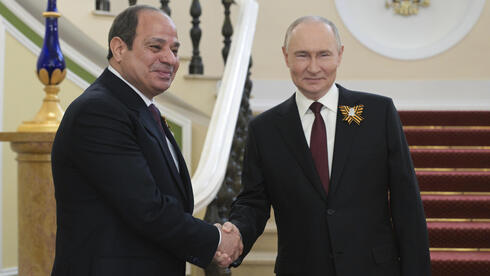
When Vladimir Putin recently stated that Egypt’s Dabaa Nuclear Power Plant might start commissioning its first reactor unit by 2027, many interpreted this as an energy infrastructure development. However, this perception misses a critical point: Dabaa is not merely a project for power generation; it represents a broader strategic maneuver, artfully cloaked in peaceful civilian cooperation rhetoric. Central to this narrative is its impact on Israel’s security dynamics.
The Strategic Importance of the Dabaa Project
In 2015, Egypt and Russia formalized their nuclear cooperation with a comprehensive agreement, coinciding with Russia’s military intervention in Syria. This agreement positioned Russia not just as a technical partner but as a pivotal player in remolding the Middle East’s security landscape to its advantage. The financial terms of the Dabaa deal were designed to ensure Egypt’s long-term dependency on Russian capital. With Rosatom committed to constructing four VVER-1200 reactors along Egypt’s Mediterranean coast for $25 billion—backed by a soft loan from Russia—Cairo finds itself tied to a partner with a vested interest in its energy future.
Beyond financing, the implications of this partnership extend deeply into operational control. The arrangement includes long-term contracts for Russian fuel supply, training of Egyptian technicians by Russian experts, ongoing maintenance agreements, and waste reprocessing—all of which effectively bind Cairo to Moscow for the operational span of the facility. The potential lifespan of these reactors could well extend into the latter part of the 21st century, granting Russia a lasting strategic foothold just a short flight from Israel’s borders.
The Implications for U.S. and Israeli Security Calculations
The ramifications of the Dabaa project are multifaceted. Historically, the Egyptian-Israeli relationship, rooted in the 1979 Camp David Accords, has been integral to Israeli strategic calculations. Israel has relied on a stable southern border, one that does not necessitate friendship but aims for alignment with Western interests. As Russian influence grows through infrastructure dependency, Egypt’s future decisions regarding its foreign policy could tilt in favor of Moscow, to the detriment of U.S. and Israeli interests. The operational presence of Russian reactors along Egypt’s coast serves as a critical variable in any future policy considerations.
Putin’s strategic vision is clear: he seeks to position Russia as a key player in the nuclear discourse stretching from Iran to Egypt, effectively bridging Israel’s immediate strategic environment. Building on the legacy of a complex nuclear infrastructure, Russia has successfully maneuvered into a position of indispensable importance, cultivating relationships that have eluded Western influence for decades. By doing so, Moscow transforms what may seem like conventional energy initiatives into tools of coercive leverage.
A Critical Moment for Washington and Jerusalem
The recent announcement by Putin coincided with discussions about the Iranian nuclear program, where he emphasized ongoing consultations with President Abdel Fattah el-Sisi. This intersection of nuclear development in Egypt and Iranian negotiations creates a precarious geopolitical landscape. Russia’s dual role as Cairo’s nuclear supplier while offering advice on Tehran significantly enhances its influence across the region.
Given the current dynamics, Israel and the United States face a pressing need to reconsider their strategic posture in the Middle East. While both nations have been preoccupied with immediate threats from Iranian activities and other regional conflicts, the sustained growth of Russian influence warrants urgent attention. The Dabaa project is not merely a matter of energy; it heralds an era where Moscow could dictate the terms of regional power dynamics, significantly curtailing Western leverage in the process.
In conclusion, the Dabaa Nuclear Power Plant represents a critical juncture in U.S. and Israeli strategic calculations. Without a robust and concerted strategy to counteract Russian entrenchment, the geopolitical landscape could shift dramatically, altering alliances and power dynamics for generations to come. This shift underscores the importance of vigilance and proactive engagement as a means to preserve regional stability.