
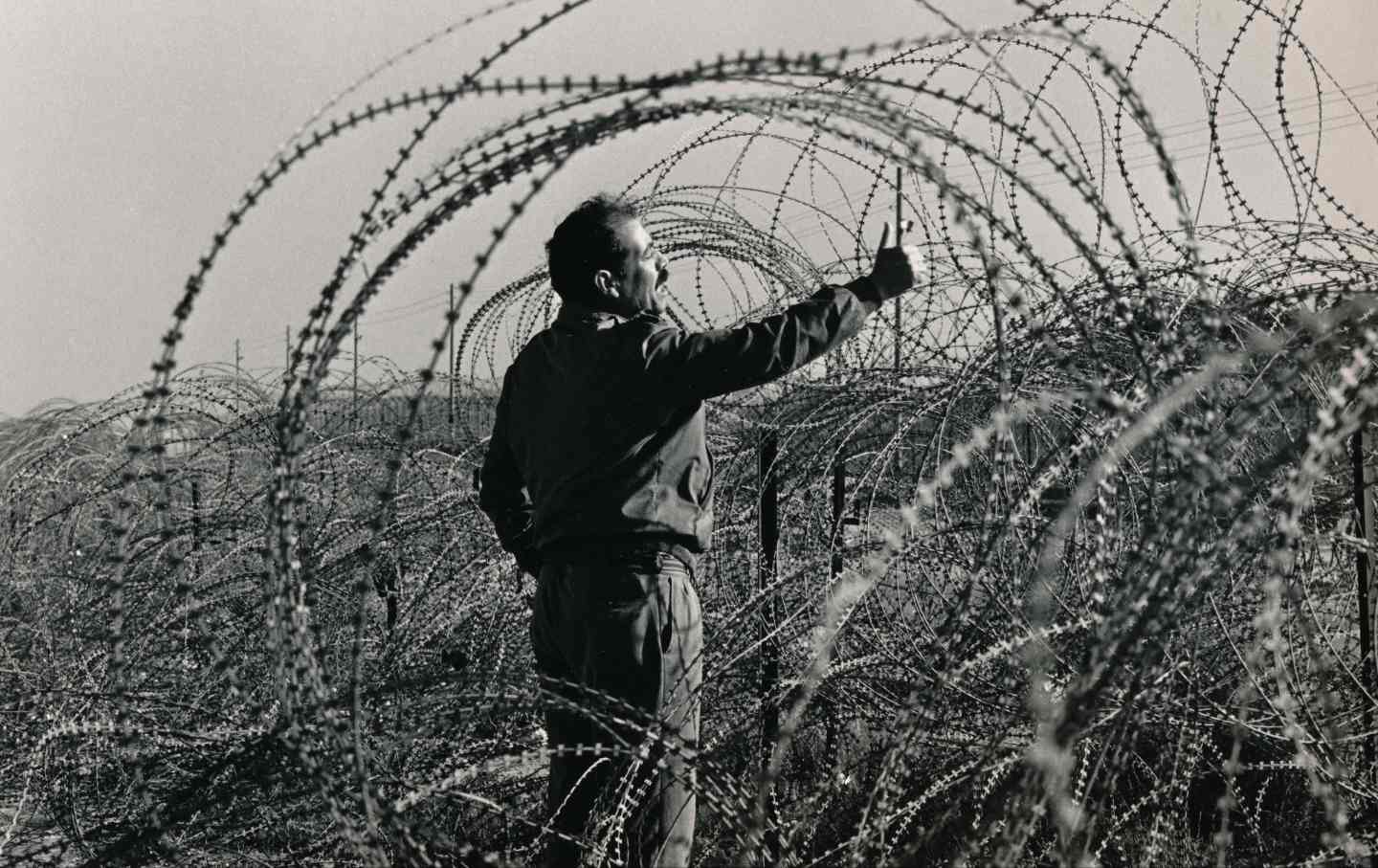
In July 1994, a poignant scene unfolded in the Sinai region of Egypt, where thousands of displaced Palestinians found themselves trapped behind a barbed-wire fence that separated Egypt from Gaza’s Rafah city. This barrier, known locally as the “shouting fence,” became a symbol of heartbreak as families were torn apart. As Palestinian Liberation Organization (PLO) chairman Yasser Arafat made his celebrated return to Gaza from exile, those stranded in the Sinai were left lamenting their separation from loved ones.
The Legacy of the “Canada Camp”
The fateful events began with the Israeli occupation of the Sinai Peninsula, which ended in 1982 when this territory was returned to Egypt under the Camp David Accords. However, the repercussions were profound. More than 4,000 displaced Palestinians, inadvertently left on the Egyptian side of the newly established border, faced a grim reality. Behind the now-constructed barbed wire, families longed to reunite, especially mothers grieving for children they hadn’t seen in over a decade. The area known as “Canada Camp” originated from a refugee housing complex established in the 1970s, initially designed to accommodate those from Rafah whose homes had been demolished. The camp became emblematic of the loss and longing experienced by so many.
In 1982, the relocation plan for these refugees, announced as part of a six-month timeline, ended up taking 18 years to materialize. The prolonged wait highlighted the complex dynamics at play as Palestinians remained in limbo, caught between Egyptian and Israeli jurisdictions, without the rights of full citizenship or acknowledgment from either entity. The tragic irony was that, while the international community addressed this displacement, personal stories of separation and despair began to fade in the public consciousness.
Enduring Separations
For residents separated from their loved ones, the fence was both a boundary and an incomplete connection. Families utilized the “shouting fence” to exchange messages, sometimes celebrating milestones through greetings shouted across the divide. One poignant moment involved a bride whose wedding permitted her to cross back to Gaza briefly; her husband was unable to hold their child until the child was three years old. The emotional toll of such divisions is immeasurable, resonating through generations as these barriers left deep psychological scars.
Despite the normalization of this separation, hopes for reunification remained alive. Yet the political landscape shifted dramatically, complicating the issue further. Ron Wilkinson, a former UN official, noted that bureaucratic and political inertia played crucial roles in stalling repatriation efforts, leading many families to wait in uncertainty for nearly two decades. By October 2000, the last residents of Canada Camp were finally allowed to return to Gaza, albeit amidst tenuous circumstances and inadequate housing.
Echoes of Displacement Today
Fast forward to today, and the pain of separation resonates once more, with renewed military actions driving waves of Palestinians into Egypt. Currently, over 200,000 individuals are reported to be stuck in a predicament reminiscent of the original Canada Camp era—again facing the “shouting fence” of division and despair. Exacerbating these struggles is Egypt’s own governmental stance, which has often mirrored Israeli restrictions on Palestinian rights. While the official narrative speaks of preserving Palestinian identity, the reality is that policies often result in deep-rooted disenfranchisement and collective punishment.
As this cycle persists, the stark separation between Gaza and Egypt—once characterized by kinship and shared culture—now underscores a harsh reality of alienation and exclusion. Many dream of a time when families could flow freely between regions, swapping stories and celebrating lives together. The longing endures for those unjustly caught in a web of division, demanding that the cries for recognition and return not be forgotten.
In these tumultuous times, it is critical to remember the past, recognize the ongoing struggles of displaced populations, and strive for a more inclusive and just future for all Palestinians.