
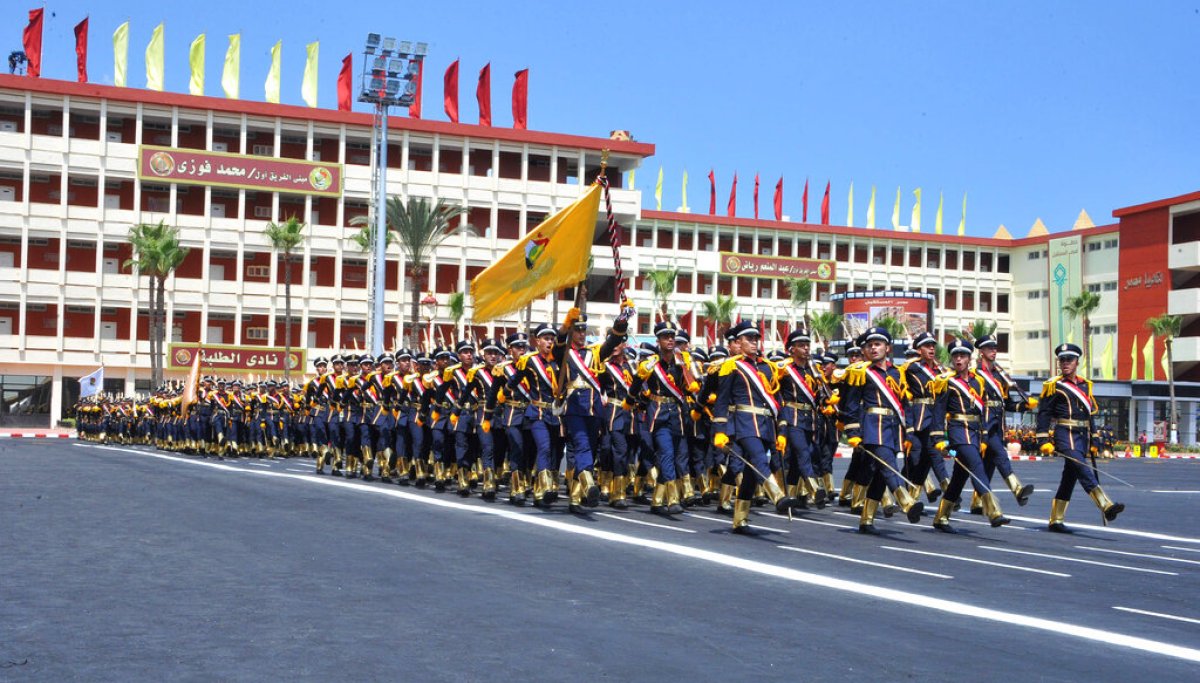
The current military landscape in Egypt’s Sinai Peninsula has raised concerns regarding regional stability and security. With approximately 40,000 troops deployed—significantly exceeding the 22,000 troop limit set forth in the 1979 peace treaty with Israel—the situation is evolving from a focused counterterrorism effort to an ongoing military presence. This escalation threatens to undermine the peaceful dynamics that have characterized the Egyptian-Israeli border for almost five decades.
U.S. Diplomatic Pressure for Change
To effectively address these concerns, the United States must leverage its influence by linking military aid and diplomatic support for Egypt to two critical steps: Egypt’s participation in the Abraham Accords and a measurable reduction of its military forces in the Sinai to align with the original treaty stipulations. While the prevailing “cold peace” has maintained relative quiet along the borders and facilitated a $35 billion natural gas deal between Egypt and Israel, it lacks the deeper economic and political integration seen in the relationships formed through the Abraham Accords by countries like the UAE, Bahrain, and Morocco.
Innovative Strategies for Collaboration
Two key actions could pave the way for a stronger partnership. First, Israel should share its advanced artificial intelligence-driven technology designed for sensor fusion and predictive analytics, which has proven effective in regions like Gaza and Lebanon. This system integrates satellite imagery, ground sensor data, and drone feeds into comprehensive, real-time threat assessments. Implementing this technology would allow Egypt to secure the Sinai Peninsula with far fewer troops, enabling a more efficient use of resources while simultaneously safeguarding critical infrastructure.
Second, a collaborative project between Egypt and Israel could establish a desalination and green-hydrogen facility in the Sinai, utilizing Israeli reverse-osmosis technology and solar energy. This initiative is crucial for Egypt, which faces severe water shortages that threaten its growing population. A joint facility would not only address an urgent domestic need but also represent tangible progress in strengthening bilateral ties through actionable collaboration.
A Transformative Diplomatic Framework
Bringing Egypt into the fold of the Abraham Accords could transform this diplomatic framework into an “Abrahamic NATO.” This new alignment would be anchored by three fundamental components: information sharing for countering Iranian influence, coordinated maritime security across the Eastern Mediterranean and Red Sea, and streamlined responses to border emergencies. Such an alliance would position Egypt as a stabilizing force in a region marked by uncertainty, prompting neighboring nations like Saudi Arabia to reconsider their strategic calculations.
Recent developments, including Saudi Arabia’s nuclear agreement with the U.S., underscore the urgency of this collaborative framework. While this agreement could potentially trigger a regional arms race, it highlights Saudi Arabia’s quest for energy diversification and credible deterrence. A partnership with Egypt would create a compelling counterbalance to any U.S.-Saudi nuclear deal, making Saudi participation in the Abraham Accords more plausible.
In summary, reconfiguring military support and diplomatic efforts toward Egypt could yield significant rewards for both nations. By prioritizing technology transfers and joint initiatives, Egypt can fortify its military capabilities while redirecting its focus to more pressing regional threats, such as unrest in Libya and disputes over water resources from the Grand Ethiopian Renaissance Dam. If these measures are not taken, the gradual erosion of the 1979 treaty will continue, leading to heightened tensions and diminished confidence among regional actors. The U.S. has a unique opportunity to facilitate a productive partnership that could significantly stabilize the region and enhance collective security. The choice is clear: either invest in strategic collaboration or risk prolonging instability.