
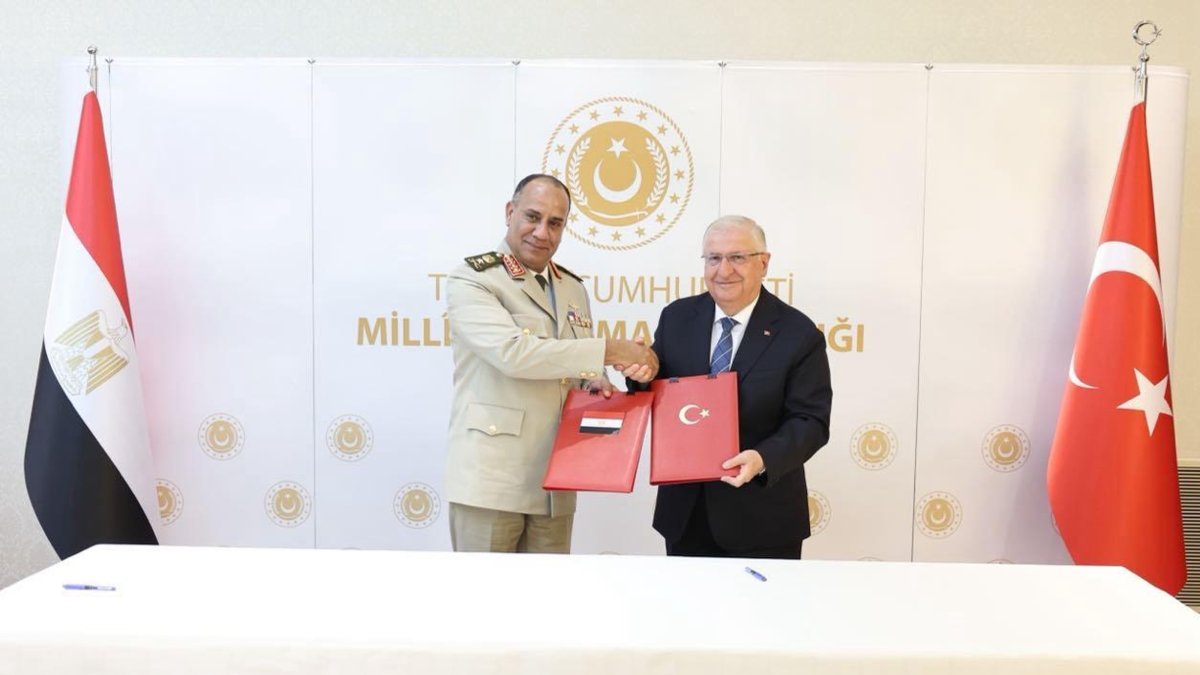
Egypt’s Defense Minister, Lt. Gen. Ashraf Salem Zaher, recently met with his Turkish counterpart, Yaşar Güler, in Ankara. This important meeting culminated in the signing of a memorandum of understanding (MoU) aimed at enhancing defense collaboration between the two nations.
Strengthening Bilateral Relations
In recent years, Ankara and Cairo have gradually revitalized their once-strained relationship. After years of diplomatic distance, the two countries have found common ground, especially in light of the escalating expansionist policies in the region by Israel. This renewed camaraderie has led both nations to evaluate and promote stronger political, economic, and security ties. The convergence of interests highlights a shared commitment to stability and cooperation in an increasingly volatile environment.
During a previous visit to Egypt, Turkish President Recep Tayyip Erdoğan emphasized the importance of fostering deeper collaboration, particularly in the areas of maritime trade, transportation, and ensuring freedom of navigation. Both nations recognize that their geographical positions and shared interests in the Mediterranean can synergize their efforts towards achieving mutual goals. Strengthening maritime security has also become a pressing concern, further solidifying the need for enhanced cooperation.
Humanitarian Coordination and Assistance
In addition to defense dialogues, Egypt and Turkey have been working collaboratively on humanitarian initiatives in relation to Gaza. With Egypt sharing a border with Gaza, their joint efforts are crucial for addressing humanitarian needs and fostering stability in the region. The recent geopolitical developments have necessitated a united front, making it imperative for both nations to coordinate their response and assistance efforts.
The partnership between Egypt and Turkey has also extended to logistical and transport routes. Earlier this month, the two countries formalized another MoU regarding cooperation along maritime routes and regional transport corridors. This agreement not only aims to improve connectivity but also ensures that both nations can effectively navigate the challenging regional landscape and enhance trade viability.
Conclusion
The ongoing engagement between Egypt and Turkey signals a significant shift in regional dynamics. While historical tensions may have colored their interactions, the current geopolitical climate has ushered in a new era of collaboration fueled by shared interests in security, humanitarian concerns, and economic cooperation. As both countries navigate the complexities of their respective roles, their renewed partnership presents an opportunity for long-term stability in the region. Enhanced defense cooperation and joint humanitarian initiatives pave the way for a more integrated approach to addressing challenges faced by both nations, ultimately contributing to broader regional peace and stability.
This evolving relationship underscores the necessity of diplomatic engagement in an unpredictable world, shedding light on the potential that lies in collaboration over conflict. With each agreement signed, Egypt and Turkey demonstrate a significant commitment to overcoming past grievances and building a prosperous future together.