
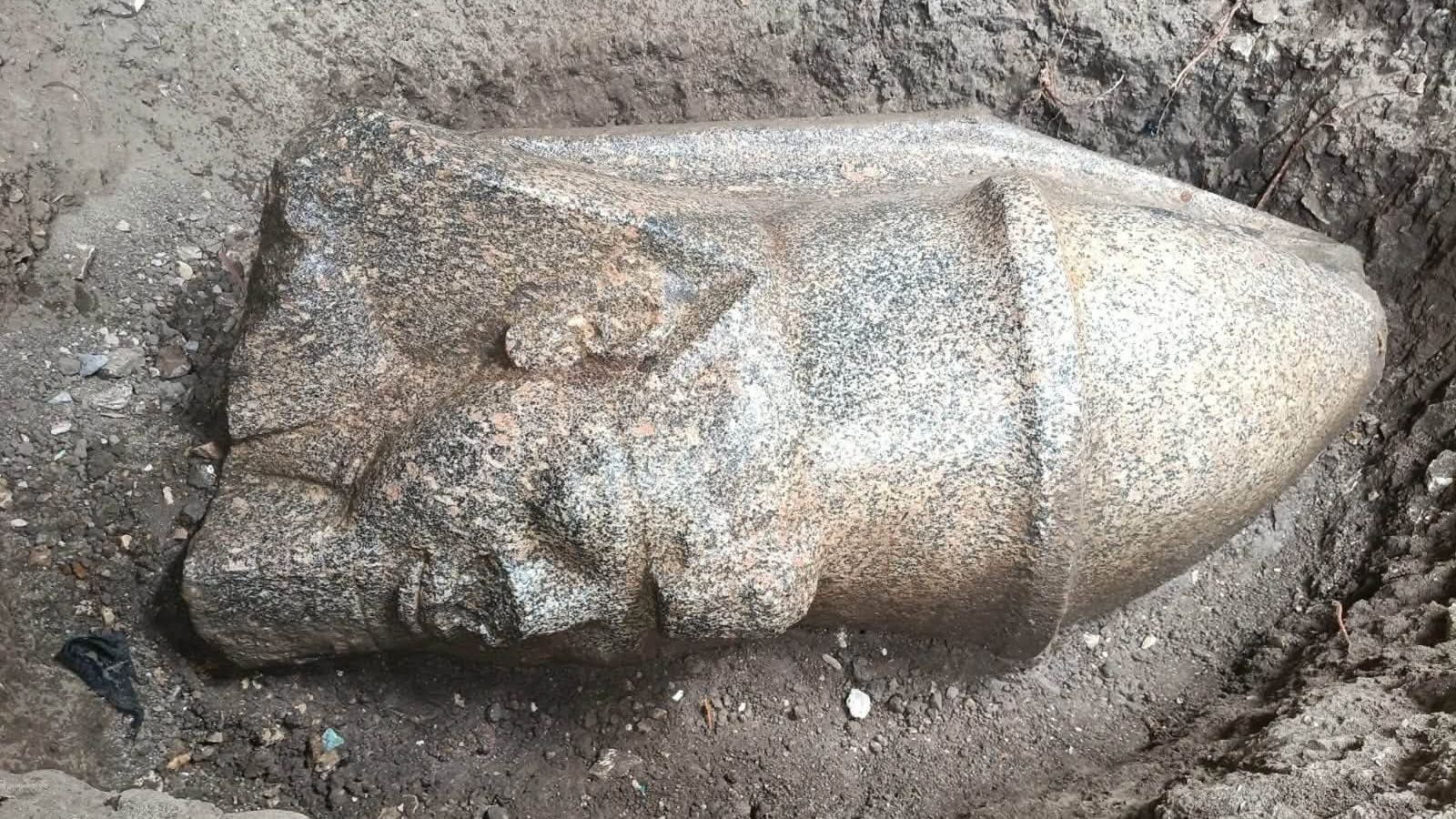
In a remarkable finding near the village of Behbeit El Hagar in northern Egypt, recent excavations have unearthed the remains of two colossal statues of the renowned Pharaoh Ramesses II. This discovery was initiated by local resident Khaled el-Shahat, who promptly alerted the Egyptian Ministry of Tourism and Antiquities upon uncovering the artifacts. A dedicated archaeological team was dispatched to investigate and recover the statues, shedding light on one of ancient Egypt’s most iconic rulers.
Significance of Ramesses II
Ramesses II, who ruled from approximately 1279 to 1213 B.C., is often heralded as one of the most powerful pharaohs in Egyptian history. His reign, lasting an impressive 66 years, saw Egypt stretching its influence as far as modern-day Syria. Notable for extensive building initiatives, Ramesses is remembered for the construction of temples and monuments that still captivate historians today. The recent findings at Behbeit El Hagar underscore his lasting legacy, suggesting that he had a profound impact on this cultural hub, which already features architectural remnants that referenced his name.
The Newly Found Statues
The statues discovered are monumental in scale; one is believed to have originally stood nearly 28 feet tall. Currently, the remaining pieces primarily include a head measuring about 5.2 feet tall, featuring intricately carved details that showcase the pharaoh wearing the traditional double crown representing both Upper and Lower Egypt. This head also carries a hieroglyphic inscription linking it to Ramesses II, enhancing its historical value. The second statue, slightly smaller at about 7.9 feet, depicts Ramesses adorned with the “Nemes” headdress, a distinctive symbol worn by Egyptian royalty.
Importance of Archaeological Context
These statues were found on the western side of an Isis temple, which is significant given the goddess’s association with healing and magic. Archaeologist Mahmoud Emam has previously worked at this archaeological site and emphasizes that the overall context of these finds aligns with what historians know about Ramesses II’s extensive contributions to the region. Close to the new statues, excavators also uncovered a pink granite block engraved with additional hieroglyphs, referring to Ramesses as “King of Upper and Lower Egypt” and as the “Son of Ra.”
Unveiling Further Discoveries
This discovery at Behbeit El Hagar contributes to a growing body of evidence that illustrates Ramesses II’s commitment to monumental architecture and religious devotion. Previous archaeological research at the site has revealed other architectural fragments connected to the pharaoh, prompting researchers to advocate for further excavation efforts. As urban growth puts pressure on the area, there is an urgent call for continued research to uncover more about this pivotal site in ancient Egyptian history.
In summary, the recent excavation of two statues of Ramesses II not only reaffirms his reign as a critical period in Egyptian history but also highlights the importance of the Behbeit El Hagar site in understanding the cultural and monumental achievements of ancient Egypt. This discovery not only enriches our knowledge of past civilizations but also serves as a reminder of the enduring allure of Egyptology.