
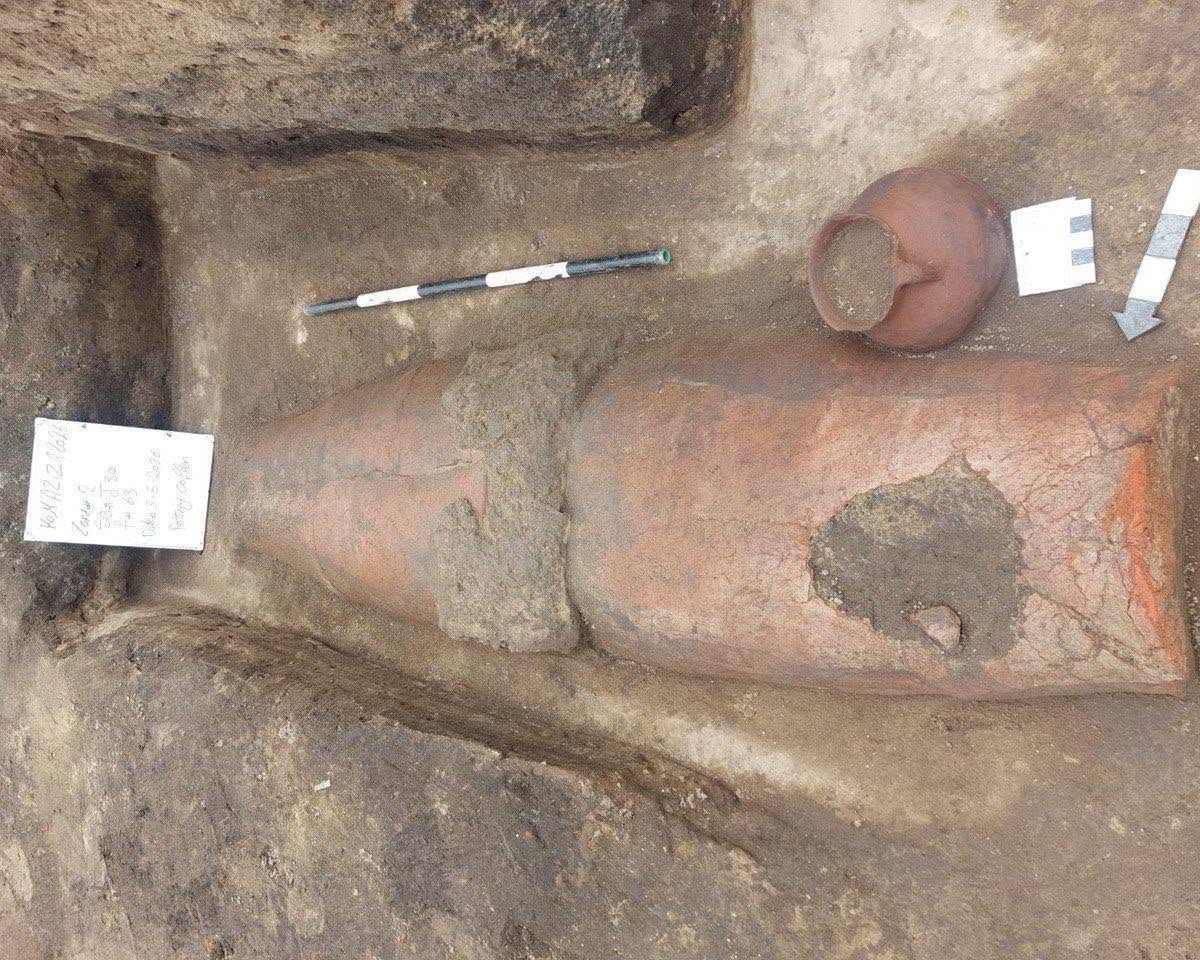
Archaeological discoveries continue to shed light on ancient civilizations, particularly in regions steeped in history like Egypt. Recent excavations in Beheira, northern Egypt, have uncovered fascinating finds that offer insights into burial practices and societal structures. Researchers have encountered a wealth of artifacts that not only enhance our understanding of ancient life but also underscore the cultural richness of this vibrant area.
Significant Archaeological Discoveries
At the site known as Tell Kom, archaeologists have unveiled a remarkable cemetery that dates back to ancient times. This extensive burial ground features dozens of tombs, showcasing a variety of coffin designs that reflect the artistic traditions of the era. Among the notable finds are decorated coffins and intricate grave goods, which provide vital clues about the beliefs and practices surrounding death and the afterlife.
The craftsmanship of the coffins is particularly striking, with many adorned in vivid colors and elaborate patterns. These designs signify not only the skill of the artisans but also the social status of the individuals buried within them. The differences in decoration and materials hint at a stratified society where wealth and influence played essential roles in determining burial practices.
Cultural Insights from the Tombs
The artifacts discovered alongside the coffins offer invaluable insights into the daily lives of the people who once inhabited this region. Items such as pottery, jewelry, and tools found within the tombs suggest a cultural exchange and trade with neighboring areas. This evidence supports the idea that northern Egypt was a hub of interaction, influencing and being influenced by various cultures throughout various periods.
In addition to material goods, the presence of inscriptions and hieroglyphics on some of the coffins provides a glimpse into the spiritual beliefs and customs of the time. These writings often depict scenes of the deceased in the afterlife or invoke divine entities, emphasizing the importance of religion in their society. Such findings contribute significantly to our understanding of ancient Egyptian belief systems and how they shaped daily life.
Implications for Future Research
The discoveries at Tell Kom are not just isolated finds; they pave the way for ongoing research into ancient Egyptian civilization. As archaeologists continue to study the site, they hope to uncover more about the social hierarchy, trade dynamics, and religious practices that characterized this ancient community. These findings hold promise for expanding our knowledge of history, especially regarding lesser-known regions that played crucial roles in the broader Egyptian landscape.
Additionally, the ongoing excavations serve as a reminder of the importance of preserving archaeological sites. As modernization encroaches upon these historical areas, there is an urgent need to safeguard these treasures for future generations. By highlighting the significance of such sites, researchers aim to galvanize public interest and ensure that archaeological efforts receive the support necessary to continue uncovering the past.
In conclusion, the excavation efforts in Beheira, Egypt, represent a remarkable opportunity to deepen our understanding of ancient cultures. From stunningly crafted coffins to everyday artifacts, each discovery contributes a piece to the intricate puzzle of history. As further research unfolds, we can expect to gain even more insights into the lives of those who lived in this culturally vibrant region long ago.