
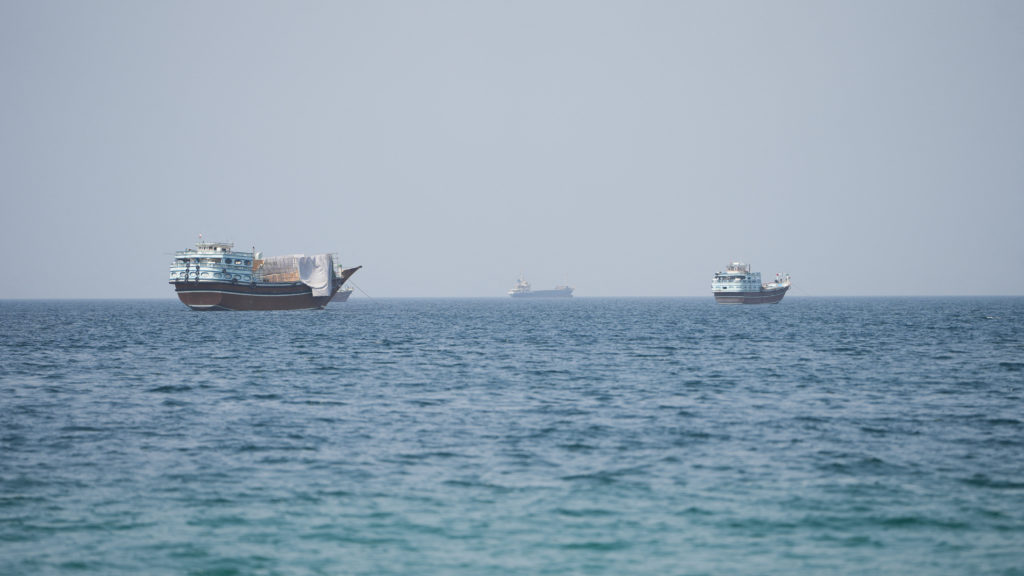
Navigating Tensions Over the Strait of Hormuz
In the complex landscape of international diplomacy, the Strait of Hormuz has emerged as a focal point in U.S.-Iran relations. President Donald Trump could face pressure to strike a compromise to reopen this critical waterway, which is vital for global oil supply. Given the current challenges of falling approval ratings and rising gasoline prices, a diplomatic resolution may be imperative.
Challenges in Negotiations
The primary contention revolves around control of the Strait of Hormuz, a passage through which approximately 20% of the world’s oil is transported. While both the U.S. and Iran claim that an agreement is within reach, the Trump administration is staunchly opposed to any settlement that would solidify Iran’s influence over the strait, including the potential for Tehran to levy fees on vessels passing through. Conversely, Iran is adamant about maintaining some level of control over the waterway, stating it will not revert to its previous status as an unrestricted international route. Despite facing extensive military actions from the U.S., Iran has exhibited the capability to threaten commercial shipping with drones and missiles, thereby maintaining a strategic hold on the strait.
The Pressure of Polling and Economic Factors
For Trump, yielding to Iran’s demands could be perceived as a sign of weakness, a notion that is at odds with his view of leadership as a dichotomy of winners and losers. Analysts, such as Eliot Cohen, emphasize that this perception of losing would be deeply uncomfortable for him. Nonetheless, former State Department official David Schenker suggests that mounting economic pressures might push Trump toward a negotiation strategy that involves some concessions. Such negotiations, however, could carry far-reaching consequences for global trade dynamics.
As the situation evolves, Trump has made statements downplaying concerns regarding U.S. military capabilities, countering narratives that suggest the conflict has strained weapon inventories. He has described the current state of U.S. armaments as satisfactory, asserting that “massive amounts” of military supplies are available, while also indicating that some types of munitions are in shorter supply. This rhetoric may resonate with his supporters but fails to address the pressing realities outlined by defense experts regarding dwindling resources essential for military operations.
The Status of the Strait and Future Prospects
While officials insist that the Strait of Hormuz remains navigable, recent incidents have raised alarms, with vessels reportedly facing threats in the region. According to maritime intelligence from Lloyd’s List Intelligence, shipping traffic through the strait has seen fluctuations, indicating that while some ships are transiting, overall traffic is significantly below pre-crisis levels.
A potential agreement may allow for shipping through Iranian-controlled routes to the Persian Gulf while permitting exit via routes overseen by Oman. This compromise is reportedly viewed as temporary. Importantly, the U.S. administration has rejected any framework that would empower Iran to charge transit fees, insisting that commercial shipping should be unrestricted.
As the Trump administration grapples with these looming challenges, the need for careful navigation of international waters—both literally and metaphorically—remains a critical consideration. The outcomes of these discussions could impact not only U.S.-Iran relations but also global oil markets and regional stability, compelling leaders to tread carefully in their diplomatic engagements.