
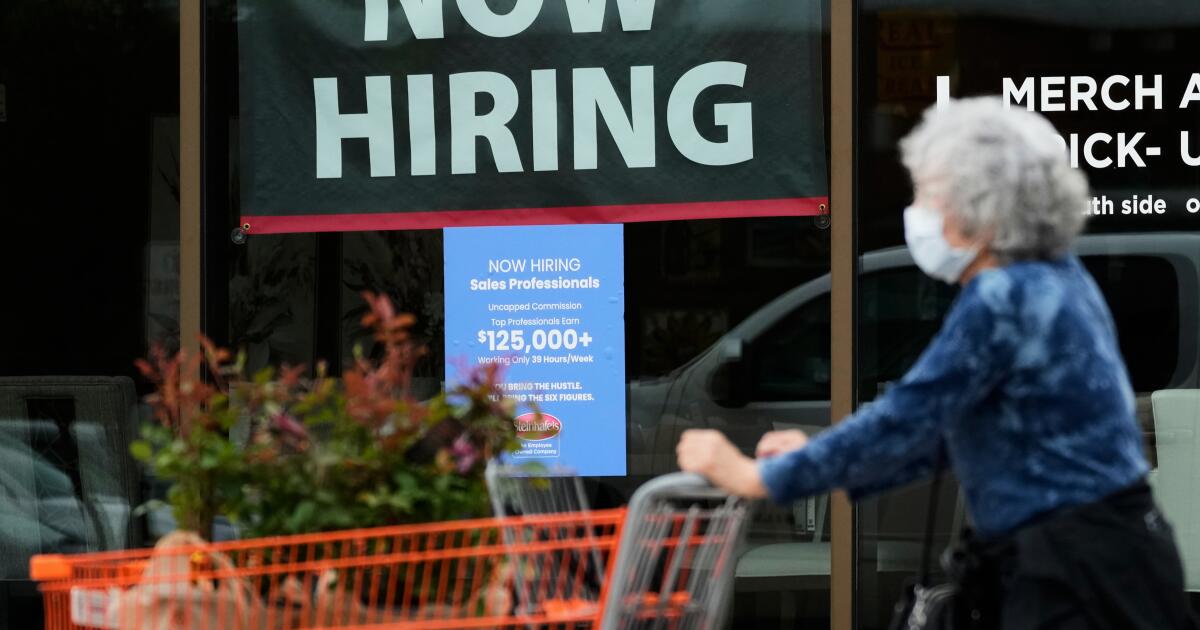
Employers’ recent job cuts mark a concerning trend in the U.S. labor market, highlighting challenges that could impact the economy and upcoming elections. A surprising loss of 23,000 positions last month, coupled with significant job revisions from previous months, puts pressure on the labor force and raises questions about the recovery’s sustainability.
Job Losses and Unemployment Trends
In a sharp decline for the labor market, the Labor Department recently reported a net job loss of 23,000 for the past month, exacerbated by downward revisions that eliminated an additional 103,000 from payrolls in May and June. Despite the unemployment rate falling to 4.1%, the underlying reasons for this drop signal distress. A staggering 264,000 Americans exited the labor force, pushing the percentage of those employed or seeking work down to 61.4%, the lowest since February 2021.
Specific sectors faced significant job cuts, with local public schools slashing 50,000 positions, followed by restaurants and bars at 26,000, and retailers cutting 19,000. While the Trump administration pointed to minor increases in construction and manufacturing jobs, the overall picture illustrates a labor market undergoing considerable strain, particularly as the midterm elections approach.
Economic Challenges and Workforce Dynamics
These job losses occur amid rising economic uncertainties, including surging energy prices due to geopolitical tensions. Companies have exhibited a more cautious approach to hiring, possibly influenced by lingering effects from COVID-19 and a changing economic landscape. Although job security remains solid for current employees, layoffs are at historic lows, and businesses express hesitancy in letting go of their workforce acquired during prior shortages.
Interestingly, while the hiring rate averages 61,000 jobs per month this year, it represents a stark contrast to the modest figures from 2025. The United States now requires far fewer jobs to stabilize unemployment figures—approximately 155,000 per month—due to factors like immigration crackdowns and demographic shifts in the workforce. Senior economists observe that the shrinking pool of available workers is driving up wages for those who switch jobs, potentially reflecting a wider trend in labor market dynamics.
Long-term Implications and Future Prospects
Despite the struggles faced by job seekers, particularly those re-entering the workforce or looking for their first position, recent reports suggest a paradoxical tightening of employment opportunities. Researchers at the Federal Reserve Bank of San Francisco indicate that landing jobs has become increasingly difficult, contradicting typical patterns seen in past economic recoveries. Rather than finding opportunities, many potential candidates face a shrinking workforce pipeline that leaves them marginalized.
Compounding this issue are broader economic factors, including escalating energy costs and advancements in artificial intelligence, which may further burden the job market by either enhancing productivity or reducing the need for additional hires. The exit of experienced workers and increasing competition for existing roles may hinder job growth, potentially leading to prolonged challenges for the labor market.
In conclusion, the current state of the U.S. labor market reveals a complex interplay of factors that could have significant implications for both the economy and political landscape. As policymakers and businesses adapt to these changes, the focus will likely remain on fostering a robust environment for job creation while addressing challenges arising from a shrinking workforce and evolving economic conditions.